
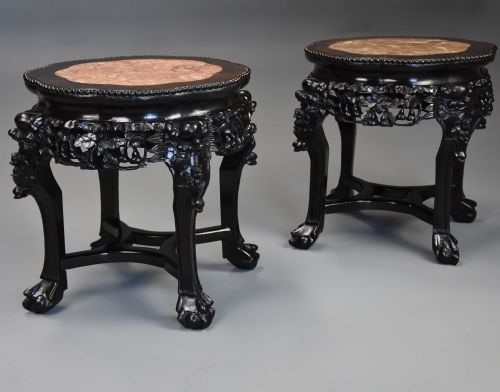


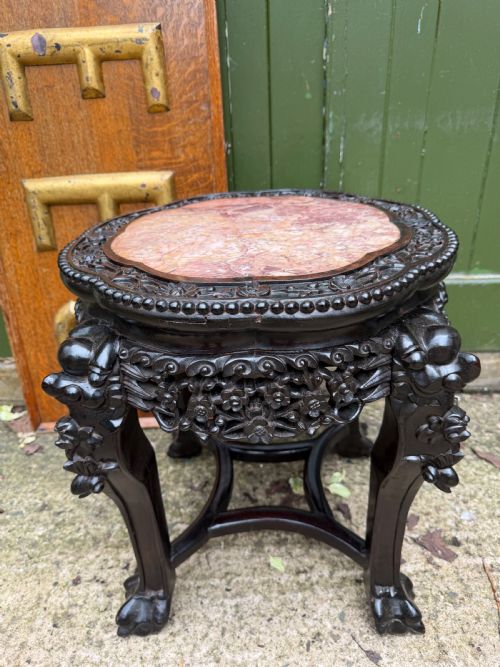


Hardwood Chinese Low Table
A hardwood chinese low table brings grounded proportion and dense timber grain into a modern room.
Hardwood Chinese Low Table
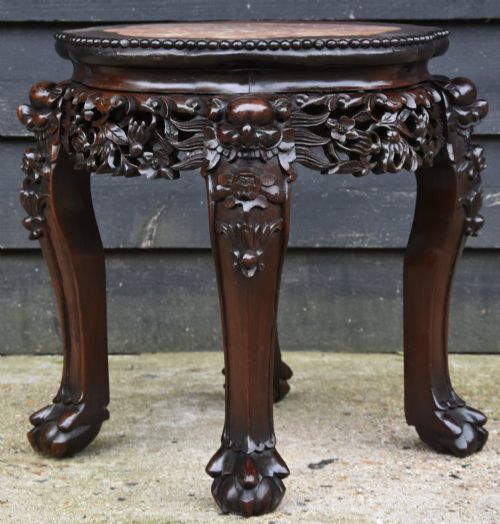
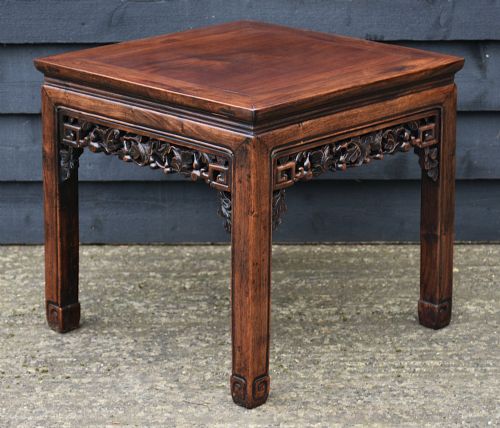
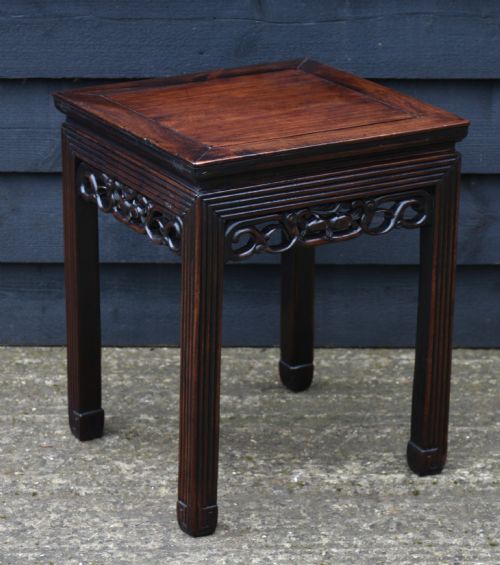
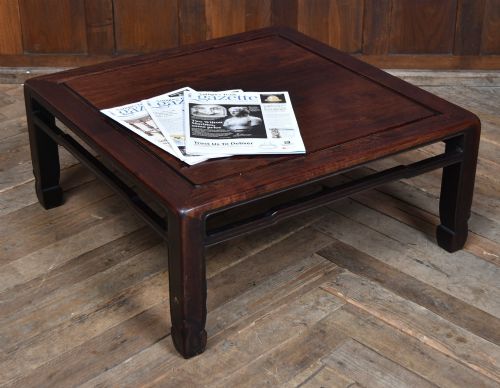
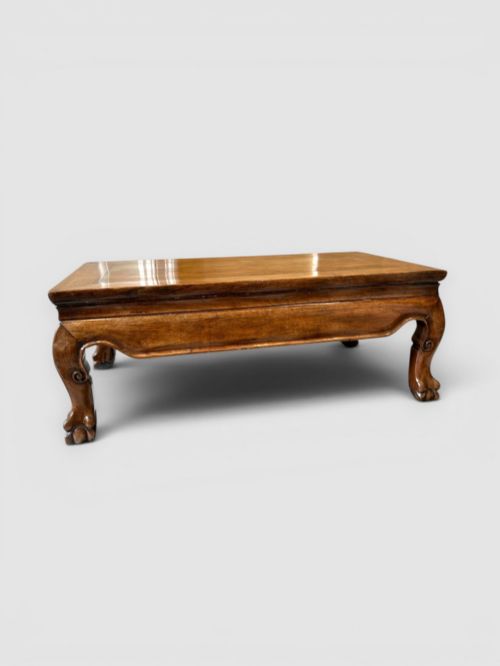
A hardwood chinese low table encompasses domestic platforms designed for use close to the floor, including kang tables, opium tables, and low coffee tables originating across the nineteenth and early twentieth centuries.
The selections span traditional Qing Dynasty pieces alongside export variations, shifting from square or rectangular plank tops to circular pot stands and scholarly display surfaces.
Buyers encounter these works in heavy timbers shaped for serving, resting, or displaying vessels within traditional and contemporary interiors.
Materials and construction
Craftsmen utilised dense Asian hardwoods such as rosewood, hongmu, padouk, and huanghuali, selected for their stability and capacity for intricate carving.
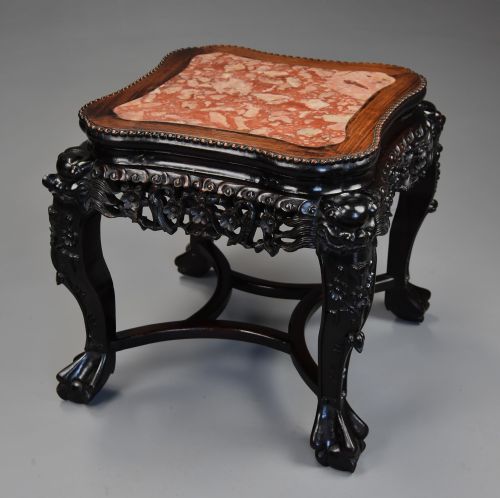
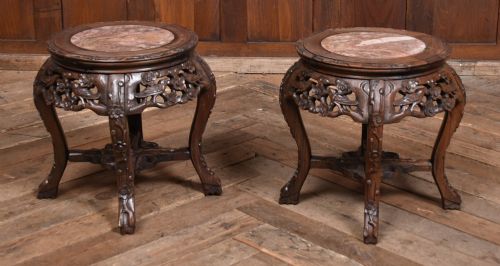
Surfaces frequently incorporate inset panels of variegated rouge marble, porcelain, or glass, held securely within robust mortise and tenon frames.
Joinery relied on precise interlocking wooden components without metal nails, allowing the dense timber to adapt to seasonal humidity changes.
Several low tables retain minor ink stains on their tops, left by scholars who practiced calligraphy close to the floor centuries ago.
Judging execution
Quality rests in the crispness of the hand-carved relief work and the depth of the natural wood patina achieved over decades of handling.
Superior examples display balanced proportions, tightly fitted inset marble or panel tops, and uncompromised structural integrity across the legs and scroll ends.
The Hardwood Chinese Low Table Glossary
- Kang table
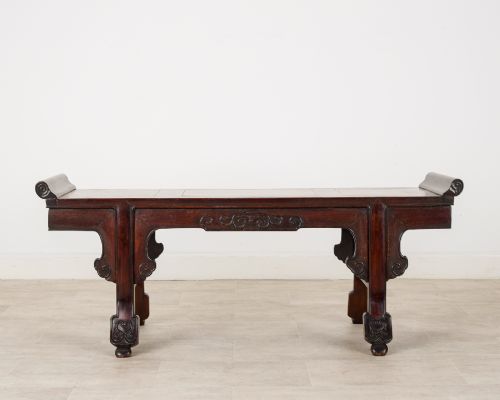
- A low platform table traditionally used on a heated brick bed in northern Chinese homes for dining or writing. These pieces sit low to the ground and often feature scroll ends.
- Hongmu
- A translation meaning red wood, applied by cabinetmakers to dense, heavy tropical hardwoods with rich dark colouration. It forms the structure of many substantial nineteenth-century pieces.
- Padouk
- A durable, heavy timber displaying distinctive reddish-brown hues that darken with age. It provides a stable base for detailed carving.
- Jardiniere stand
- A tall or low supporting table built to hold heavy flower pots or decorative vases. They feature circular or square tops with inset marble panels.
- Scroll end
- A curved terminal detail on the aprons or legs of low tables. This feature provides a fluid silhouette to rigid timber frames.
Hardwood Chinese Low Table: Frequently Asked Questions
What is a kang table?
A kang table is a low-set platform traditionally placed upon a heated brick sleeping platform in traditional northern Chinese architecture. They served functional roles for eating, drinking tea, and writing.
Today, their compact proportions make them versatile as low coffee tables or display surfaces in modern living spaces.
How do you style a low table?
These tables work well positioned centrally before low seating arrangements, allowing their carved aprons and timber grain to remain visible. Their modest height grounds a room without obstructing sightlines.
Pair them with minimal modern upholstery to let the historical form stand out as a focal point.
What woods were used?
Cabinetmakers utilised dense native and imported timbers, including rosewood, elm, padouk, and huanghuali. These woods were chosen for their structural strength and deep natural lustre.
Surfaces were often left unpainted to highlight the grain and rich colouration developed through careful polishing.
Why do some have marble tops?
Marble inserts provided a cool, durable surface resistant to moisture from teapots and flower vases. The stone also introduced contrasting colour and tactile variety against the dark timber frame.
Variegated rouge and grey marble varieties appear frequently across nineteenth-century examples.