


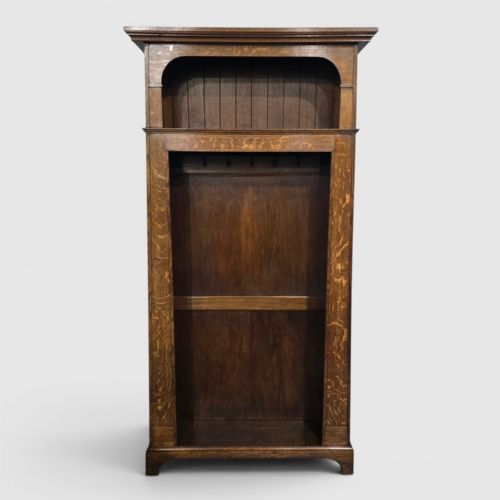
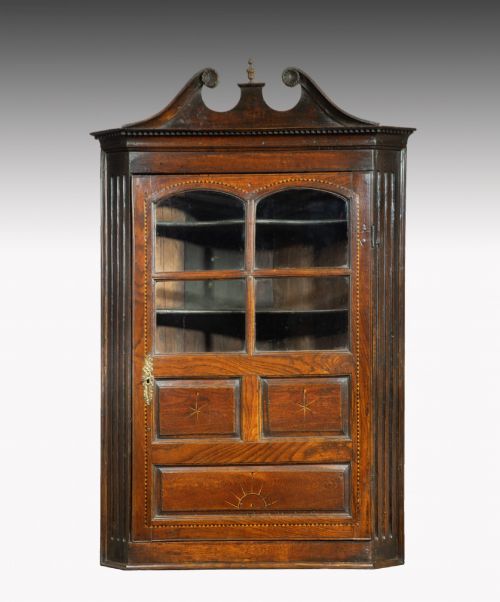
Hanging Oak Cupboard
A hanging oak cupboard brings practical storage and architectural presence to a wall, making use of neglected corners and room perimeters.
Forms and Origins
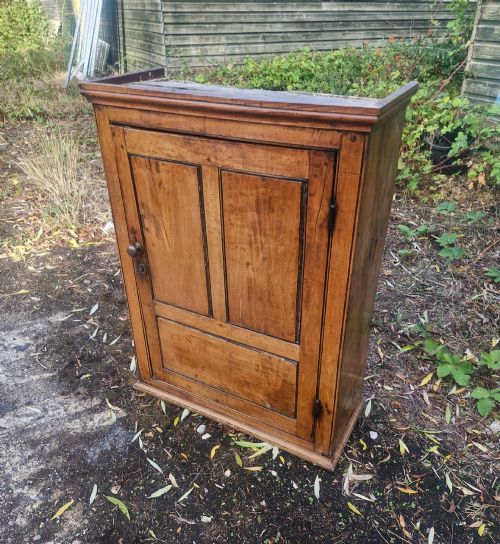
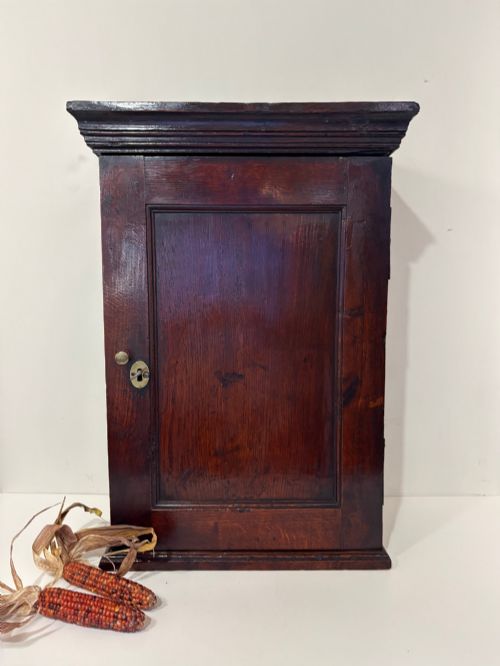
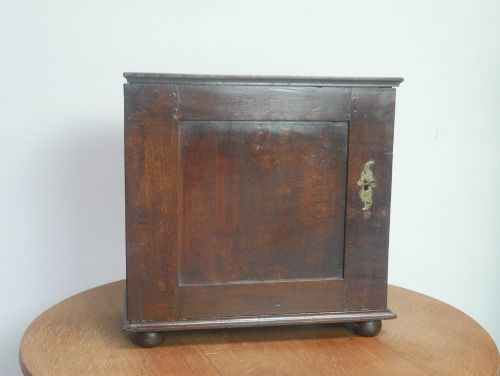
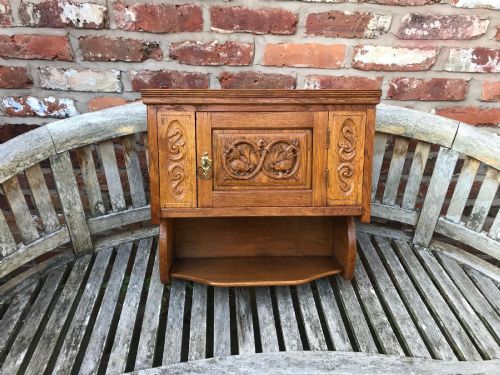
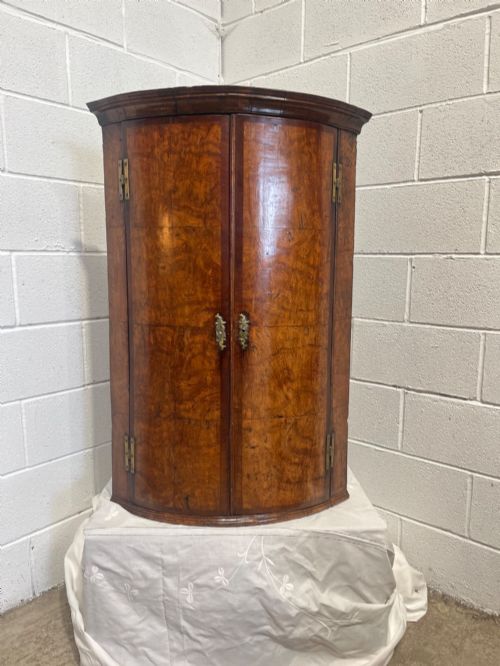
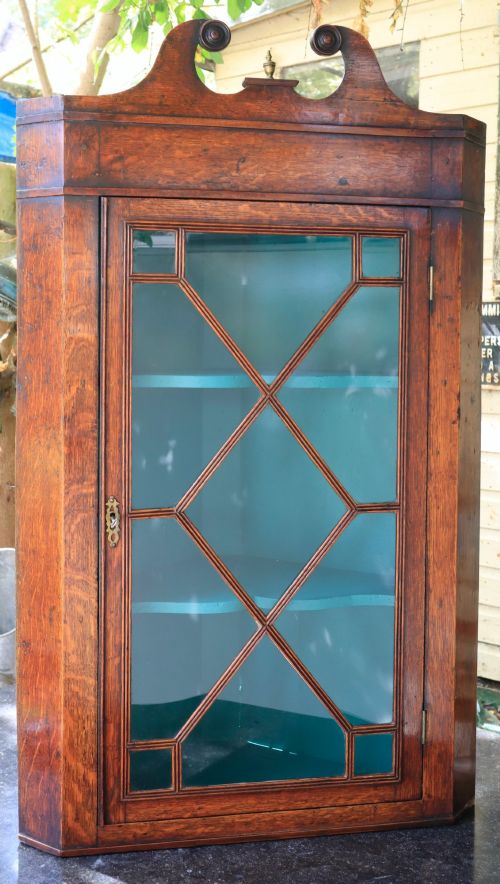
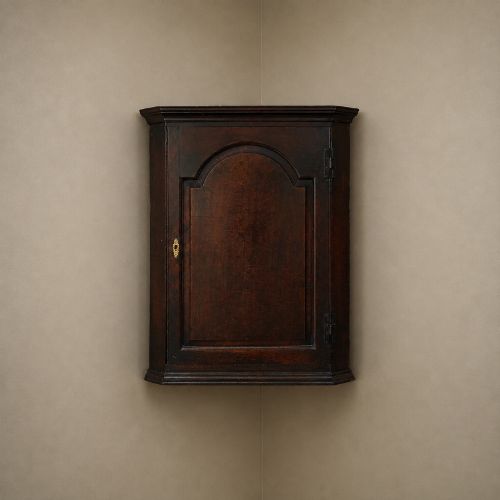
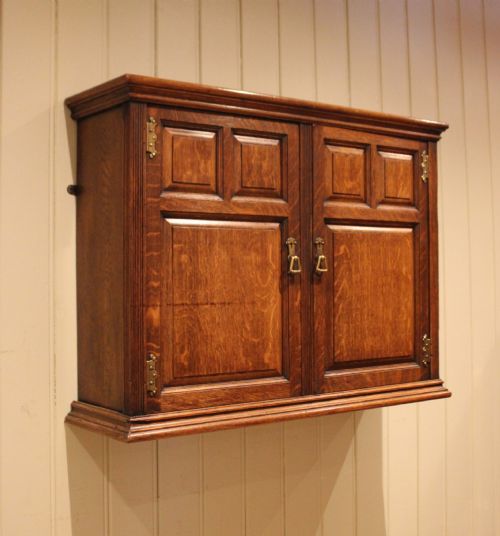
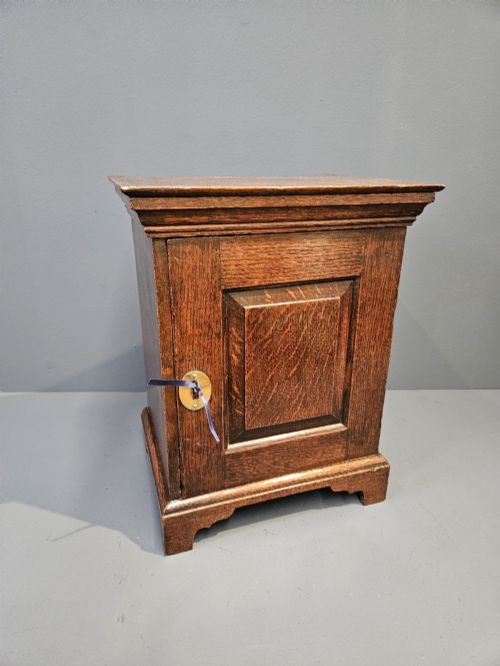
A hanging oak cupboard is typically encountered as a corner cabinet or a wall-mounted unit designed to save floor space while providing secure storage. These pieces range from compact Georgian corner cupboards to broader wall cabinets and larger press cupboards.
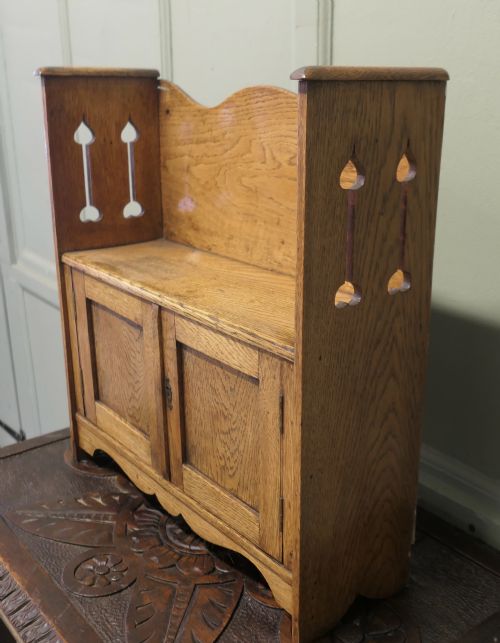
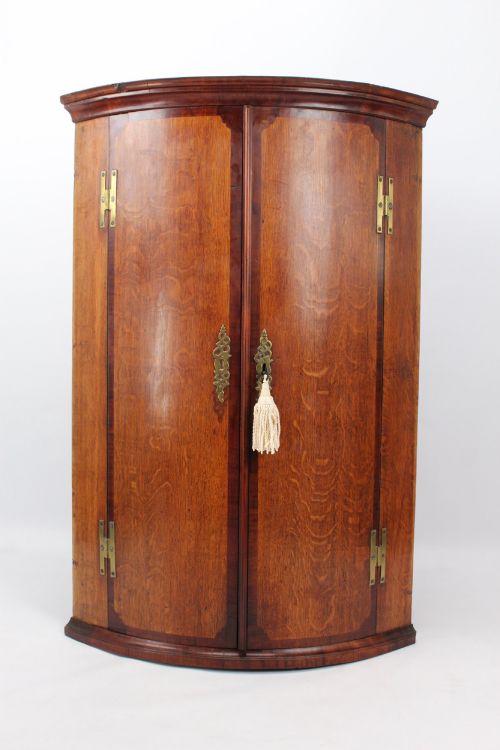
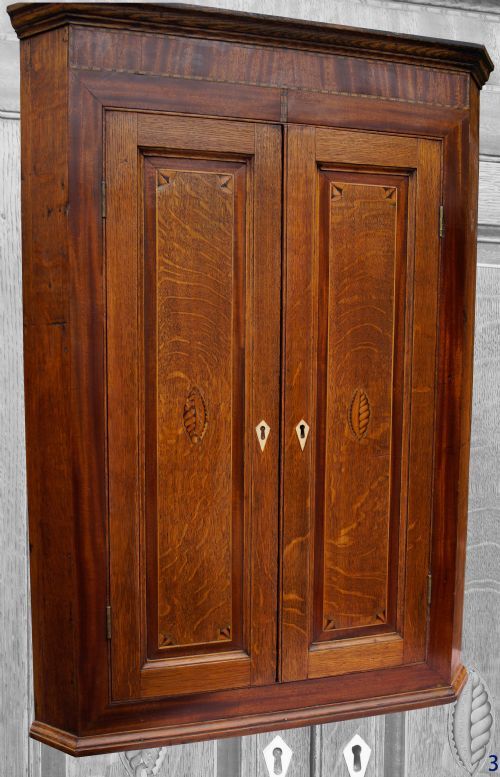
The material predominantly spans solid oak, frequently paired with mahogany cross-banding or subtle wood inlay. Pieces emerge across multiple periods including the eighteenth century, the Georgian era, Victorian times, and Arts and Crafts revivals.
Provincial workshops and regional makers produced the vast majority of these items for domestic use in homes and cottage interiors. Collectors find both flat-front wall units and bow-front variants that soften the geometry of a room.
Materials and Technique
Cabinet makers built these carcasses using solid oak panels, often combining brass hinges and key escutomCHECHE with lead or glass for glazed display doors. Secondary woods like mahogany and boxwood appear in cross-banding and decorative stringing.
Construction techniques involve traditional joinery, with panelled doors and fitted internal shelving secured to withstand wall-hanging use. Hand-carved details and applied wood inlay distinguish more ambitious provincial examples from plain utilitarian boxes.
Retail Price Guide 2026
Typical UK retail prices for hanging oak cupboard, calculated from the Sellingantiques database of over a million retail prices indexed since 2003. This retail price guide relies exclusively on Sellingantiques data; no external sources or auction records are used, so the figures do not describe the wider market.
Listings span Georgian, Victorian, and Arts and Crafts periods, utilising solid oak alongside mahogany, boxwood, glass, and brass.
Defining Quality
Quality rests on the selection of timber figure, the crispness of any hand carving, and the restraint of decorative inlay. Better examples display carefully matched grain patterns across the primary door panels and harmonious proportions.
The integrity of original brass hardware, working locks, and structural joints without heavy timber replacement elevates a piece. Provincial utility balances against refined cabinet work, where tighter door fits and superior timber selection mark out the upper tier.
Heals
The Hanging Oak Cupboard Glossary
- Corner cupboard
- A specialised cabinet built with a triangular plan to fit neatly into the ninety-degree junction of two walls.
- Cross-banding
- A border technique where veneer strips are laid across the grain of the primary wood to frame a door or panel.
- Astra glazed
- A term associated with specific glazing bar arrangements found on certain Arts and Crafts wall-hanging display cabinets.
- Livery cupboard
- A traditional term historically used for larger press or clothes-hanging storage furniture found in domestic interiors.
Frequently Asked Questions
How do I hang a heavy oak corner cupboard safely?
These cabinets require secure fixing directly into wall studs or masonry using heavy-duty brackets suited to the weight of solid oak.
Professional installation ensures the considerable load is supported safely without straining the historic carcase joints.
What rooms suit a hanging oak cupboard best?
Kitchens, dining rooms, and hallways utilise corner cupboards effectively to store glassware or ceramics while occupying otherwise empty wall space.
Smaller wall-mounted units fit equally well in studies or bathrooms where floor space remains at a premium.
How do I distinguish Georgian from Victorian oak cupboards?
Georgian pieces generally show simpler, structural timber framing with understated brass hardware and cleaner provincial lines. Victorian variants frequently introduce heavier carved ornament, glazed leaded panels, or Revival styles inspired by earlier centuries.
Examining the internal construction and backboards often reveals the specific period of manufacture.
Did these cupboards hold drinks or clothes?
Usage varied entirely by scale, with compact corner cupboards serving glassware and spirits, while larger press cupboards accommodated linens and garments.
Internal shelving configurations indicate whether a cabinet was built for small provisions or hanging clothes.