

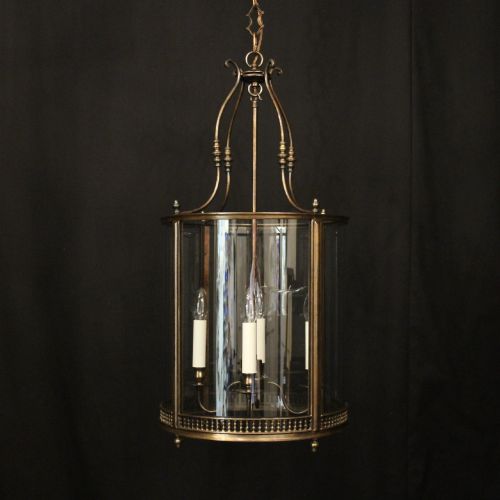
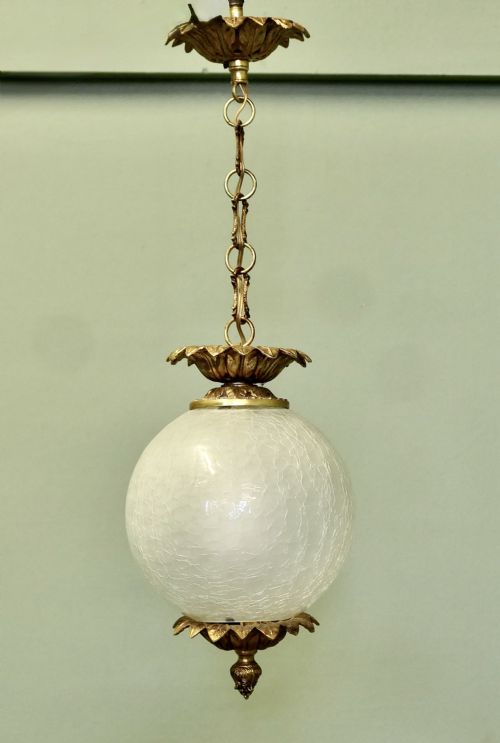
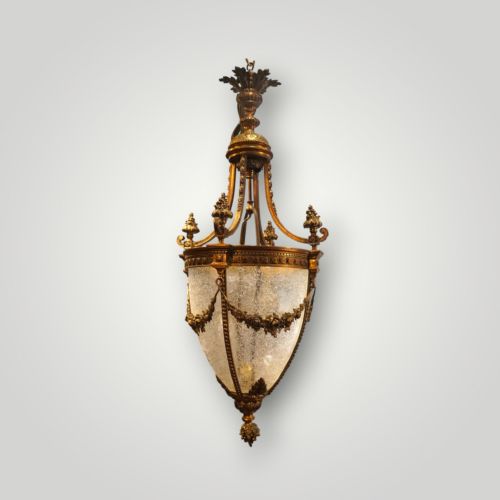
Hanging Glass Lantern
A hanging glass lantern brings direct illumination and period character to hallways, stairwells and porches.
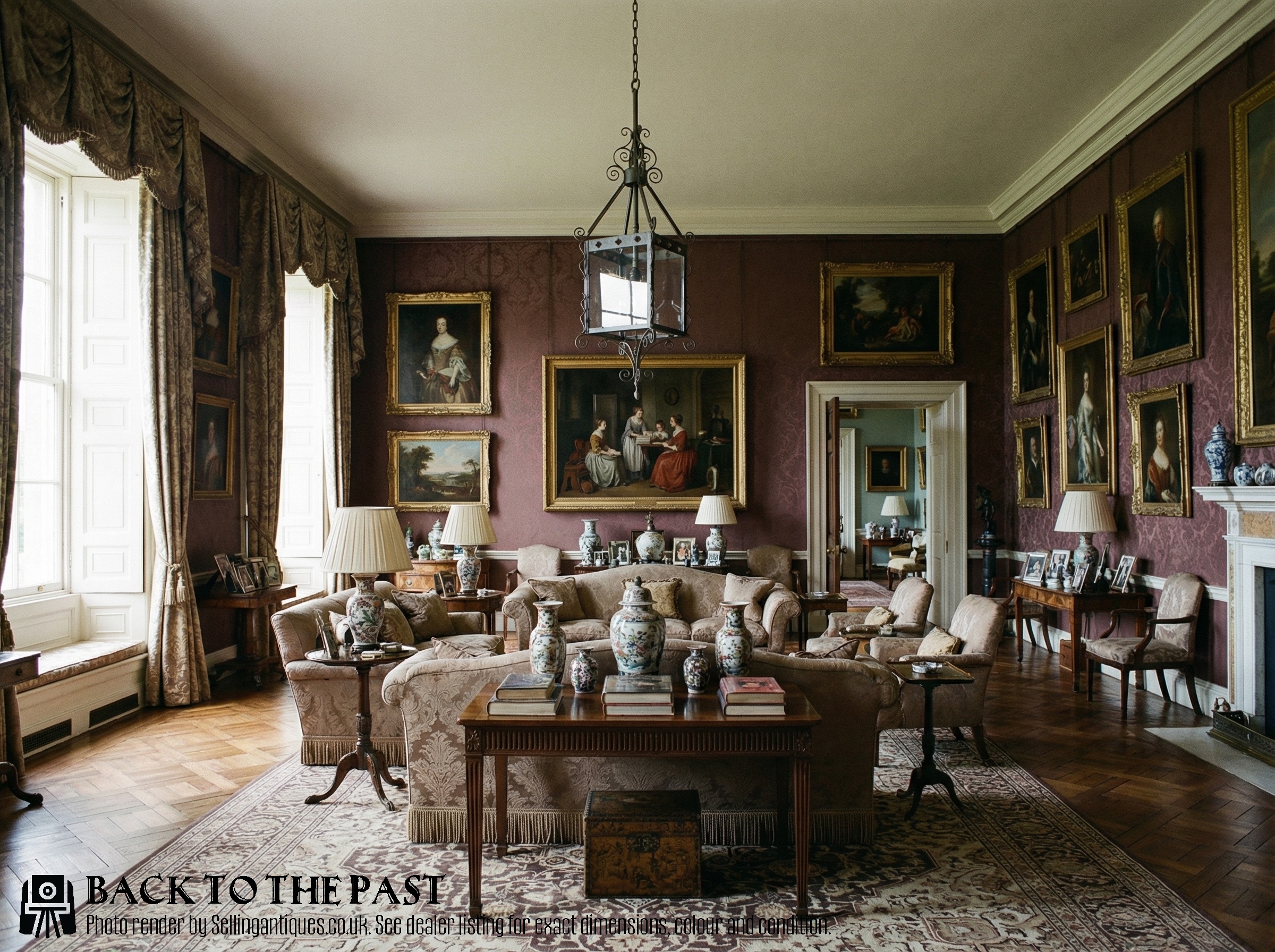
Hanging Glass Lantern
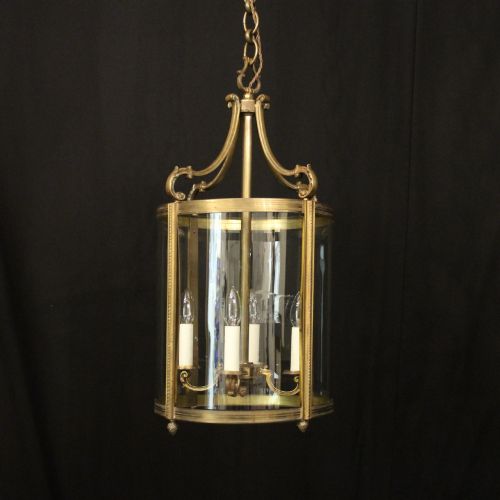
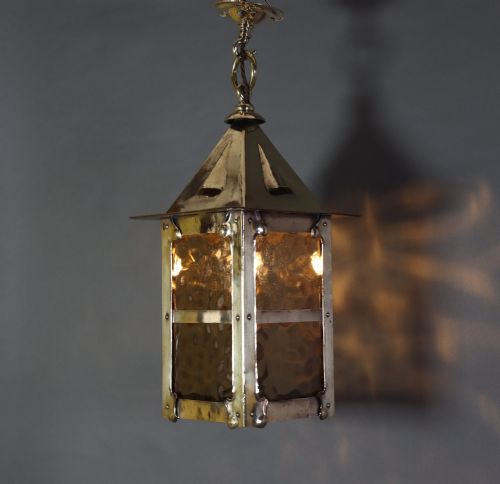
A hanging glass lantern suspends from the ceiling by chain, cord or rigid rod to illuminate interior spaces like halls and entranceways. The selection spans domestic lighting from the nineteenth century through to the Art Deco period, encompassing English and French workshop traditions.
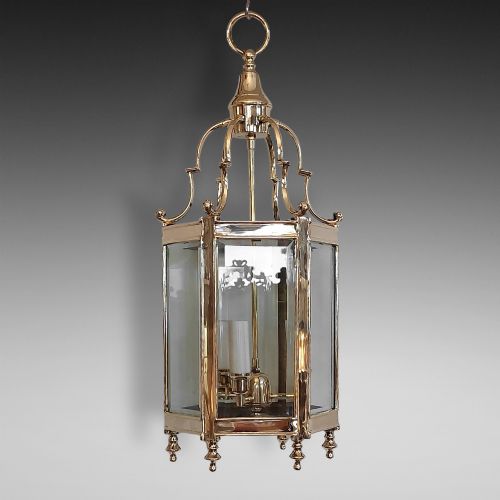
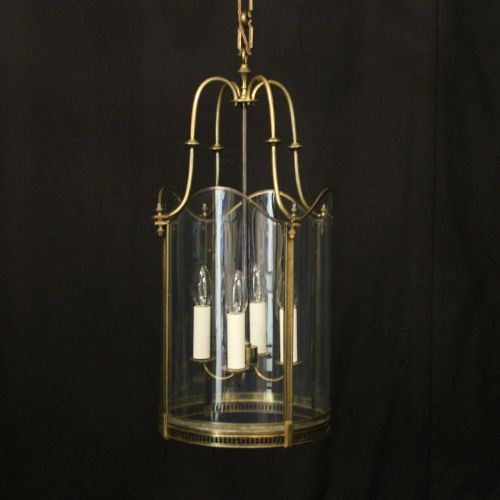
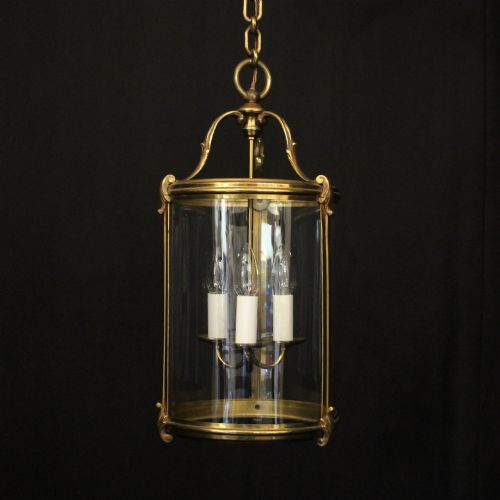
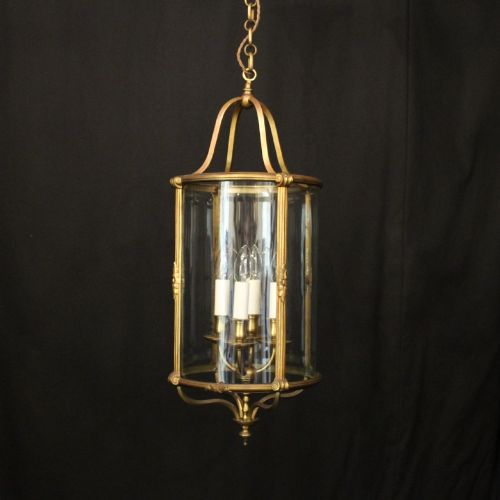
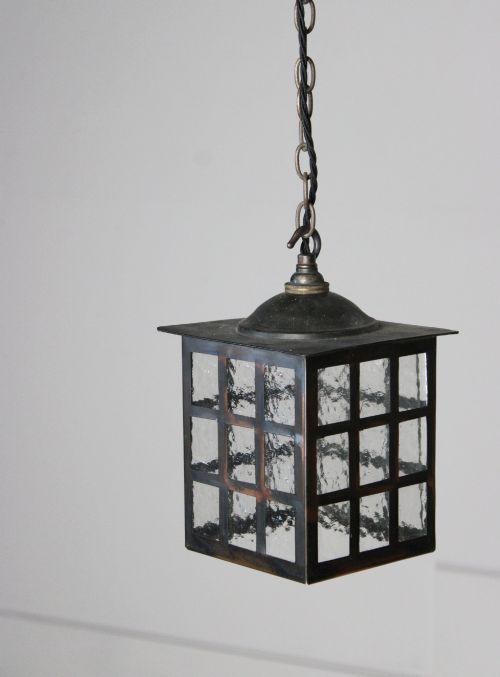
The most common forms on this page include hexagonal brass frames, convex glass domes and multi-light fixtures designed for narrow vestibules. Pieces range from utilitarian railway and porch lights to ornate French gilt bronze hall lanterns with multiple internal bulb holders.
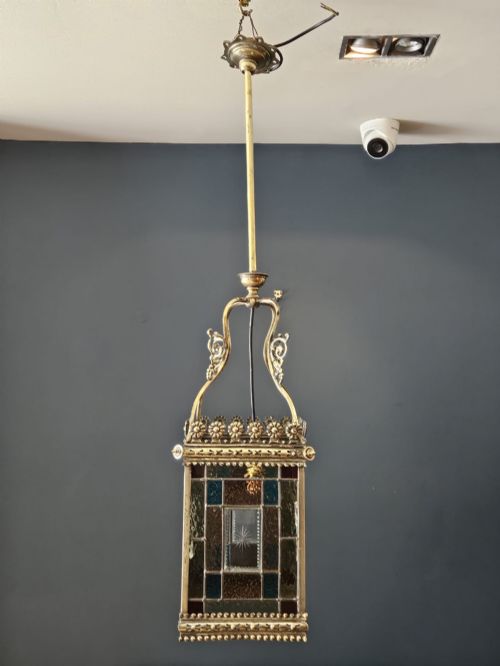
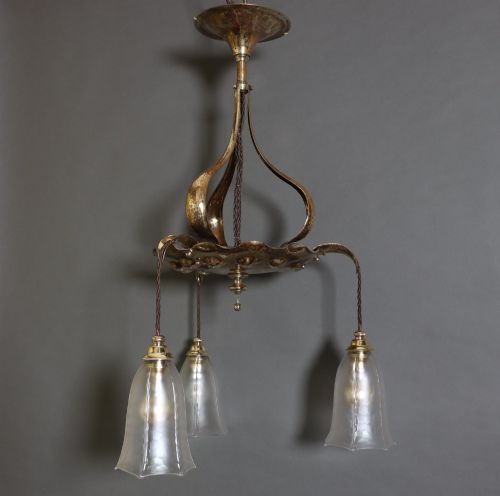
Stylistic influences vary widely across the inventory, touching upon Gothic Revival, Arts and Crafts, Art Nouveau and Neo-Classical idioms. Buyers encounter everything from simple leaded copper panels to elaborate gilded bronze frames housing bevelled or bullseye glass.
Evaluating craftsmanship and detail
Quality rests upon the weight of the metal framework, the crispness of casting or piercing detail, and the clarity or character of the glass. Heavier gauges of brass and bronze with hand-finished chased decoration mark out superior examples.
The integration of original glass panes, whether hand-blown bullseye, faceted crystal or stained leaded panels, significantly elevates a piece. Superior lanterns maintain proportion between the metal cage and the glass, with secure mechanical fixings and intact patination.
Hanging Glass Lantern Retail Price Guide 2026
Typical asking prices for hanging glass lantern among the pieces listed under this phrase on Sellingantiques today, from the lower quarter to the upper quarter. They describe what is for sale here now, not the wider market.
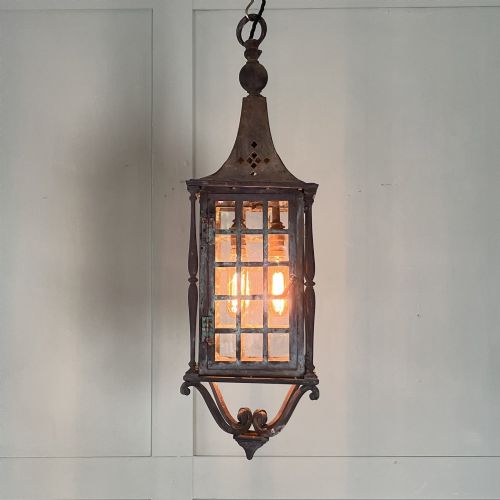
Even railway guards needed atmosphere, as proven by the robust copper Victorian railway lanterns found here.
The Hanging Glass Lantern Glossary
- Convex glass
- Curved glass panels that project outward to diffuse light across a wider angle. This technique appears frequently on French hall lanterns from the early twentieth century.
- Leaded glass
- Individual pieces of glass held together by strips of lead called cames. This method is common in Arts and Crafts and Victorian church or porch lighting.
- Gilt bronze
- Bronze metal treated with a thin layer of gold or gold-coloured gilding. It provides a rich finish seen on formal French revival hall fixtures.
- Moravian star
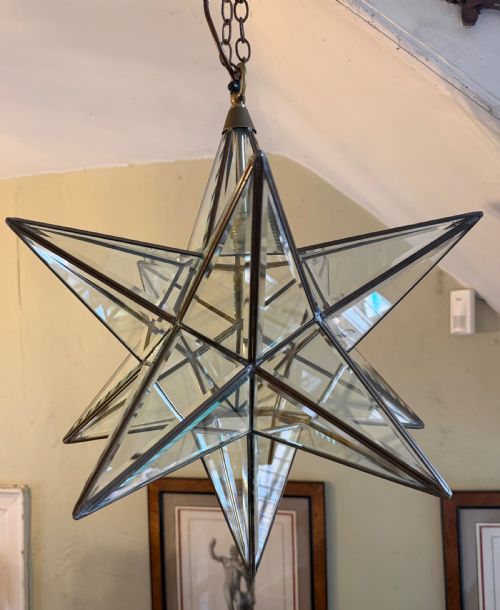
- A multi-pointed geometric glass and metal lantern design popular in the early twentieth century. These fixtures often feature bevelled glass panes held in brass framework.
- Bullseye glass
- Thick circular glass lenses with a central protrusion formed during hand-blowing. They add distinct texture and historical authenticity to nineteenth-century examples.
Hanging Glass Lantern: Frequently Asked Questions
Where should I hang a glass lantern?
These fixtures suit entrance halls, high-ceilinged stairwells and covered porches where overhead suspension is practical. Their downward illumination provides functional task lighting for transitional spaces.
Ensure adequate clearance beneath the lowest point of the lantern for foot traffic and door swings. Scale the size of the fixture to the dimensions of the room to maintain balanced proportions.
How do I date an antique lantern?
Dating relies on combining the stylistic clues of the metalwork with manufacturing techniques. Arts and Crafts pieces show hammered surfaces and exposed leadwork typical around nineteen hundred.
Later pieces from the nineteen twenties often adopt clean geometric Art Deco lines or French gilt convex proportions. Examining the electrical fittings and wiring compartments can also offer clues regarding the period of use.
How do I clean an antique glass lantern?
Remove dust gently using a soft dry cloth or feather duster to protect delicate patination on the metal frame. Glass panels can be wiped with a mild glass cleaner applied to a cloth rather than sprayed directly.
Avoid abrasive metal polishes on antique brass, copper or gilt surfaces to preserve their historic appearance. Take care around soldered lead joints and delicate stained glass sections during maintenance.