

Hanging Glass Hall Lantern
A hanging glass hall lantern brings light and presence to an entrance, shaping the first impression of a home through period brass, bronze and glass.

Hanging Glass Hall Lantern
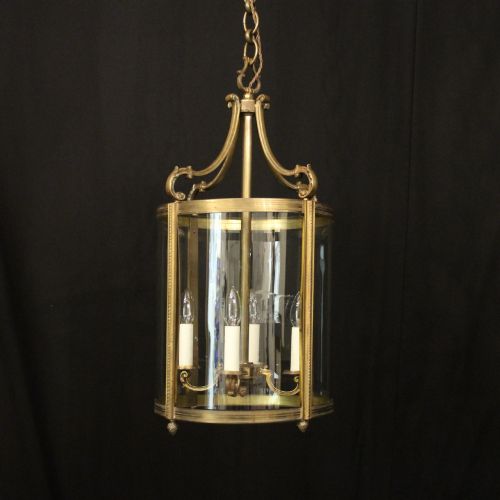
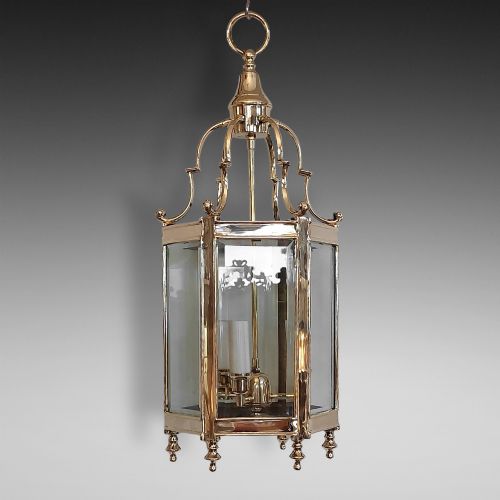
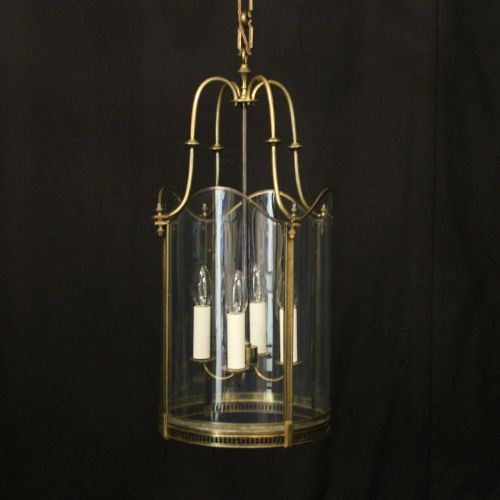
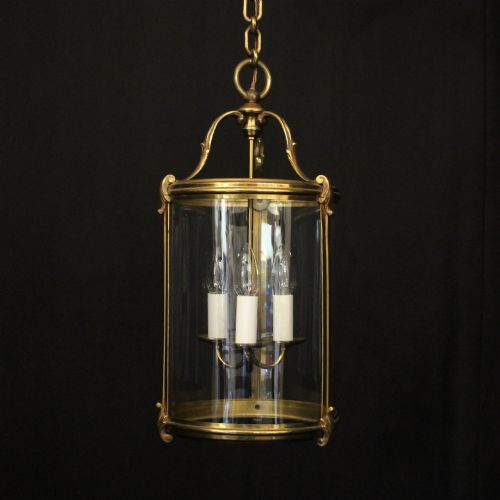
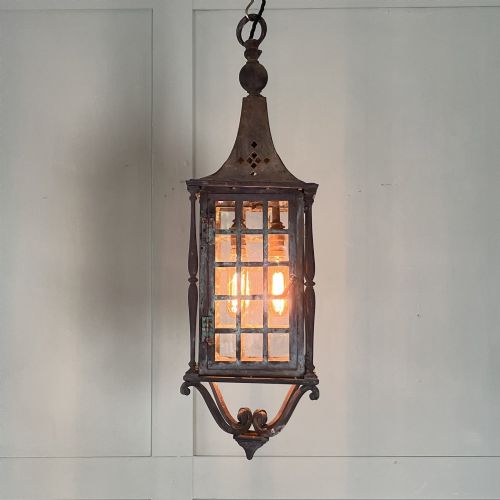
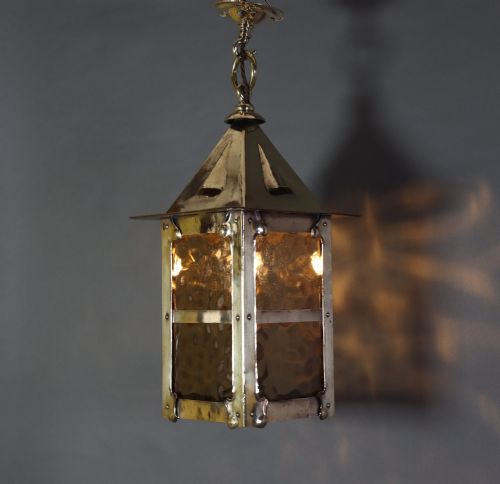
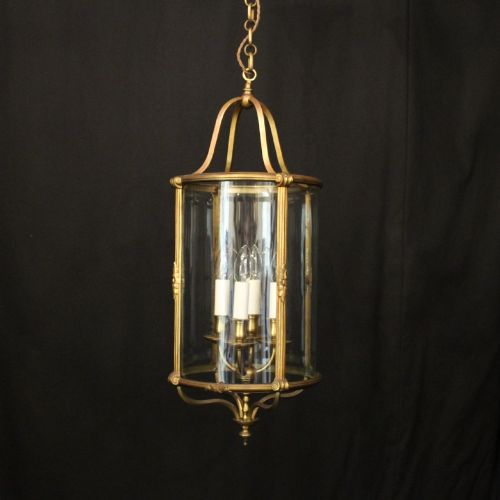
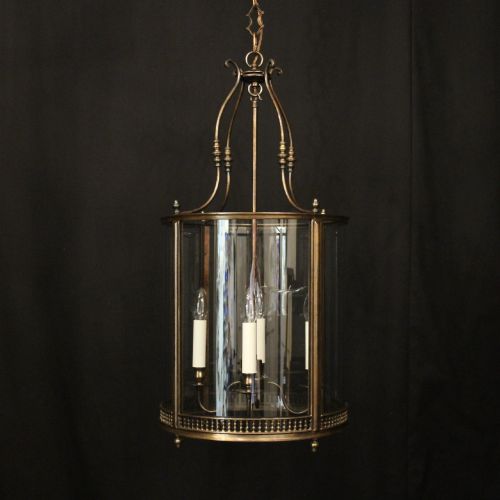
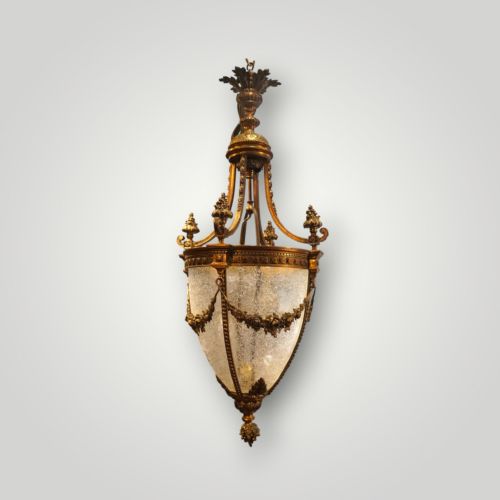
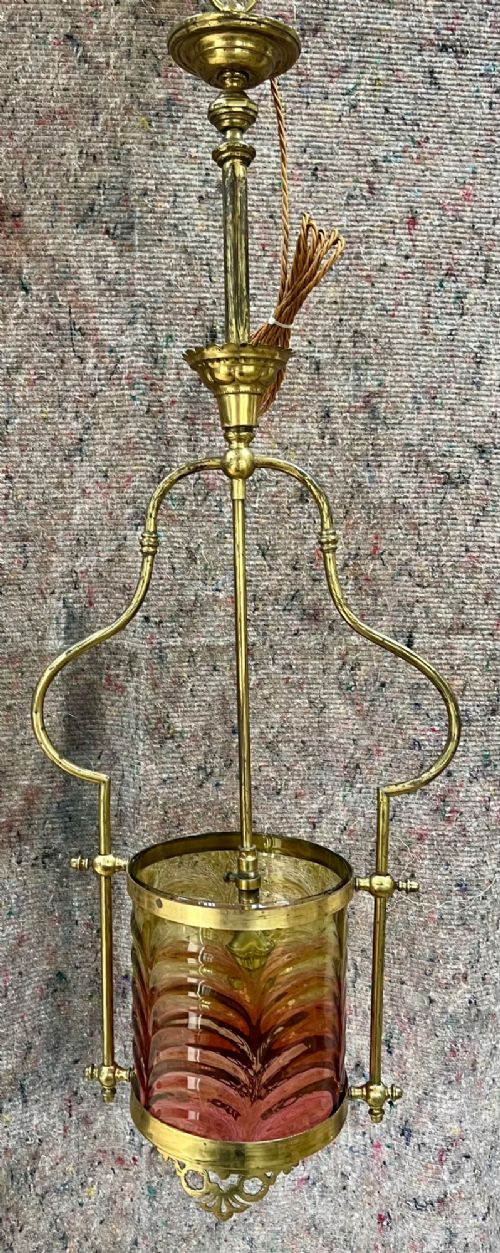
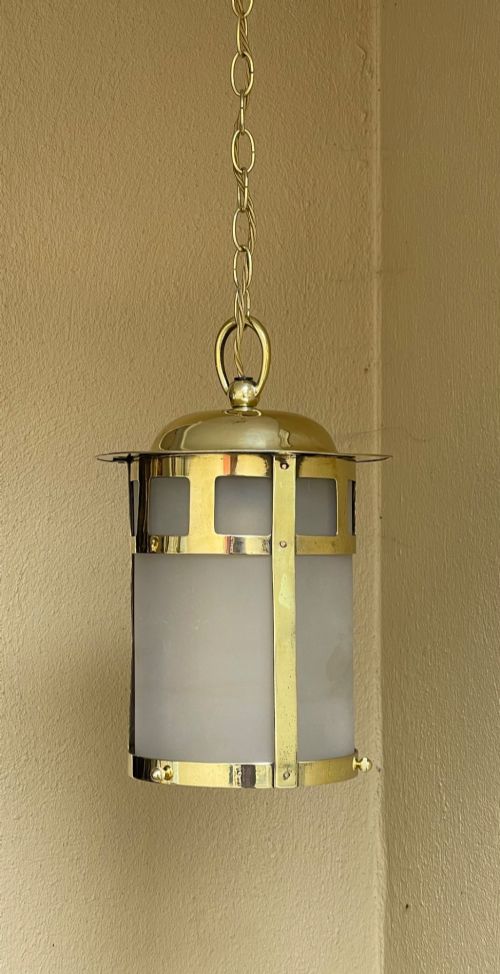
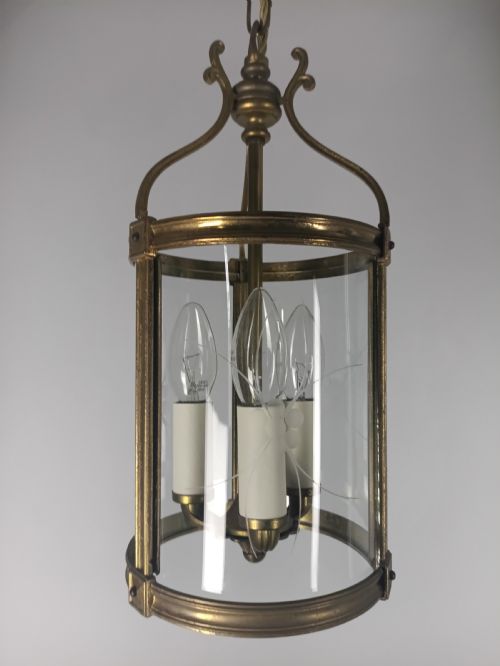
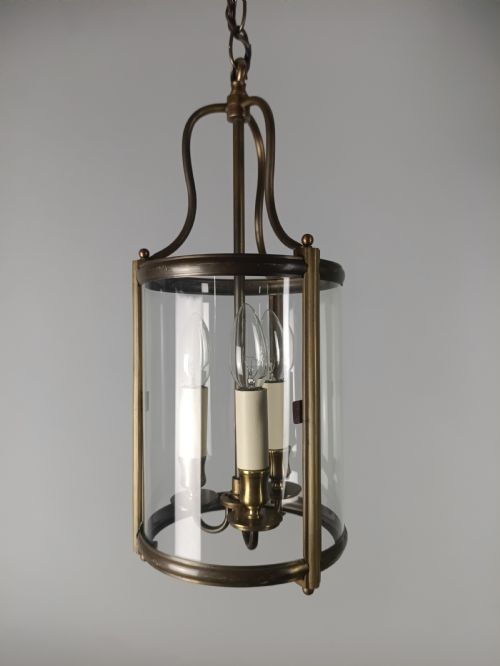
A hanging glass hall lantern is an overhead light fixture designed specifically for entrance halls, vestibules and corridors, suspended to provide both illumination and architectural character. When you search for a hanging glass hall lantern, you encounter pieces spanning the Victorian and Edwardian eras through to the early twentieth century, with French and English origins predominating.
The forms vary from simple hexagonal and round shapes to elaborate multi-light configurations featuring convex or bulls-eye glass panels. Many examples reflect distinct design movements, incorporating the linear simplicity of Arts and Crafts style, the sinuous curves of Art Nouveau or the formal symmetry of French neoclassical taste.
The selection ranges from compact porch lights measuring modest dimensions to large multi-bulb fixtures intended for substantial entrance spaces. Brass frames dominate the current offerings, alongside gilt bronze, wrought iron and leaded structures housing clear, stained or moonstone glass.
Materials and construction
Makers constructed these lanterns using cast or sheet brass, gilt bronze and wrought iron to form rigid metal frames capable of supporting heavy glass panels. These metal components were frequently chased, gilded or left with a natural brass finish depending on the prevailing aesthetic of the period.
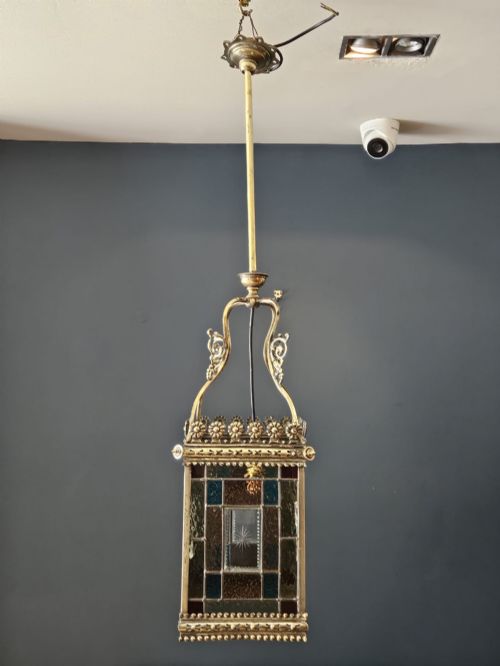
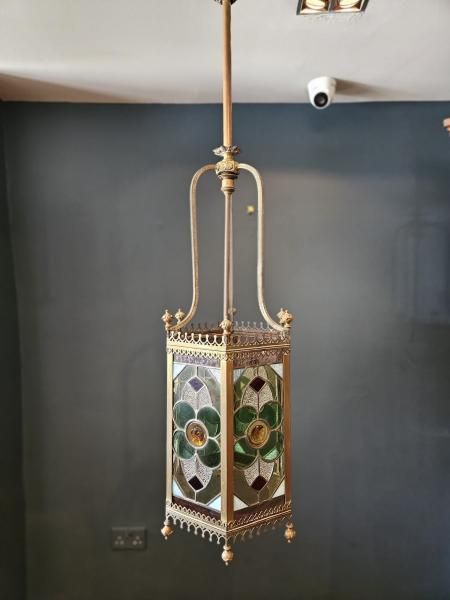
The glazing involved specialised techniques, utilising leaded joints, hand-blown bulls-eye roundels, convex curves and acid-etched designs. Glaziers secured these glass elements into the metal armatures with lead cames or internal clips, ensuring structural stability for overhead suspension.
A solitary leaded stained glass porch lantern measures a mere five inches.
Evaluating quality and execution
Quality in a hanging glass hall lantern rests upon the weight of the metal framework and the sophistication of its casting or smithing. Finer pieces display crisp botanical or classical chasing on the bronze and brass, whereas lesser examples rely on simpler stamped sheet metal.
The glass itself dictates much of the distinction, separating standard plate panes from thick, hand-blown bulls-eye panels, deeply etched surfaces or complex leaded stained glass. Heavier metal gauges, robust suspension loops and original multi-light candle clusters or internal electrical conversions further elevate a piece above standard utility lighting.
The Hanging Glass Hall Lantern Glossary
- Convex glass
- Curved glass panels that project outward, frequently seen on French lanterns to diffuse light across a wider angle. This technique required skilled glassblowing and shaping.
- Lead came
- The grooved lead strips used to hold individual pieces of stained or clear glass together in leaded panels. It provides both structural gridwork and a decorative linear pattern.
- Bulls-eye glass
- Thick, circular glass panes featuring a prominent central nub, created from the centre of a blown glass disc. They add texture and distort light charmingly in hallway settings.
- Gilt bronze
- Bronze metal treated with a thin layer of gold or gold-colored alloy to impart a rich, reflective surface. It appears frequently on formal French lanterns from the nineteenth and early twentieth centuries.
Hanging Glass Hall Lantern: Frequently Asked Questions
How do I hang a hall lantern?
These lanterns suspend from ceilings using matching chains or rigid rods attached to a mounting canopy. You must ensure the ceiling joist or structural noggin can support the combined weight of the metal frame and thick glass panels.
Professional electricians should handle the hanging and internal wiring to comply with current safety standards while preserving the original suspension loop.
How do I clean an antique lantern?
Dust the metal framework and glass panels gently with a soft, dry cloth to remove everyday accumulation. Avoid harsh chemical cleaners or abrasive polishes that might strip the historic patina from the brass or bronze.
For glass panes, apply a mild glass cleaner to a cloth rather than spraying directly onto the fixture, protecting any aged metal or wiring from excess moisture.
Were these lanterns originally electrified?
Most surviving Victorian and Edwardian examples originally burned gas or candles before undergoing conversion to electricity during the twentieth century. You will often find evidence of early gas keys or altered burners inside the frames.
Modern rewiring allows these historic fixtures to function safely in contemporary homes while retaining their original exterior appearance and optical glass.
Where should I place a hall lantern?
Hang the fixture centrally in an entrance hallway, vestibule or high-ceilinged landing where it can serve as a primary focal point. Ensure the bottom of the lantern clears head height while remaining low enough to cast adequate light downward.
Pairing a lantern with neutral walls allows the brass framework and textured glass to project decorative shadows throughout the space.