



Bronze Vestibule Lantern
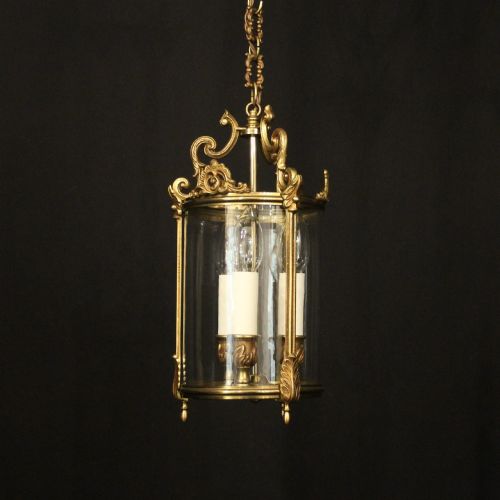
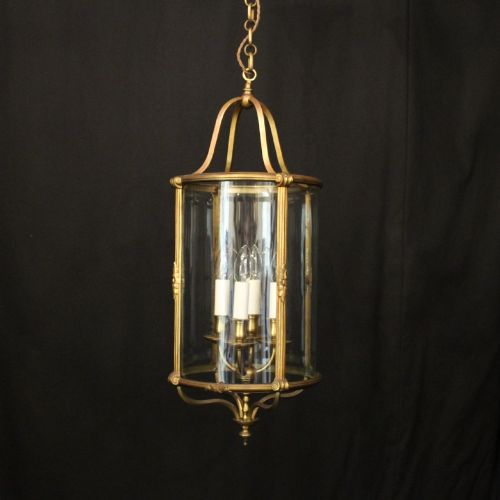
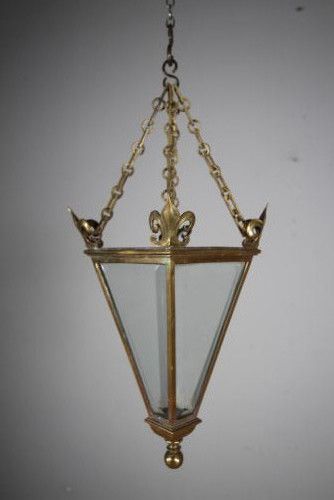
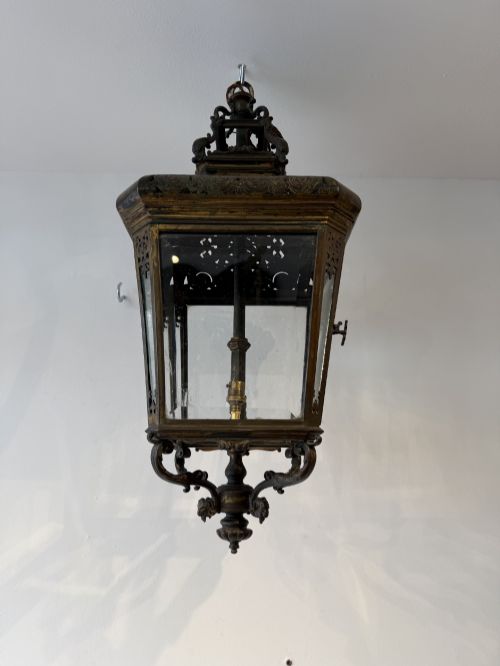
These bronze vestibule lantern designs bring architectural weight and clear illumination to entrance halls, drawing primarily on French Neoclassical and Louis XVI traditions.
Bronze Vestibule Lantern
A bronze vestibule lantern is a hanging light fixture designed to illuminate entrance halls, stairwells, and transitional spaces with formal presence. When you search for this phrase, you are looking at substantial ceiling-hung lighting featuring metal frameworks enclosing glass panels.
The versions you are most likely to meet on this page span from the early nineteenth century through to the 1930s. They appear frequently in French Neoclassical, Louis XVI, and Regency styles, alongside later Art Deco interpretations.
Most examples function as hanging lanterns, hall lanterns, or pendant lights suspended by chains or rods. They combine structural metal frames with glass panels, accommodating internal electric conversions or original candle arrangements.
How they were made
Makers constructed these lanterns using cast bronze, brass, and gilded or silvered bronze frameworks. Metal components were cast, chased, and joined to support transparent, frosted, or etched glass panels.
Surface treatments involved applying gold leaf or chemical finishes to bronze and brass bases. Glass elements were mouth-blown, cut, or acid-etched to diffuse light within the hall.
Bronze Vestibule Lantern Retail Price Guide 2026
Typical asking prices for bronze vestibule lantern among the pieces listed under this phrase on Sellingantiques today, from the lower quarter to the upper quarter. They describe what is for sale here now, not the wider market.
Listings span periods from the nineteenth century through the 1930s, featuring bronze, brass, and glass configurations.
What varies in quality
Quality rests in the crispness of the bronze casting and the depth of the original gilding or silvering. Finer pieces display sharply defined neoclassical ornament, whereas simpler utilitarian items rely on plain brass sheet construction.
The weight of the cast metal and the thickness of the cut or etched glass separate standard production from high-grade architectural lighting. Hand-chased mounts and heavy suspension chains indicate superior workshop standards.
The Bronze Vestibule Lantern Glossary
- Gilt bronze
- Bronze that has been coated with a layer of gold or gold leaf. This finish provides a warm, reflective surface suited to formal interior lighting.
- Frosted glass
- Glass treated to diffuse light evenly across a room. It softens internal glare while maintaining structural clarity within the lantern frame.
- Etched glass
- Glass decorated with acid or abrasive techniques to create surface patterns. This treatment adds decorative detail to the enclosing panels of the fixture.
- Regency
- A British design period spanning the early nineteenth century characterised by classical revival motifs. Pieces from this era often incorporate austere geometric lines and Greco-Roman ornaments.
- Louis XVI style
- A French design movement drawing on classical antiquity with symmetrical layouts and crisp rectilinear forms. It frequently employs floral swags, ribbons, and urn motifs on metalwork.
Bronze Vestibule Lantern: Frequently Asked Questions
Where should a bronze vestibule lantern hang?
These lanterns suit entrance halls, high-ceilinged corridors, and stairwells where overhead suspension is practical. Their proportions require adequate vertical clearance to allow doors to swing freely underneath.
Positioning them centrally draws the eye upward and establishes a formal tone at the threshold of a property.
How do I determine the period of a lantern?
Dating relies on stylistic markers such as French Neoclassical or Art Deco details, alongside the manufacturing techniques visible in the metal casting and glass panels. Nineteenth-century examples often feature hand-chased bronze mounts.
Later pieces from the 1920s and 1930s tend to show cleaner lines and simplified brass structures reflecting changing interior aesthetics.
Are these lanterns wired for modern electricity?
Most surviving examples have been adapted for modern electrical supplies during their working lives. Internal lamp holders are fitted within the metal frame to accommodate standard bulbs.
Rewiring should be inspected by a qualified electrician to ensure safety compliance with current domestic standards.
What is the difference between bronze and brass lanterns?
Bronze is an alloy of copper and tin, offering a heavier weight and a darker, richer natural tone that accepts gilding well. Brass is an alloy of copper and zinc, generally presenting a brighter yellowish metallic appearance.
Both materials were utilised across different periods, with bronze typically reserved for higher-status decorative pieces.