



Hanging Copper Light
A hanging copper light brings warmth and character to an interior, and these pieces span the Victorian period through to the 1930s.
Hanging Copper Light
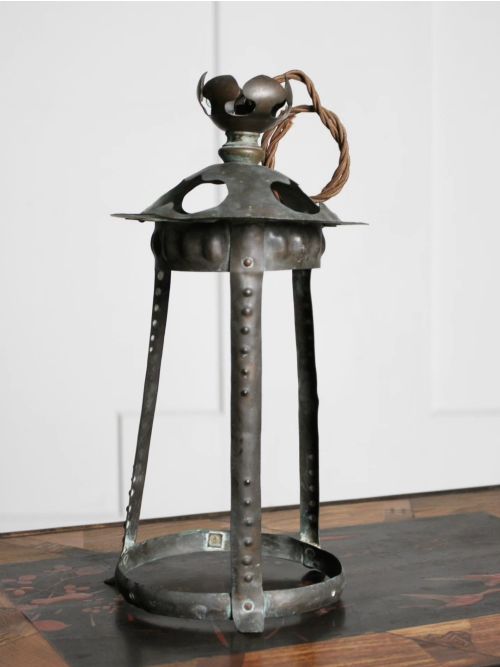
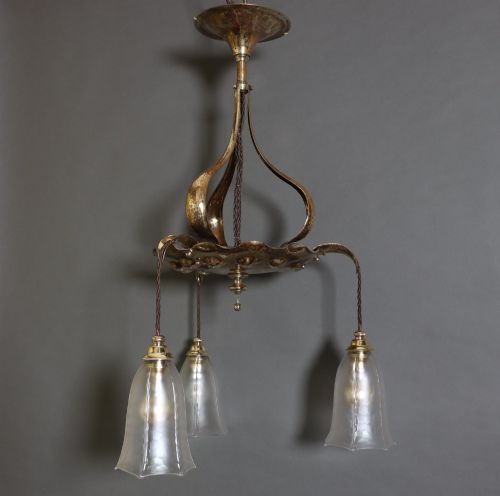
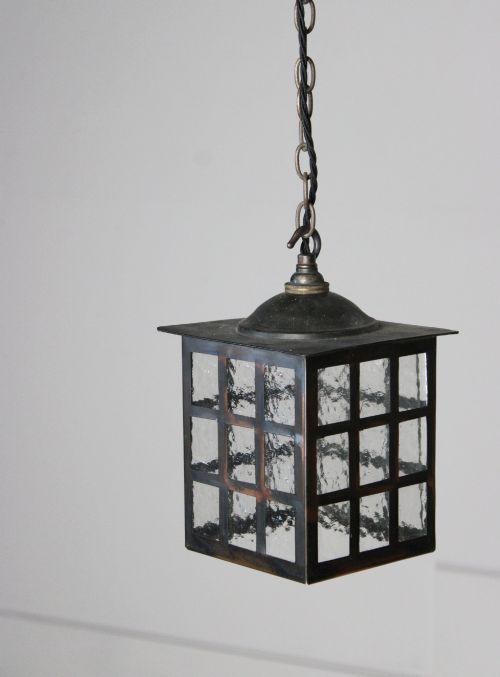
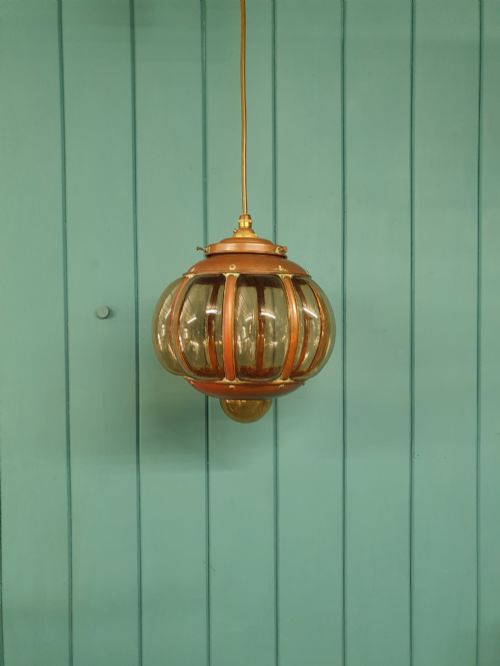
A hanging copper light encompasses pendants, ceiling lights, and lanterns originating from the nineteenth century up to the 1930s. The selection on this page leans heavily towards Edwardian lanterns and Arts and Crafts pendants, alongside Art Deco designs.
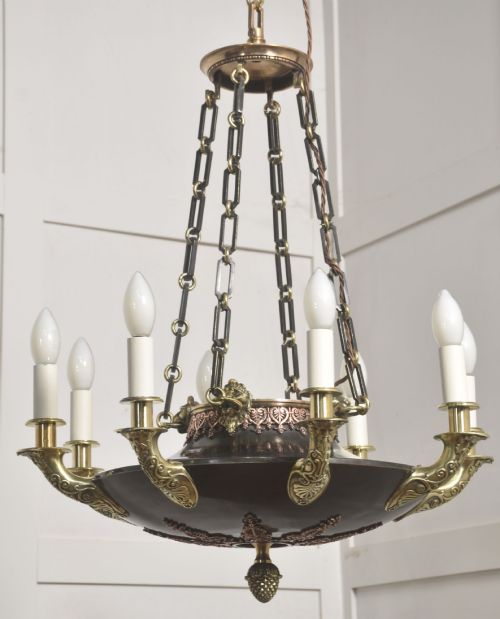
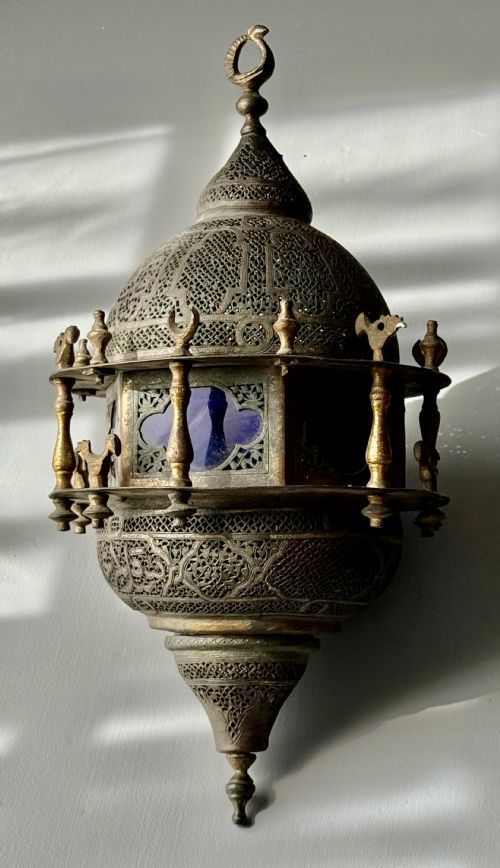
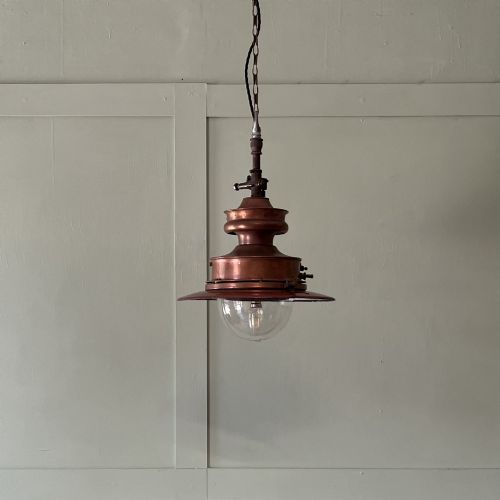
Forms range from simple nautical pendants and railway lanterns to large porch lanterns and multi-light chandeliers. These pieces combine utilitarian origins with decorative revivals, including Moorish and Empire styles.
How they were made
Makers utilised hammered and spun copper sheets combined with structural brass, iron, and wrought elements. Pierced work and riveted seams feature prominently in lanterns and Arts and Crafts fixtures.
Glazing takes the form of clear, frosted, opaline, or smoked glass panels, sometimes moulded or curved to fit cylindrical and multi-sided frames.
Listings feature copper alongside brass, iron, and smoked glass across Victorian, Edwardian, and Art Deco periods.
What varies in quality
Quality rests in the weight of the metal gauge and the precision of the hand-beaten or pierced details. Superior examples exhibit robust construction with integrated cast brass mounts rather than flimsy soldered joints.
The sophistication of the design dictates distinction, moving from utilitarian railway and trade fixtures to artistic commissions by named French and English workshops.
Jean Gauthier
The Hanging Copper Light Glossary
- Pendant light
- A single light fixture suspended from the ceiling by a chain, cord, or metal rod. These often direct illumination downwards through glass shades or open lantern frames.
- Smoked glass
- Glass treated to achieve a dark, translucent finish that softens bulb glare. It appears frequently in nautical and industrial hanging lights.
- Moorish Revival
- An architectural and decorative style incorporating intricate geometric piercing and Islamic motifs. Lanterns in this style utilise pierced brass and copper panels.
Hanging Copper Light: Frequently Asked Questions
How do I hang a heavy copper lantern safely?
Suspension requires adequate ceiling joists or a proper metal hook capable of supporting the combined weight of the copper frame and glass panels. Wiring should be routed through the original hanging chain or stem to maintain structural integrity.
Professional installation by a qualified electrician ensures the fixture meets current safety standards while preserving historical metalwork and old bulb holders.
Can I use modern LED bulbs in these antique lights?
Modern LED bulbs work well inside antique glass and copper shades because they emit significantly less heat than traditional incandescent lamps. This protects vintage wiring and fragile glass panels from thermal stress.
Selecting warm white LED bulbs preserves the intended amber glow of copper surfaces and smoked or opaline glass.
How should I clean aged copper and brass?
Preserving the natural patina involves dusting with a soft dry cloth and avoiding abrasive metal polishes that strip historical surface character. Gentle cleaning removes surface grime without destroying the darker tones accumulated over decades.
Glass panels can be removed carefully for washing with mild soapy water before being dried and re-secured in their metal frames.
What is the difference between an Edwardian and a Victorian lantern?
Victorian copper hanging lights often lean towards heavy utilitarian designs, such as railway and industrial bulkhead fixtures, built for durability. Edwardian pieces frequently introduce softer decorative curves and refined Arts and Crafts aesthetics.
Victorian pieces tend to use heavier iron framing, whereas Edwardian variants experiment more with lighter copper spinning and decorative glass panels.