


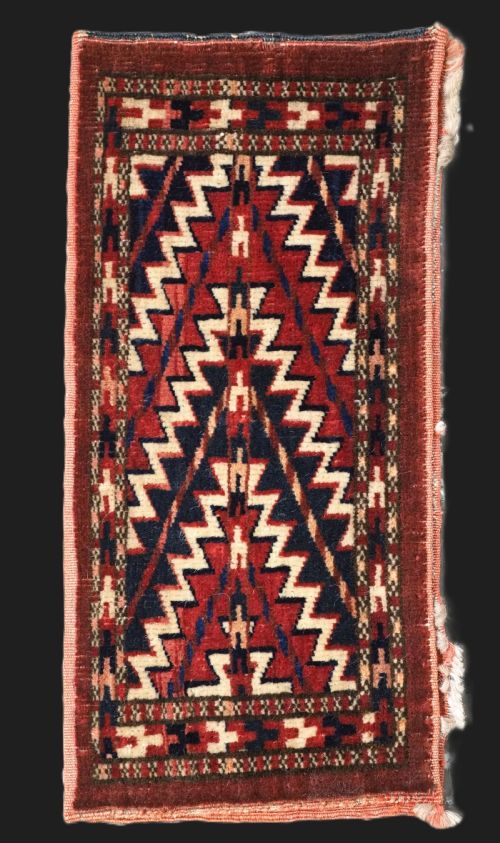


Handwoven Wool Bag Face
A handwoven wool bag face is a surviving fragment of nomadic utility, prized by collectors for its dense tribal iconography and tactile connection to nineteenth-century weaving traditions.
Handwoven Wool Bag Face
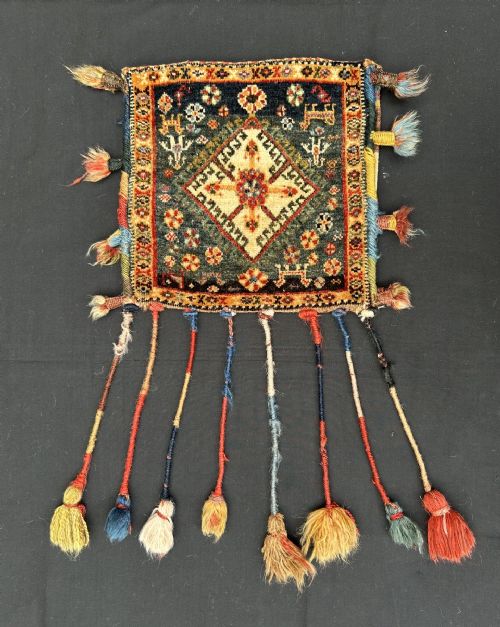
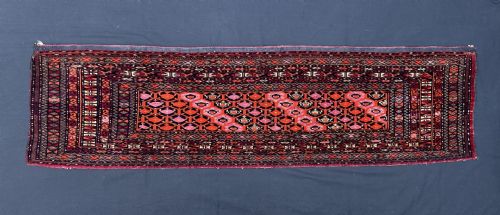
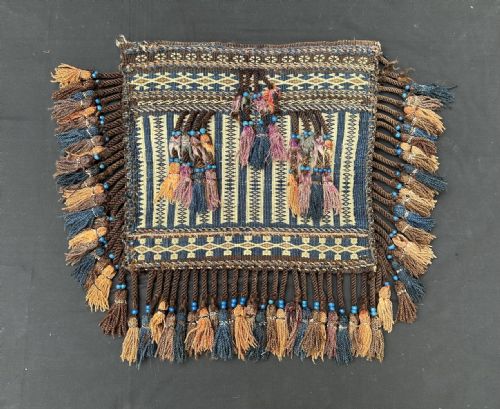
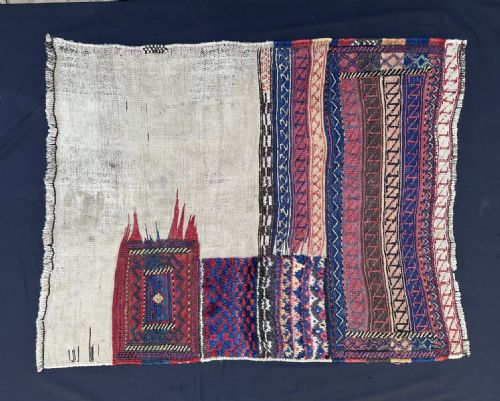
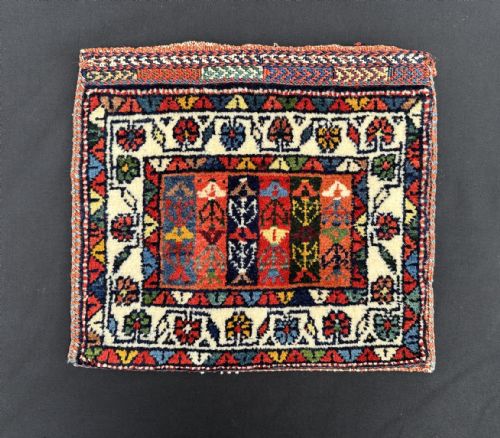
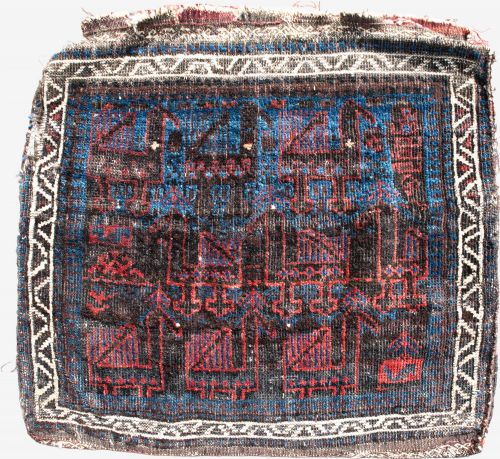
A handwoven wool bag face represents the front panel of a utilitarian nomadic container, detached from its original backing or preserved as a cushion. These fragments originate primarily from Persian, Turkmen, and Baluch tribal groups working during the nineteenth and early twentieth centuries.
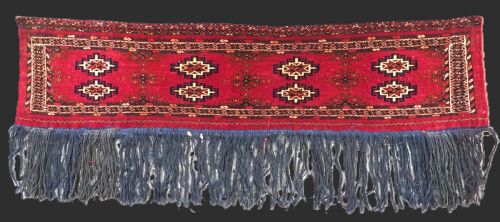
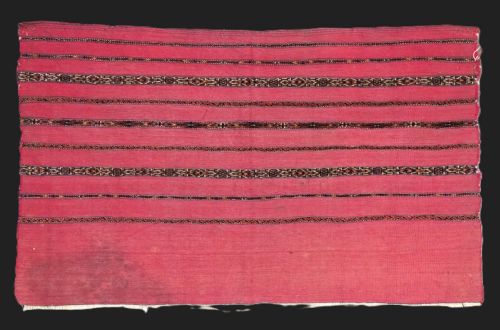
The objects take several forms, including vanity bags, storage bags, and larger saddlebag fronts designed for transport by horse, camel, or donkey. Collectors will frequently encounter Turkmen torbas and chuvals alongside Persian qashqa'i and afshar panels on this page.
Makers produced these panels for personal domestic use rather than export, embedding specific tribal motifs and clan patterns into the dense weave. Each piece functions as a portable archive of nomadic design, distinct to the region and workshop that produced it.
Assessing quality in tribal fragments
Quality rests upon the tightness of the knotting, the precision of the geometric layout, and the brilliance of the natural dye palette. Finer examples display intricate drawing within the guls and a supple handle to the wool.
The survival of crisp secondary details, such as original side cords or supplementary silk accents, elevates the standing of a textile. Wear remains acceptable when the underlying structure and tribal motifs retain their visual strength.
Nomadic weavers frequently tucked small glass beads into the pile to ward off the evil eye.
Sariq Tribe·Baluch Tribes·Lori-Bakhtiari Nomads·Afshar Tribes·Tekke Turkmen·Yomut Turkmen·Ersari Tribes·Shahsavan panel·Khamseh
The Handwoven Wool Bag Face Glossary
- Gul
- A medallion or repeated octagonal motif used extensively in Turkmen tribal weaving. These symbols often identified specific clans or regional weaving groups.
- Torba
- A small horizontal storage bag traditionally hung on the walls of a nomad tent. They feature detailed face panels designed to display tribal status.
- Chuval
- A large tent storage bag used for bedding or household goods. The surviving faces showcase complex repeat patterns.
- Chanteh
- A small personal vanity bag or container woven by nomads for carrying small possessions. These pieces often feature particularly fine knotting.
- Khorjin
- The Persian term for a double-sided saddlebag designed for transport. Surviving bag faces represent the separated fronts of these utilitarian objects.
Handwoven Wool Bag Face: Frequently Asked Questions
What is a bag face?
A bag face is the decorative front panel of a nomadic container, separated from its original backing over decades of use. These panels were preserved for their intricate patterns and sturdy construction.
Nomads originally used these containers for storage and transport before collectors mounted or adapted the fronts into decorative wall hangings and cushions.
How were these bags used?
Nomadic families utilised these textiles inside tents and on animals for grain storage, bedding, and personal belongings. Smaller versions served as vanity cases or transport pouches.
Every format fulfilled a practical purpose within daily tribal life, reflecting the domestic requirements of nineteenth-century weavers.
How do I care for wool textiles?
Protect antique wool textiles from direct sunlight to prevent natural dyes from fading over time. Gentle vacuuming through a mesh screen helps remove dust without disturbing the pile.
Avoid moisture and professional chemical cleaning unless handled by a specialist familiar with antique vegetable-dyed wool.
How can I tell tribes apart?
Tribal attribution relies on specific structural patterns, colour palettes, and repeating motifs such as guls. Turkmen weavers favoured deep reds and octagonal medallions, while Persian groups employed varied blues and complex geometric lattices.
Comparing knot counts and secondary border designs further clarifies the origin of each piece.