



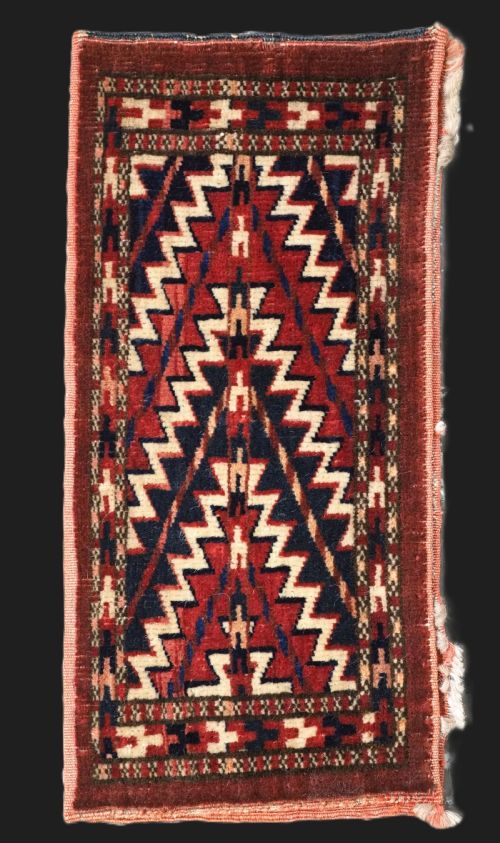

Nomadic Turkmen Woven Bag
When you search for a nomadic turkmen woven bag, you encounter the portable utility weaving of Central Asian tribes made to carry household goods and possessions.
Nomadic Turkmen Woven Bag
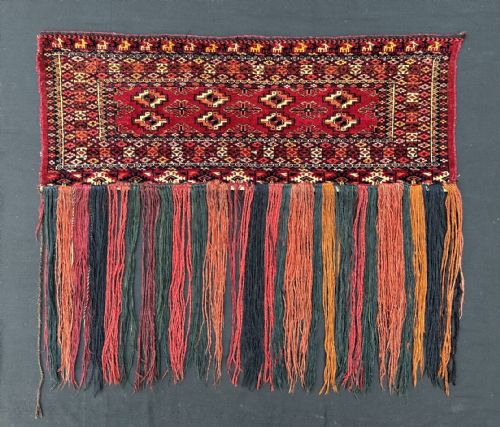
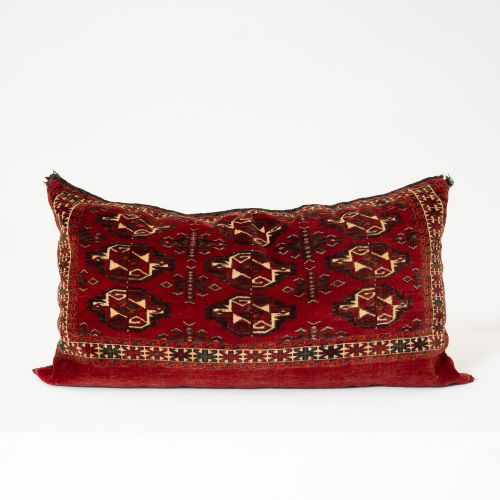
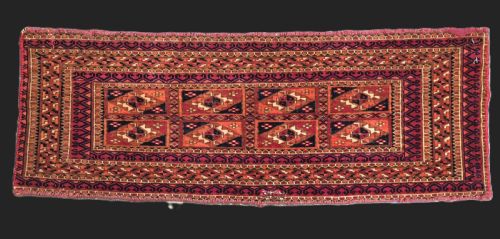
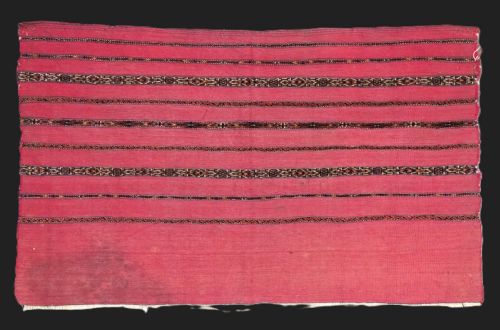
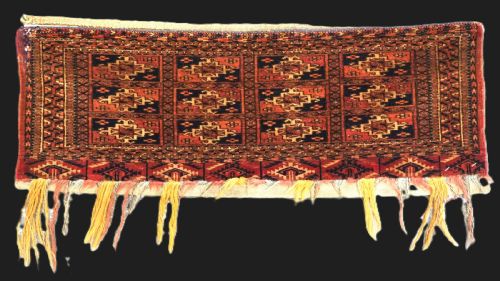
Most examples originate from nineteenth and early twentieth-century communities including the Tekke, Yomut, Saryk, Ersari, and Salor tribes. Pieces range from complete bags retaining their plain weave backs and hanging loops to individual bag faces and surviving fragments.
Materials and construction
Weavers constructed these pieces primarily using hand-spun wool for the pile and foundation, often supplemented with cotton, linen, and occasional silk highlights. Natural dyes provided the rich palette characteristic of these textiles, anchoring the deep reds, ivory grounds, and contrasting motifs.
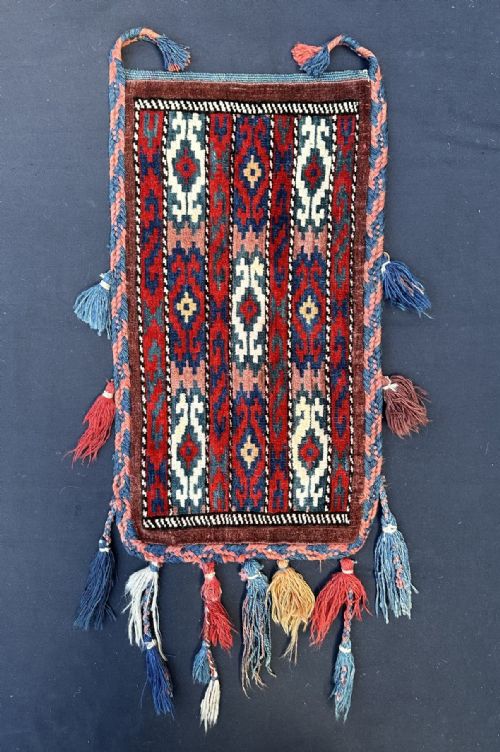
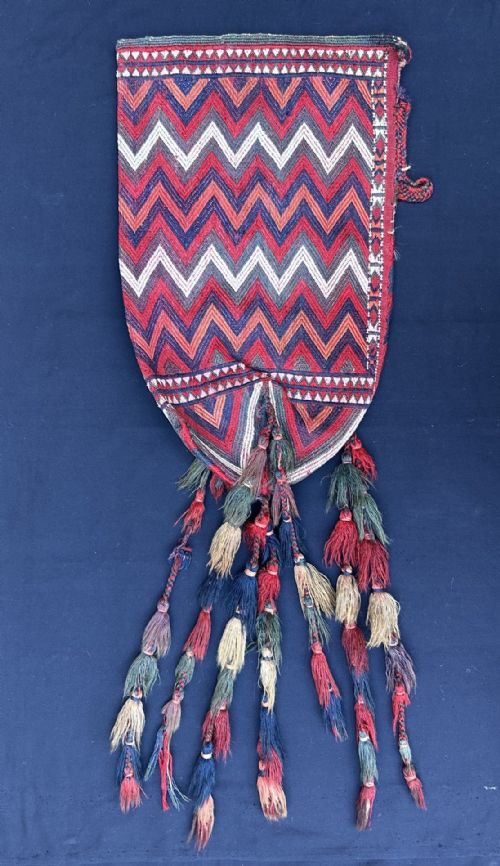
Structures vary between pile-woven surfaces displaying complex tribal guls and banded flatweave techniques. Many items incorporate functional elements such as plain weave backs, tassels, and hanging loops designed for daily utility within nomadic life.
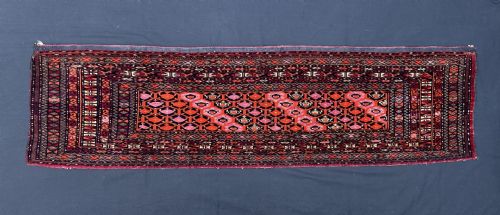
Object forms span torbas, chuvals, kap, jollar, uk bash, and spindle bags from diverse Central Asian locations.
Standards of execution
Quality rests in the precision of the knotting and the clarity of the tribal motifs, such as repeating gul arrangements or specialised designs like the kepse and aina gul. Finer density in the weave and careful handling of natural dye saturation distinguish superior examples from standard utility work.
The survival of original structural components like plain weave backs, hanging loops, and complete borders elevates a piece. The crispness of drawing within the primary medallions and secondary ornaments demonstrates the weaver's mastery of traditional tribal geometry.
Tekke Tribes·Yomut Tribes·Saryk Tribe·Ersari Tribes·Salor Turkoman
The Nomadic Turkmen Woven Bag Glossary
- Torba
- A small storage bag used inside a yurt for holding personal items or utensils. These portable containers often featured elaborate face designs while utilising simpler weaves on the reverse.
- Chuval
- A large storage sack utilised for bedding and heavy household goods. These pieces frequently display multiple rows of primary tribal guls.
- Gul
- A repeating medallion or principal motif used in Turkmen rug and textile design. Each tribal group utilised distinct gul variants to identify lineage and heritage.
- Kap
- A general term for a covered bag or utilitarian pouch. These items protected stored goods from dust and dampness in nomadic dwellings.
- Jollar
- A long, narrow bag used for animal transport or tent storage. They typically feature horizontal format designs suited to their original placement.
Nomadic Turkmen Woven Bag: Frequently Asked Questions
What were Turkmen bags used for?
Nomadic families utilised these woven containers for practical storage inside portable dwellings, organising everything from bedding and clothing to small household implements and spindle tools.
Their robust construction and portable formats allowed possessions to travel safely during seasonal migrations across the Central Asian steppes and oases.
How do I identify different tribal designs?
Tribal attribution relies heavily on the specific repeating medallion patterns, known as guls, along with the structural palette and border arrangements.
Groups such as the Tekke, Yomut, Saryk, and Ersari each employed characteristic motifs like the kepse, aina gul, or specific turreted guls that distinguish their weaving traditions.
Are these pieces complete with backs?
Survival varies considerably among surviving examples, with some retaining their original plain weave backs, hanging loops, and closure systems while others survive as individual bag faces or fragments.
Pieces complete with their original backs and structural attachments offer a clearer picture of their original function and method of suspension.
How should I care for a textile bag?
Proper preservation involves keeping the wool away from direct sunlight to protect the natural dye colours and ensuring adequate ventilation to prevent moisture accumulation.
Gentle vacuuming through a mesh screen helps remove dust without disturbing the pile or delicate flatweave structures.