

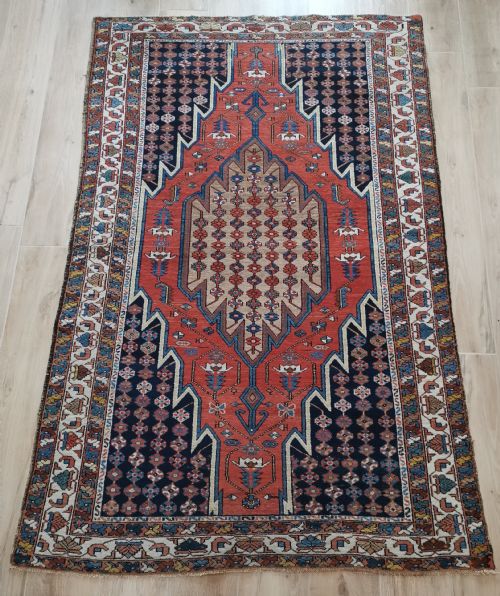


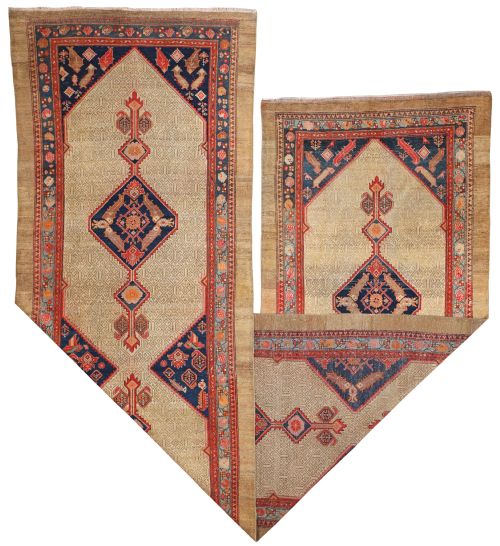


Handwoven Village Wool Runner
These handwoven village wool runner options bring earthy texture and tribal character straight to a hallway.
Handwoven Village Wool Runner
A handwoven village wool runner is a long floor covering produced by tribal and village weavers across Persia, Anatolia, the Caucasus, and Afghanistan. These runners served practical purposes in rural homes, often woven on narrow vertical looms set up in domestic spaces rather than large urban workshops.
The pieces available here stem from various periods between the late nineteenth century and the early twentieth century. Buyers encounter forms ranging from traditional long runners to narrower hallway formats and regional village rugs with elongated proportions.
Originating from specific tribal groups such as the Bakhtiar, Baluch, Kurdish, and Pashtun weavers, these textiles display distinct regional motifs. Each piece carries the vernacular design language of the specific village or encampment where it was knotted.
How they were made
Weavers constructed these textiles using hand-spun wool and natural dyes, occasionally incorporating camel hair or cotton foundations. The wool was sheared from local flocks, hand-carded, and spun into sturdy yarns capable of withstanding heavy domestic use.
Dyers utilised plant and mineral sources to achieve rich colour palettes that deepen gracefully over time. Natural dyestuffs reacted organically with the wool fibres, producing subtle tonal variations across the field of the rug.
Handwoven Village Wool Runner Retail Price Guide 2026
Typical asking prices for handwoven village wool runner among the pieces listed under this phrase on Sellingantiques today, from the lower quarter to the upper quarter. They describe what is for sale here now, not the wider market.
Listings span production dates from the eighteen-eighties through the nineteen-thirties, featuring wool, cotton, camel hair, and natural dyes.
What varies in quality
The quality of a handwoven village wool runner depends upon the density of the knotting and the integrity of the wool. Finer knots permit more intricate geometric and medallion designs to emerge with clarity from the pile.
The stability of the foundation and the purity of the natural dyes further separate examples. Tightly beaten weft threads and durable wool ensure the runner retains its structural coherence through decades of foot traffic.
The Handwoven Village Wool Runner Glossary
- Hand-spun wool
- Wool yarn processed by hand rather than factory machinery. This traditional method leaves natural lanolin in the fibre, giving the runner a tactile handle and resilience.
- Natural dyes
- Colourants derived from plants, roots, and minerals rather than synthetic chemicals. These dyes mellow into harmonious patinas as they age.
- Prayer rug
- A small format rug featuring a mihrab or niche design used historically for daily prayers. These pieces often display focused directional symbolism in their layout.
- Kilim end
- Flatwoven sections at the terminal ends of a knotted pile rug. These protective bands prevent the pile from unravelling.
- Camel hair
- Undyed fibre sourced from camels, utilised by village weavers for its natural warmth and durable golden-brown tone.
Handwoven Village Wool Runner: Frequently Asked Questions
Where should I place a village runner?
These narrow textiles suit hallways, corridors, and narrow passageways where their elongated proportions fit comfortably.
They also function effectively in kitchens and bedside spaces, adding warmth and traditional character to high-traffic areas.
How do I care for an antique wool runner?
Gentle, regular vacuuming without a rotating brush roll keeps dust from settling deep into the wool pile.
Professional specialist cleaning is recommended every few years to preserve the natural lanolin and dyestuffs.
Are these runners made with natural materials?
The pieces utilise traditional wool, hand-spun wool, and natural dyes sourced by village and tribal makers.
Some examples also incorporate cotton foundations or camel hair elements depending on the specific regional tradition.
How do I identify different regional styles?
Regional styles reveal themselves through specific colour palettes, tribal motifs, and structural weaving techniques unique to areas like the Caucasus or Anatolia.
Persian village pieces often display geometric medallions, while Caucasian and Afghan examples frequently feature bold tribal polygons.