


Handwoven Tribal Hallway Runner
A handwoven tribal hallway runner brings geometric discipline and rich wool texture to long corridors.
Handwoven Tribal Hallway Runner
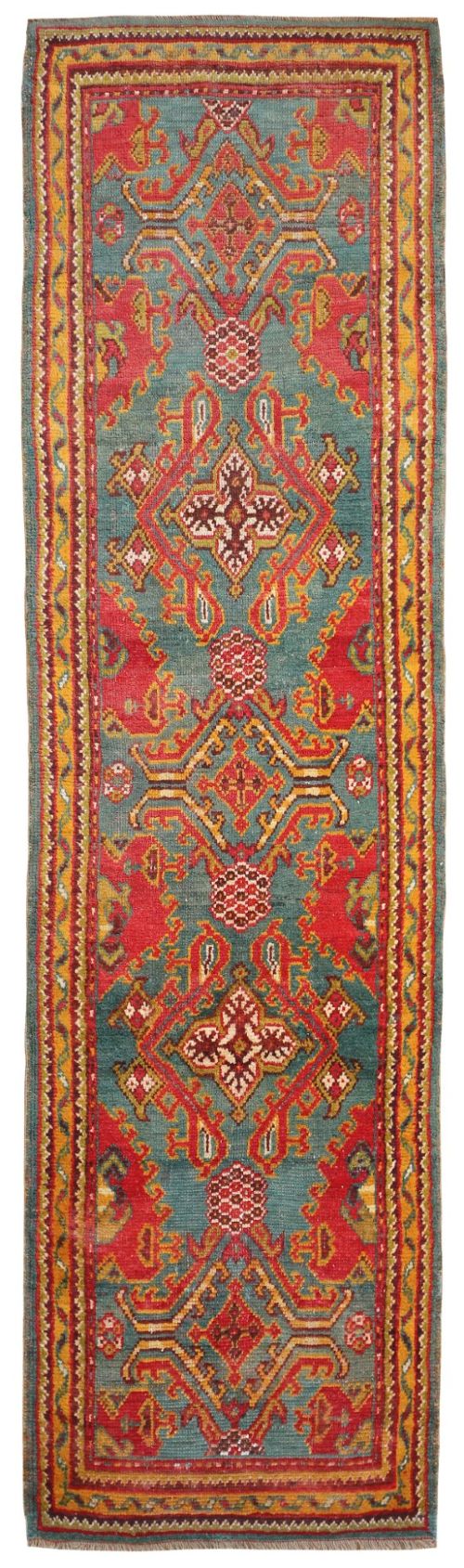
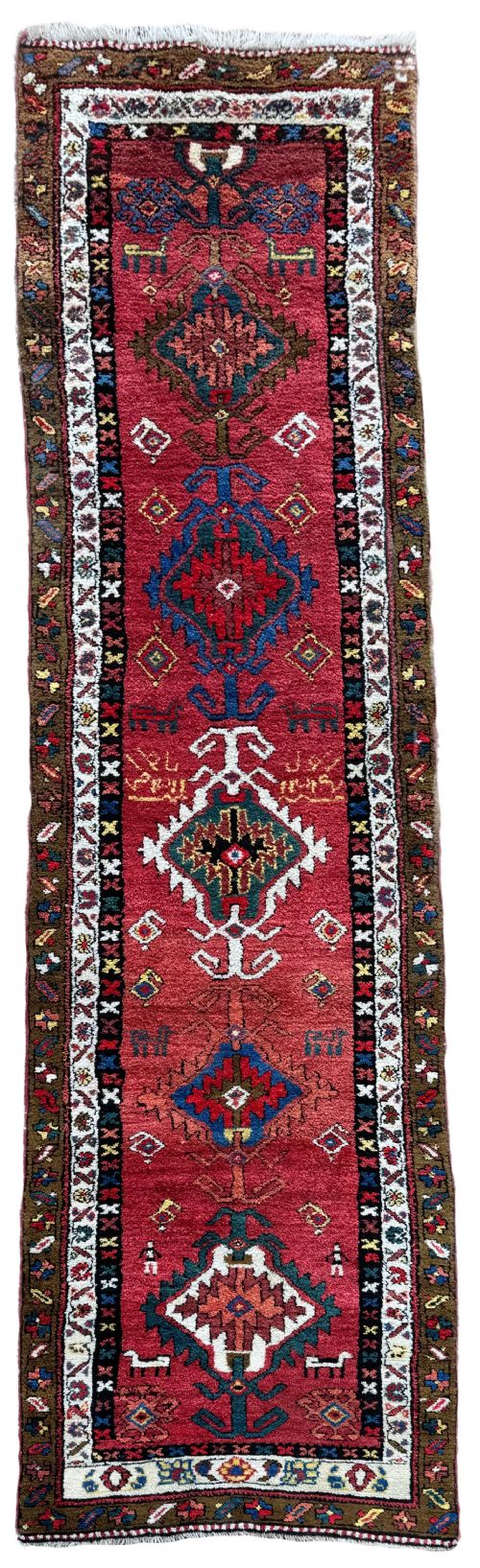
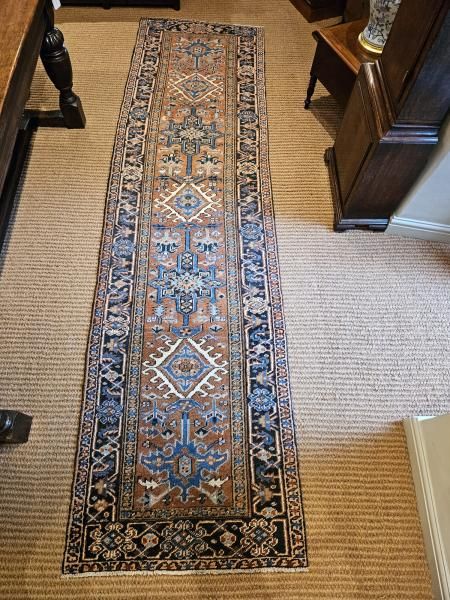
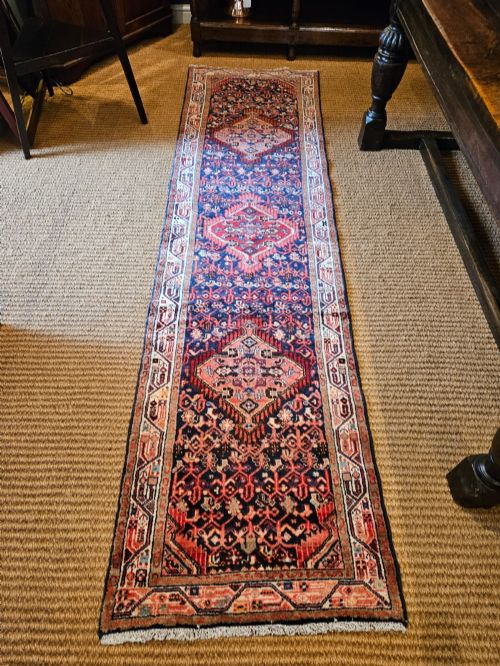
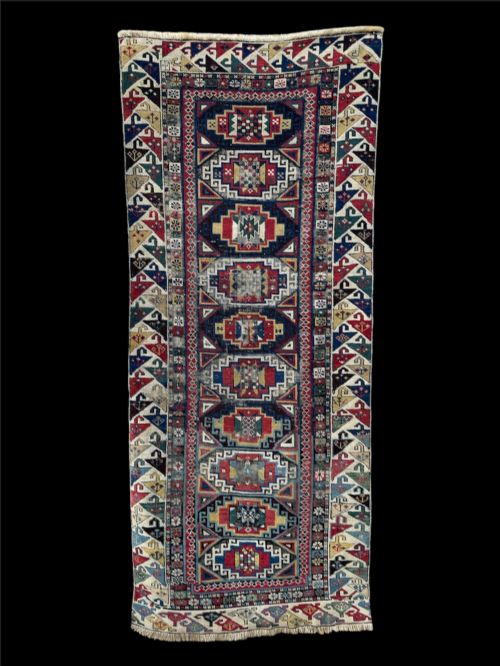
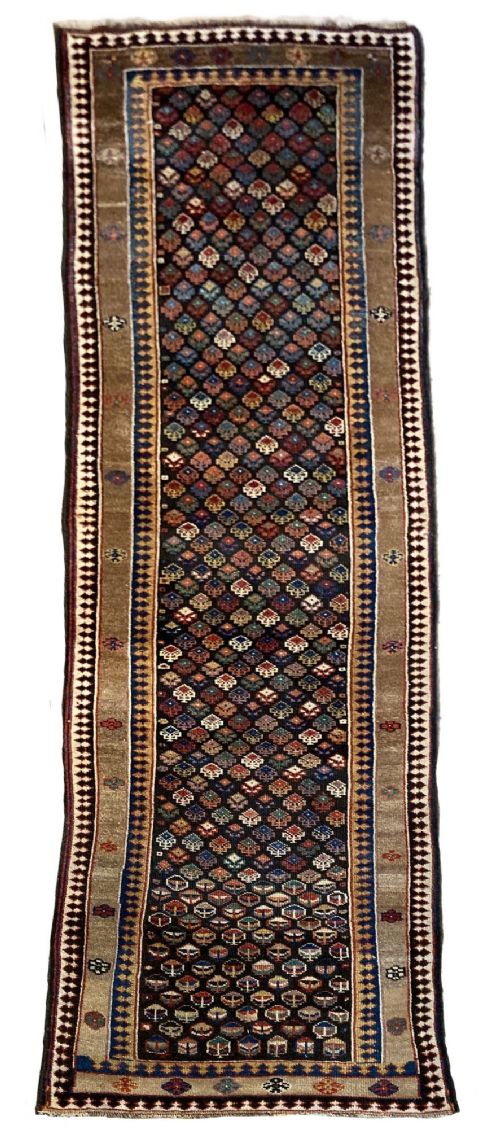
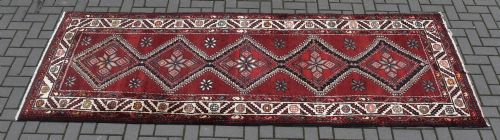
A handwoven tribal hallway runner is a narrow, elongated textile designed specifically for corridors and passages, originating from regional weaving traditions across Persia, the Caucasus, Anatolia, Central Asia, and North Africa. These pieces range from compact formats to extensive lengths exceeding five metres, proportioned strictly for narrow spaces. The selection on this page draws heavily from Persian Heriz, Hamadan, and Kurdish workshops, alongside Caucasian Shirvan, Karabagh, and Afghan tribal weaves.
Makers shaped these long formats using traditional village and nomadic techniques that date across the nineteenth and early twentieth centuries, spanning periods from the 1870s through to the 1930s. Buyers will encounter both dense pile variations and flatwoven kilim structures, often distinguished by repetitive geometric medallions, guls, and border guards. Each regional group utilises distinct palettes, shifting from deep indigo grounds to mellow olive green backgrounds.
Selecting the correct format requires noting the exact width and length, as many antique corridor pieces deviate from modern standard dimensions. Narrow configurations under one metre wide dominate the available selection, suiting tight passage architectures. Understanding the regional attribution helps clarify whether a runner originates from a specific Caucasian corridor or a Western Persian tribal centre.
Materials and construction
These textiles rely on pure wool for both the pile and the foundational warps and wefts, occasionally incorporating natural camel hair for undifferentiated brown tones or structural strength alongside cotton foundations in later pieces. Weavers knotted or flatwove these materials by hand on vertical looms, building dense structures designed to withstand heavy foot traffic in domestic hallways. Natural dyes provide the characteristic depth of colour, yielding varied patinas across indigo blues, madder reds, and earthy neutrals.
Flatwoven kilim variants utilise interlocked weft-faced techniques to create pattern without a pile, while piled runners depend on hand-tied knots secured across successive rows of horizontal weft threads. The structural integrity stems from tightly packed wool foundations that hold the geometric motifs firmly in place over decades of use. Natural dye variations create subtle abrash transitions within the wool, marking shifts in dyebath batches along the length of the runner.
Judging quality in tribal weaves
Quality rests upon the crispness of the geometric drawing and the density of the wool foundation, which dictates how sharply the medallions and tribal motifs resolve. Finer knots and tightly beaten wefts produce a firmer handle that lies flat along a hallway floor, whereas looser structures yield a softer, more pliable drape. The purity and saturation of the natural dyes further separate standard village production from exceptional weaving, with rich undertones that improve as the wool ages.
The precision of the border guards and the consistency of the narrow width over long distances reflect the weaver's control of the loom tension. Runners that maintain straight edges and balanced proportions from end to end demonstrate superior craftsmanship during production. Additionally, the preservation of the original outer selvedges and end finishes preserves the structural integrity and historical completeness of the textile.
Heriz·Hamadan·Shirvan·Karabagh·Bakhtiari
The Handwoven Tribal Hallway Runner Glossary
- Abrash
- Natural tonal variation within a field of colour caused by changes in hand-spun wool batches or successive dyebaths. This variation creates subtle horizontal bands of shading that signal traditional dyeing methods.
- Gul
- A medallion or repeating octagonal stamp motif frequently found in tribal and nomadic rug designs from Central Asia and the Caucasus. These graphic emblems often identify the specific weaving tribe.
- Kilim
- A flatwoven textile produced without a pile by tightly interweaving warp and weft threads. These runners offer a lighter profile and a smooth surface texture.
- Selvedge
- The reinforced outer edge of a runner formed by wrapping extra warp threads to prevent fraying. Original selvedges indicate a well-preserved textile.
- Warp
- The vertical foundation threads stretched tightly on the loom before weaving begins. The visible ends of these threads often form the fringe at either end of the runner.
Handwoven Tribal Hallway Runner: Frequently Asked Questions
How do I choose the right length?
Measure your hallway while leaving a consistent margin of exposed floor around the perimeter of the runner. Account for doorways and clearance requirements at either end of the passage before selecting a specific length.
Longer corridors accommodate extensive formats exceeding four metres, whereas tighter entries require narrower dimensions to maintain balance within the architectural space.
Are these runners suitable for heavy traffic?
Pure wool construction and dense hand-knotted piles provide natural resilience against regular foot traffic in domestic hallways. The resilient lanolin present in antique wool helps repel everyday dirt and cushions the foundation fibres.
Placing a quality underlay beneath the runner prevents slipping and cushions the weave against hard flooring surfaces, extending the functional lifespan of the textile.
How do I identify a tribal design?
Tribal designs feature geometric motifs, stylized animals, and repeating medallions rather than the fluid floral curves typical of court workshop carpets. These rectilinear patterns reflect the nomadic or village origins of the weavers.
Examining the borders and field motifs reveals regional characteristics tied to specific groups such as the Kurdish, Baluch, or Caucasian traditions.
What is the difference between pile and kilim?
Piled runners feature a dense vertical surface of knotted wool threads that provide a soft, plush texture underfoot. These structures offer greater warmth and depth of colour variation.
Kilim runners are flatwoven without a pile, resulting in a lighter, reversible textile with a smooth surface that sits flush against hallway floors.