


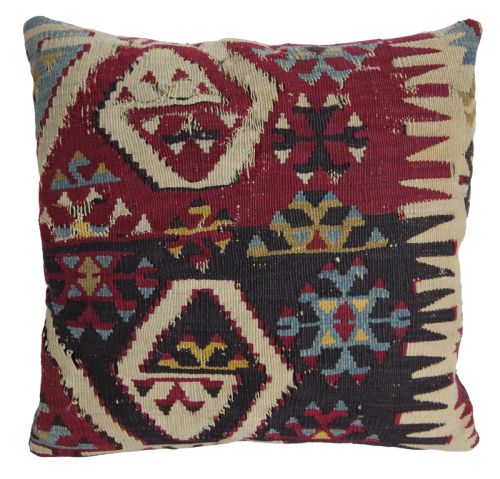


Handwoven Tribal Cushion
A handwoven tribal cushion brings tactile warmth and nomad history into a room through repurposed saddle bags, grain sacks, and kilims.
Handwoven Tribal Cushion
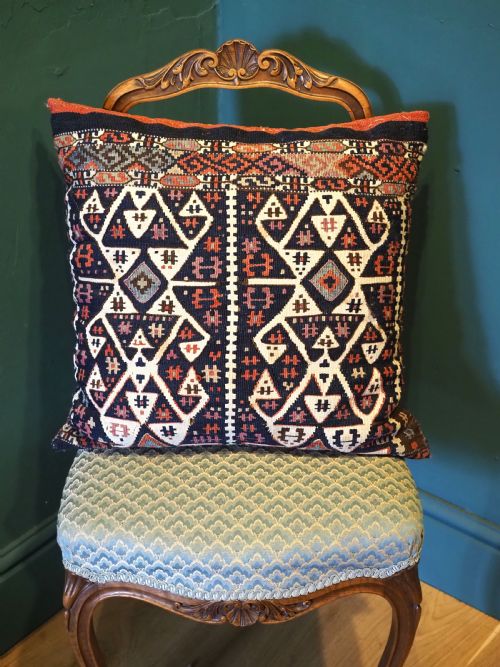
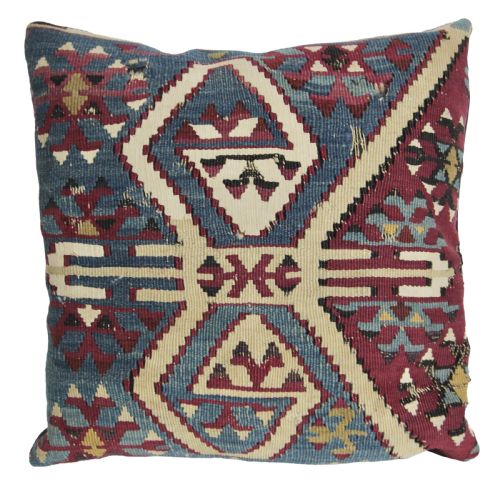
When you examine a handwoven tribal cushion, you are looking at functional nomadic textiles that have been repurposed into soft furnishings for modern interiors. These items originate predominantly as saddle bags, storage sacks, and flatweaves created by tribal groups across Anatolia, Persia, and Central Asia.
The most common examples encountered on this page derive from nineteenth and early twentieth-century village and nomad production. Makers utilised wool and goat hair to form durable containers for daily camp life, which later found new utility as decorative cushions and pillows.
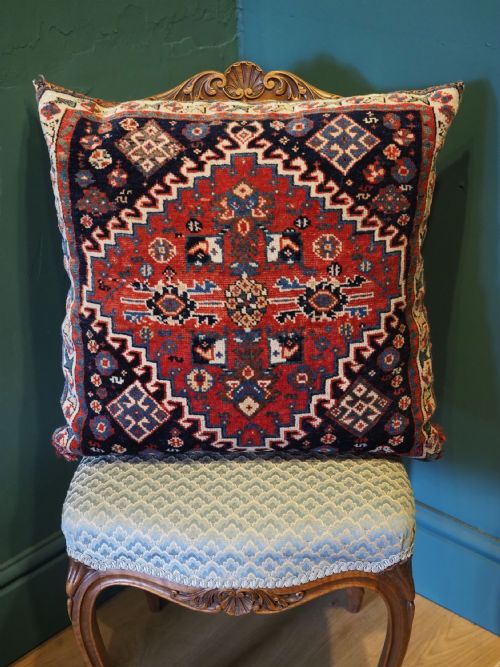
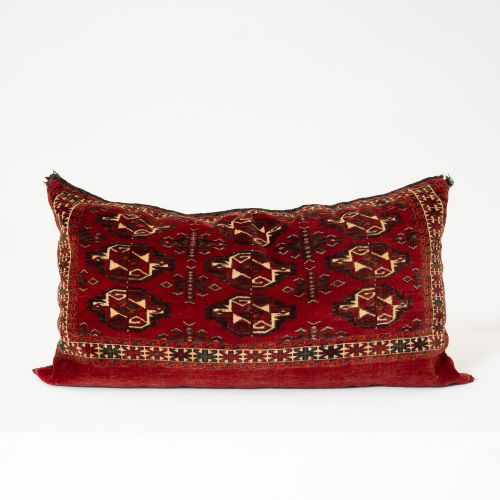
Pieces from specific regional traditions, such as Baluch, Qashqai, Turkmen, and Bakhtiari groups, dominate the selection. Each item retains the distinct geometric or banded designs of its original tribal context, whether formed as a complete bag face or assembled with a plain weave back.
What varies in quality
Quality rests in the tightness of the weave, the clarity of the tribal motifs, and the depth of the natural dyes. Denser knotting and finer wool preparation distinguish sophisticated weaving from simpler utility pieces, creating greater definition in geometric patterns and bag face designs.
Condition and completeness also separate examples, particularly where original backs, complete saddle bag structures, or well-preserved borders remain intact. The integrity of the hand-spun materials and the preservation of early pile or flatweave surfaces determine the standard of each textile.
Many cushions still carry the exact geometry once packed with wheat or bedding by nineteenth-century nomads.
The Handwoven Tribal Cushion Glossary
- Kilim
- A flatwoven textile produced without a pile, commonly utilised for rugs, bags, and cushion covers. This technique creates a smooth, durable surface with crisp geometric patterns.
- Chuval
- A large Turkmen tent-storage bag designed for blankets and bedding. These pieces display distinct gul motifs and translate into substantial decorative cushions.
- Torba
- A smaller storage bag made by Turkmen and other Central Asian tribes for domestic items. They frequently feature banded flatweave designs or rich repeating patterns.
- Yastik
- A traditional Anatolian sleeping or resting pillow face. These smaller formats lend themselves naturally to modern cushion dimensions.
- Mafrash
- A rectangular storage bale or luggage container made by tribes such as the Yomut Turkmen and Shahsavan. The sides and ends are often repurposed into flatweave cushions.
- Khorjin
- A traditional paired saddle bag woven to carry belongings across horses, donkeys, or camels. Surviving faces and complete pairs are frequently converted into matching cushion sets.
Handwoven Tribal Cushion: Frequently Asked Questions
What is a tribal cushion made from?
These items are constructed using hand-spun wool, natural dyes, and occasional goat hair for structural durability. The textiles originate from nineteenth and early twentieth-century nomadic storage bags and flatweaves.
Makers utilised sturdy cotton for foundations and backings on specific regional pieces. The combination of dense wool and natural colourants provides the strength needed for modern domestic use.
How do I care for an antique cushion?
Gentle vacuuming with a low suction setting helps remove surface dust without catching the antique wool fibres. Professional textile cleaning is recommended for deeper maintenance.
Keep the items away from direct, harsh sunlight to protect the natural dyes from fading over time. Rotating the cushions ensures even wear across the surface of the textile.
Where do these tribal pieces originate?
The pieces come from nomadic and village groups across Anatolia, Persia, and Central Asia. Specific regions include Western Persia, the Trans-Caspian steppes, and various tribal territories.
Weavers from groups such as the Qashqai, Bakhtiari, Baluch, and Turkmen produced the original bags and kilims. Each area developed distinct geometric patterns and colour palettes.