

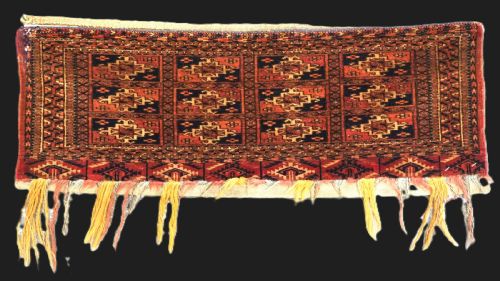


Wool Oriental Cushion
These wool oriental cushion pieces bring nomadic tribal textiles into daily interiors as functional floor and seating accents.
Wool Oriental Cushion
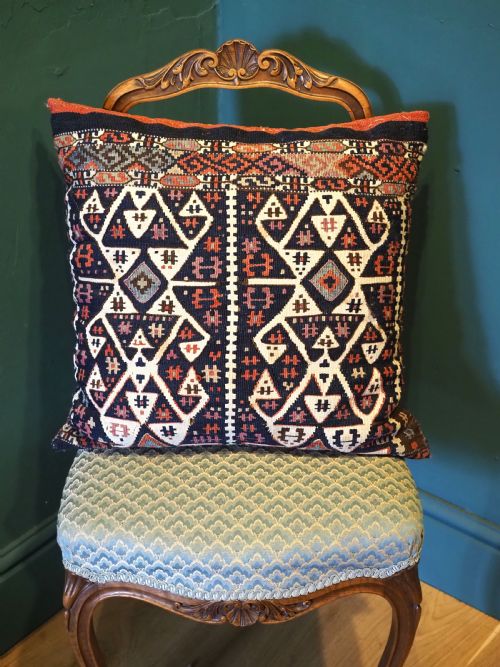
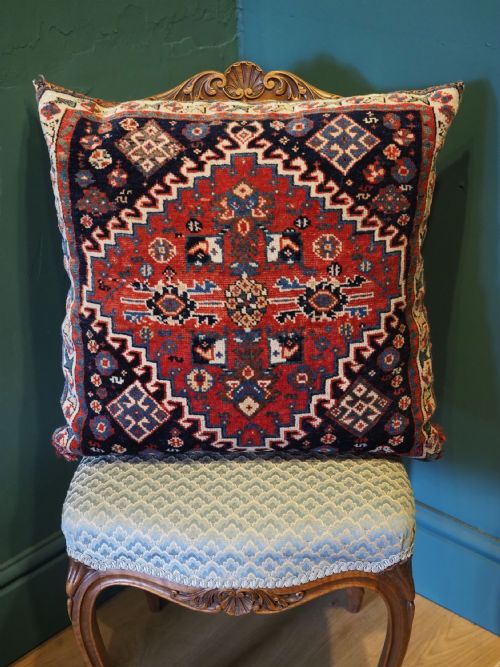
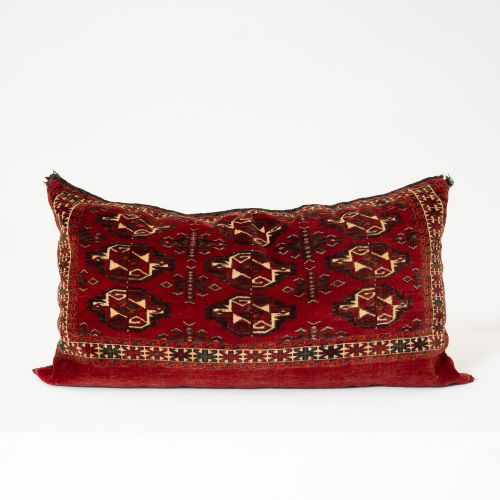
A wool oriental cushion originates from tribal and nomadic traditions across Persia, Anatolia, and Central Asia, utilising fragments of older utilitarian containers. When searching for this phrase, buyers encounter repurposed storage bags, saddle bags, bag faces, torbas, and kilims transformed into soft furnishings. The selection spans the nineteenth century through the early twentieth century, capturing regional weaving practices from groups such as the Qashqai, Baluch, Turkmen, and Shahsevan.
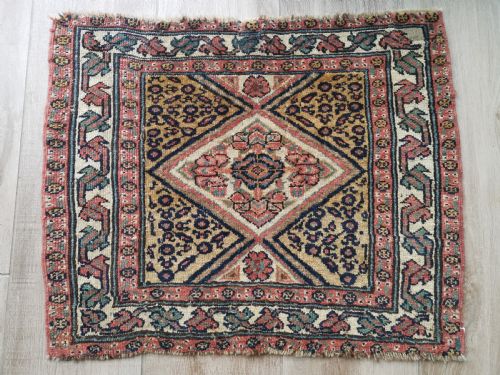
Most examples take the form of square or rectangular cushions constructed from antique woven wool panels paired with canvas or textile backs. These textiles often display geometric motifs, boteh designs, or tribal guls inherited from specific tribal groups. The physical items range from flat-woven kilim structures to piled carpet and bag face constructions.
Materials and construction
The primary material is wool, frequently hand-spun and combined with cotton elements for structural support. Weavers relied on natural dyes and vegetable dyes to create deep, saturated tones across the pile and flat-woven surfaces.
Construction typically involves repurposing genuine nineteenth-century and early twentieth-century tribal weavings, such as saddle bags and storage sacks, into cushion format. The original textile face retains its hand-woven integrity, often incorporating banded weft work or intricate tribal patterns.
Listings feature wool and cotton materials dyed with natural and vegetable dyes across the nineteenth and early twentieth centuries.
Assessing quality in antique tribal cushions
Quality rests upon the integrity and fineness of the original textile face, including the tightness of the knotting or the crispness of the flat-weave. Pieces with dense hand-spun wool and well-preserved natural or vegetable dyes demonstrate superior craftsmanship.
The provenance and condition of the textile element dictate distinction, where distinct regional tribal designs like Turkmen guls or Qashqai motifs remain sharp and complete. The skill in integrating the historic textile with a durable backing while preserving the antique face shapes the overall standard.
The Wool Oriental Cushion Glossary
- Kilim
- A flat-woven carpet or textile produced without a pile, frequently utilised for cushion faces.
- Torba
- A small Turkmen storage bag, the face of which is often converted into a decorative cushion.
- Gul
- A medallion pattern or repeating octagonal motif characteristic of Turkmen and other Central Asian tribal weaving.
- Boteh
- An almond-shaped or paisley motif symbolising life and eternity, commonly found in Persian and tribal designs.
- Saddle bag
- A paired utilitarian container woven by nomads for transport on animals, later separated into individual cushion fronts.
Wool Oriental Cushion: Frequently Asked Questions
What is a wool oriental cushion made from?
These pieces are constructed from authentic antique tribal textiles, utilising hand-spun wool and natural or vegetable dyes.
The textile faces often originate from nineteenth-century saddle bags, storage sacks, and flat-woven kilims created by nomadic groups.
How do I identify different tribal designs?
Tribal designs vary by region, displaying specific geometric motifs, repeating guls, or banded weft work unique to weavers such as the Turkmen, Qashqai, or Baluch.
Examining the colour palette, wool texture, and structural pattern helps connect a piece to its specific nomadic origin.
How should I care for an antique cushion?
Protect the hand-spun wool surface by keeping the cushion away from direct, prolonged sunlight to prevent natural dye fading.
Gentle surface cleaning and occasional rotation maintain the textile integrity of older flat-woven and piled surfaces.
Are these cushions made from old rugs?
Many examples utilise genuine antique bag faces, torbas, and saddle bags rather than newly manufactured carpets.
This method recycles historical nomadic textiles into functional home accessories while preserving traditional weaving techniques.