
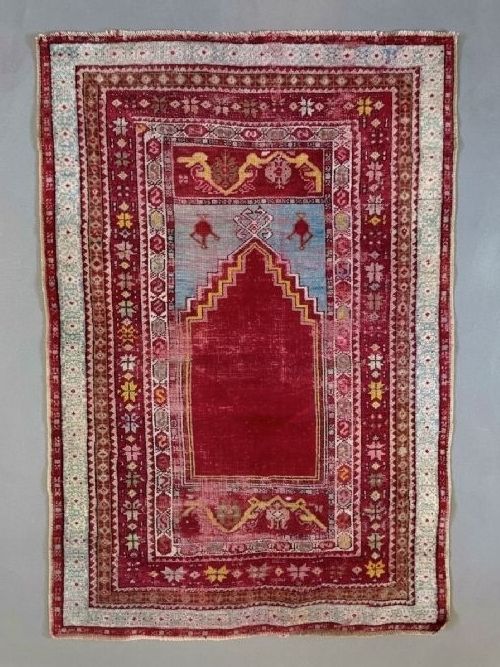

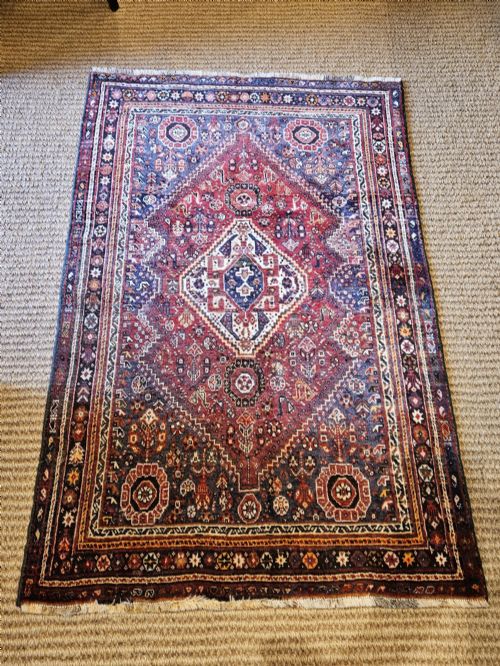
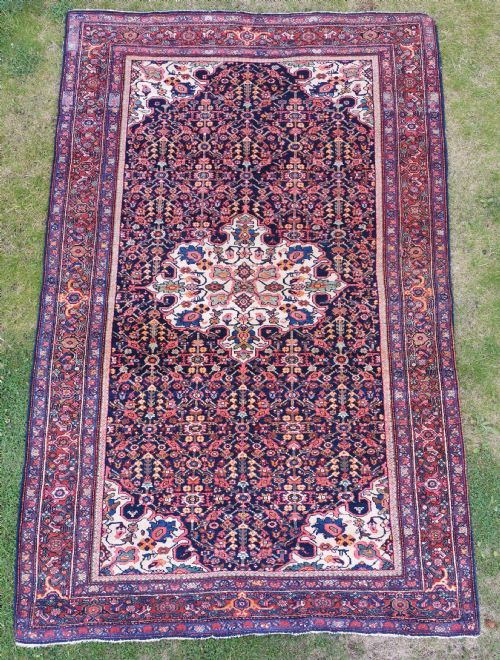
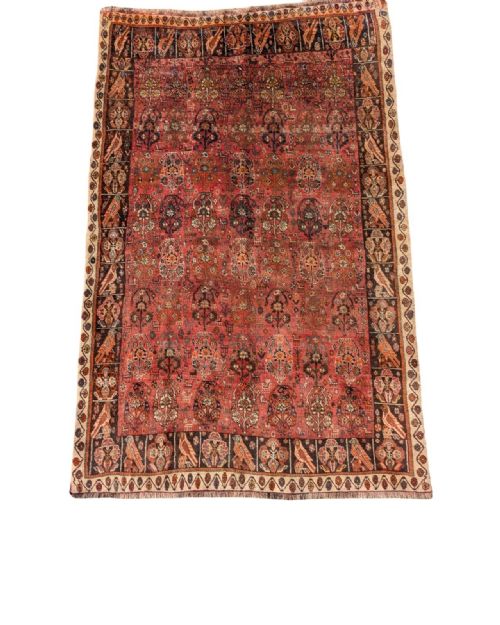
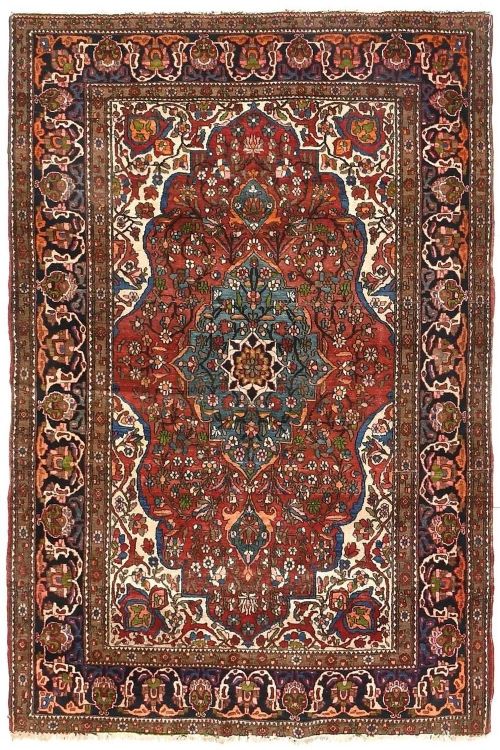
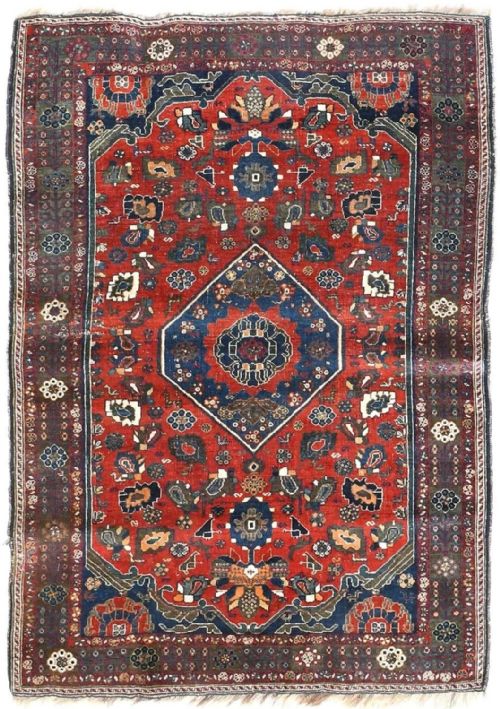
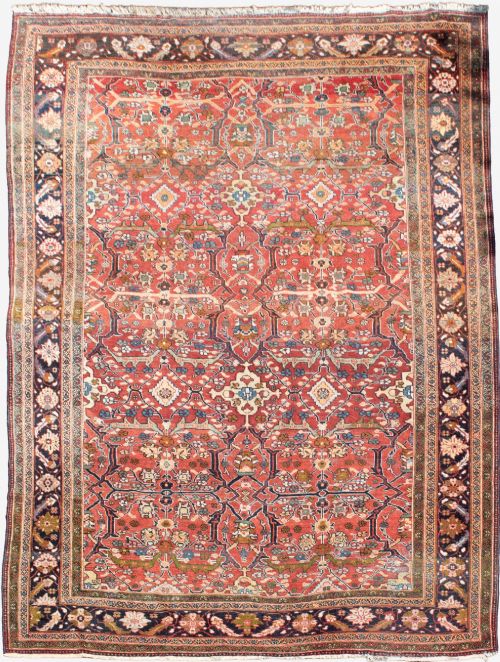
Handwoven Oriental Floor Rug
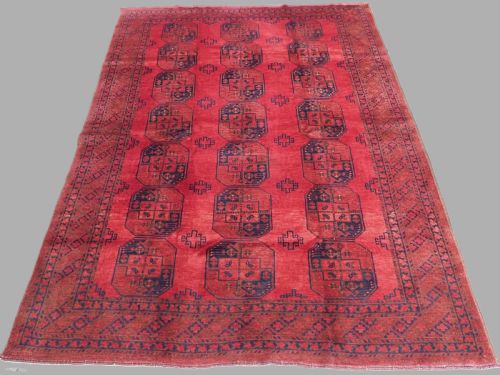
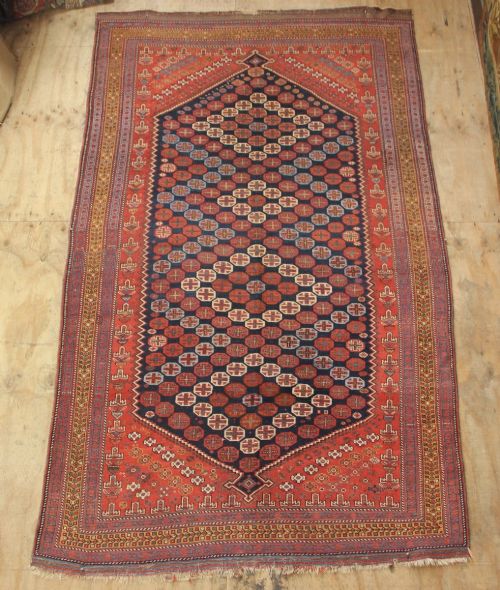
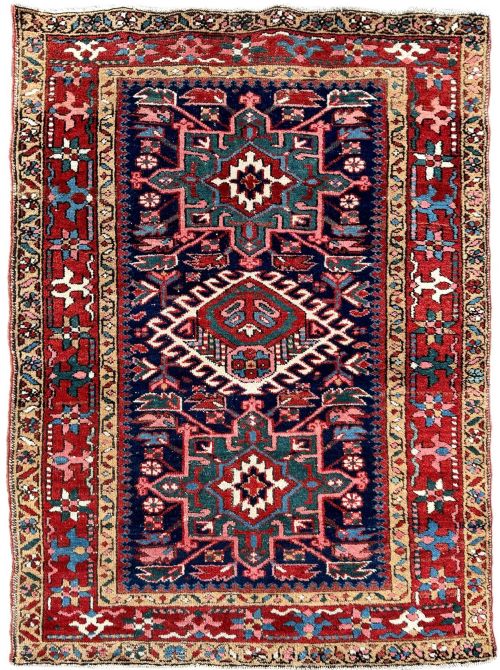
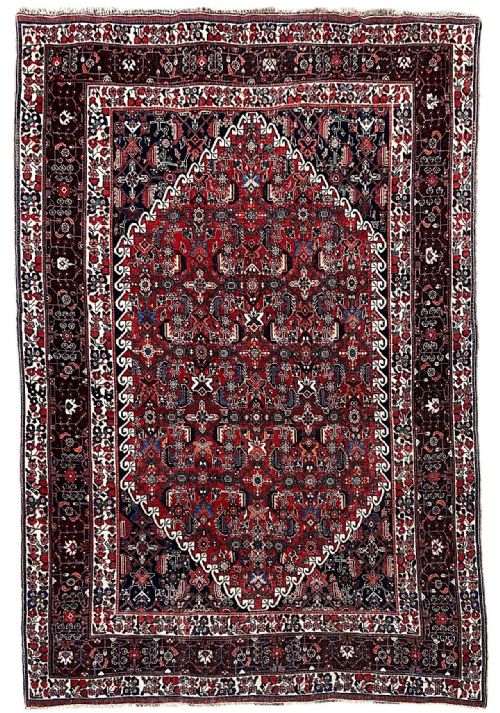
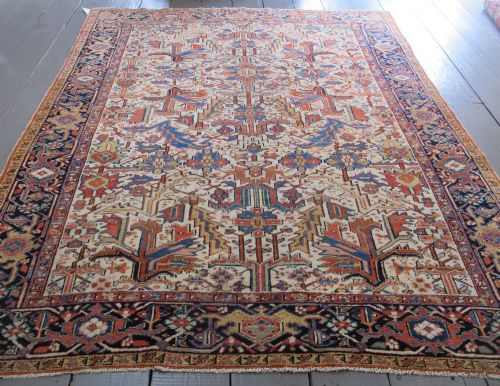
A handwoven oriental floor rug brings heavy wool and deep rust colour onto boards that need grounding.
Handwoven Oriental Floor Rug
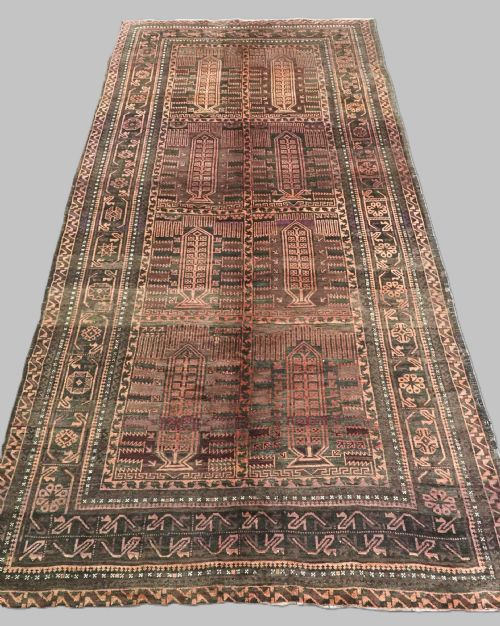
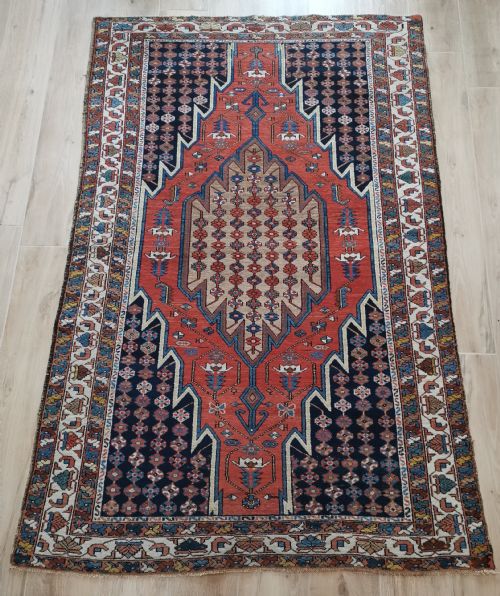
A handwoven oriental floor rug is a textile floor covering produced across Persia, the Caucasus and Afghanistan from the late nineteenth century through to the middle of the twentieth century. These pieces arrive in various formats, spanning small scatter sizes, long runners and room-sized carpets.
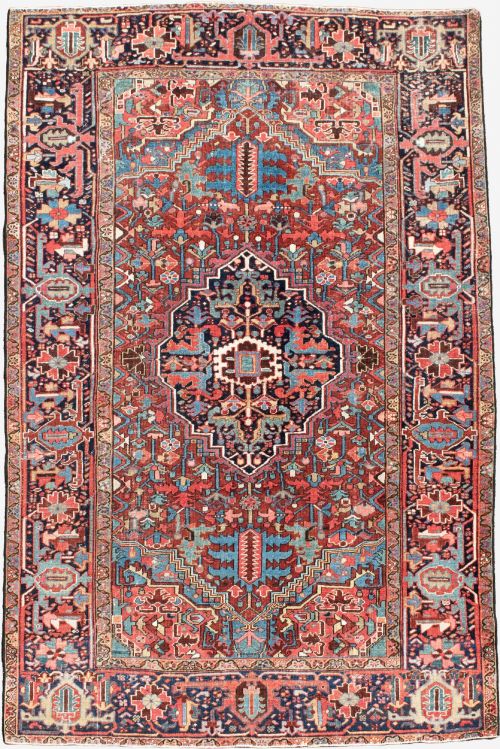
Village and tribal workshops dominate this selection, featuring named types such as Heriz, Afshar, Hamadan and Qashqai alongside Caucasian Kazak pieces. The most frequent encounters on this page are vintage wool rugs dated from around 1900 to 1930.
How they were made
Weavers knotted wool pile onto cotton or wool warp and weft foundations by hand, creating dense surfaces designed to endure decades of foot traffic. Natural and early synthetic dyes provided the saturated rust, ivory, and blue tones seen across these village carpets.
The construction methods reflect regional traditions, from the sturdy geometric builds of Heriz carpets to the finer floral work found in Kashan and Ishfahan examples.
Weavers tucked small accidental colour shifts into the borders, reminding everyone that these textiles grew under hands rather than machines.
What varies in quality
Quality rests in the precision of the knotting, the crispness of the tribal design, and the depth of the dye work. Tighter knots and resilient wool foundations separate superior room-sized carpets from simpler village runners.
The integrity of the wool pile and the balance of the central medallions dictate the visual weight and longevity of each textile.
The Handwoven Oriental Floor Rug Glossary
- Warp
- The vertical threads stretched lengthwise on the loom before weaving begins. These form the structural skeleton of the rug and often show at the fringe ends.
- Weft
- The horizontal threads passed alternately over and under the warp threads to hold the knots in place. They stabilise the width of the textile.
- Pile
- The upright ends of the knotted yarn that form the usable surface of the rug. Its thickness depends on wool quality and trimming during manufacture.
- Medallion
- A large central ornamental design motif placed in the middle of the field. Many Heriz and Saroq pieces utilise this focal structure.
Handwoven Oriental Floor Rug: Frequently Asked Questions
How do I clean a wool rug?
Professional washing by a specialist who understands antique textiles is essential for preserving the natural lanolin in the wool.
Domestic washing machines or harsh chemical cleaners will strip the fibres and ruin the dyes.
Where were these carpets made?
They originated across Persia, the Caucasus and Afghanistan, woven in towns, villages and nomadic camps.
Specific regions like Heriz, Afshar and Hamadan developed distinct local palettes and geometric or floral motifs.
Can I put a rug in a hallway?
Long narrow formats known as runners fit well in hallways and corridors to protect wooden flooring from heavy foot traffic.
Sturdy village constructions handle high traffic areas better than fine silk pieces.
How do I date an oriental rug?
Dating relies on dye colours, wool texture, structural wear patterns and stylistic conventions recorded in the piece.
Most examples on this page date from the late nineteenth century up to the 1940s.