

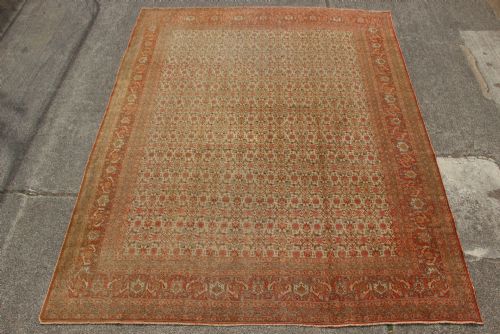
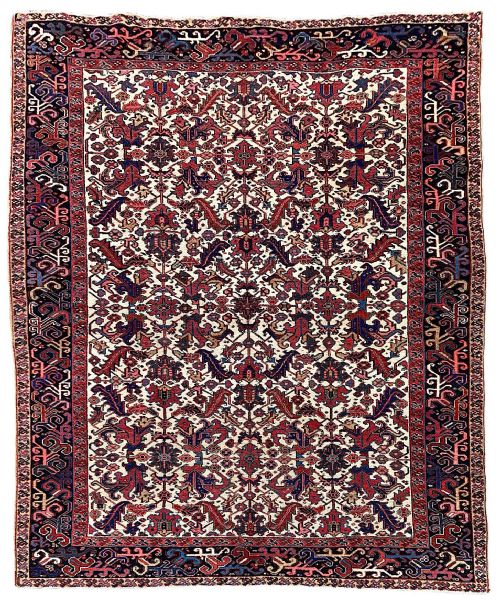


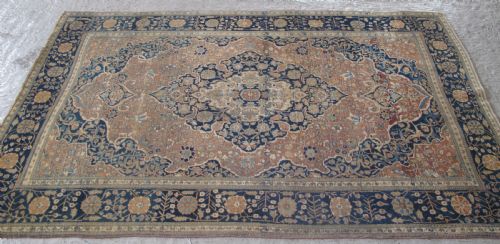

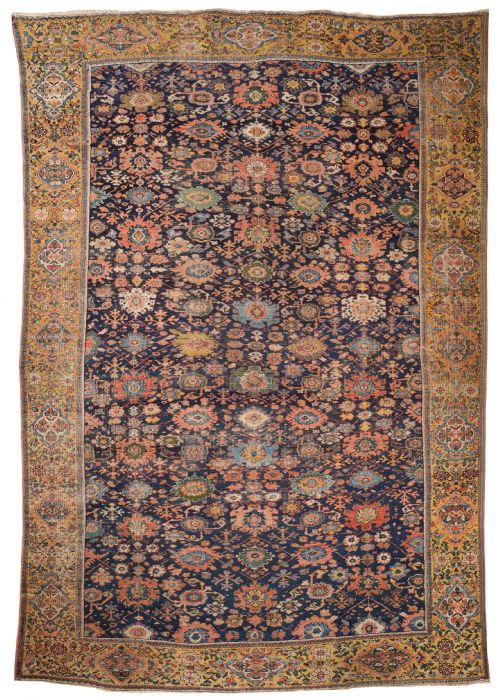


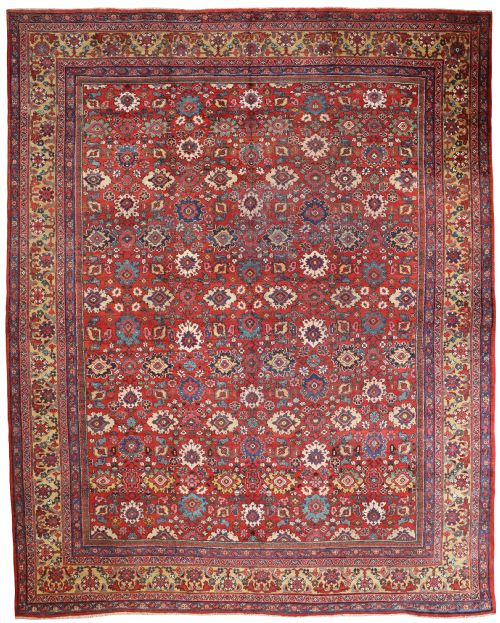

Vintage Persian Floor Covering
A vintage persian floor covering brings warmth and deep pattern to a room through centuries of weaving tradition.
Vintage Persian Floor Covering
A vintage persian floor covering encompasses hand-knotted carpets and rugs originating from Persia across the nineteenth and twentieth centuries. These textiles range from room-sized palace carpets down to smaller tribal pieces and cushions.
Buyers will encounter distinct regional weaving styles on this page, including Tabriz, Heriz, Mahal, and Kashan. Each centre produced specific geometric or floral compositions using traditional dye techniques.
Tribal pieces such as Kashgai and Afshar rugs also appear alongside formal city carpets. These smaller works display direct nomadic designs created on portable vertical looms.
Materials and Construction
The foundation of a vintage persian floor covering relies upon natural fibres such as wool, hand-spun wool, and cotton. Weavers used durable cotton for warps and wefts to ensure structural stability.
The pile consists primarily of wool or hand-spun wool, knotted tightly by hand across the surface. This technique creates a dense, resilient textile capable of enduring decades of heavy use.
Vintage Persian Floor Covering Retail Price Guide 2026
Typical asking prices for vintage persian floor covering among the pieces listed under this phrase on Sellingantiques today, from the lower quarter to the upper quarter. They describe what is for sale here now, not the wider market.
Listings feature pieces dated across the nineteenth and early twentieth centuries, spanning from eighteen-fifty to nineteen-thirty.
Assessing Quality
Quality in a vintage persian floor covering rests upon the density of the knotting and the precision of the design execution. Finer knots allow for intricate curves and sharper details within floral or geometric motifs.
The choice of wool and the depth of the pile also determine the tactile appeal and longevity of the textile. Superior materials retain their lustre and handle heavy foot traffic with grace.
Benlian·Mokhtashem
The Vintage Persian Floor Covering Glossary
- Warp
- The stationary vertical threads stretched upon a loom before weaving begins. These provide the underlying structural skeleton for the entire carpet.
- Weft
- The horizontal threads passed alternately over and under the warp threads to lock the knots in place. Together with the warp, they form the sturdy flat foundation.
- Pile
- The upright cut ends of the knotted yarn that form the usable surface of the carpet. Its thickness and material determine the texture underfoot.
- Bag Face
- The front panel of a nomadic storage bag repurposed into a small decorative mat or cushion. These panels often display concentrated tribal symbolism.
Vintage Persian Floor Covering: Frequently Asked Questions
How do I clean an old carpet?
Regular gentle vacuuming without a rotating beater bar removes surface dust without damaging the delicate wool pile. Professional specialist cleaning remains essential for deep washing to protect the natural dyes.
Avoid harsh chemical detergents or saturation with water, as these methods weaken the cotton foundation threads. Proper maintenance preserves the structural integrity of the textile for future generations.
Where were these carpets woven?
Weaving took place across various regions of Persia, encompassing major urban workshops in cities like Tabriz, Isfahan, and Kashan. Each locale developed distinct aesthetic traditions and knotting densities.
Other pieces emerged from rural village communities and nomadic tribes such as the Kashgai and Afshar. These rural and tribal works reflect local folklore and personal expression through geometric patterns.
Are these rugs suitable for hallways?
Durable wool piles and sturdy cotton foundations allow many of these antique textiles to handle regular foot traffic in corridors and living areas. Placing a quality underlay beneath the piece prevents slipping and cushions the fibres against hard floors.
Selecting a rug with a balanced pile ensures that the wear distributes evenly over time. Regular rotation of the piece promotes uniform ageing in sunlit spaces.
How do I distinguish regional styles?
Regional attribution relies upon examining the specific motif vocabulary, colour palette, and structural materials. City carpets often feature intricate curvilinear floral medallions, while tribal examples favour bold rectilinear geometry.
Observing the knotting style and the specific treatment of the borders provides further clues to origin. Comparing piece structures helps identify whether a rug stems from an urban workshop or a nomadic encampment.