

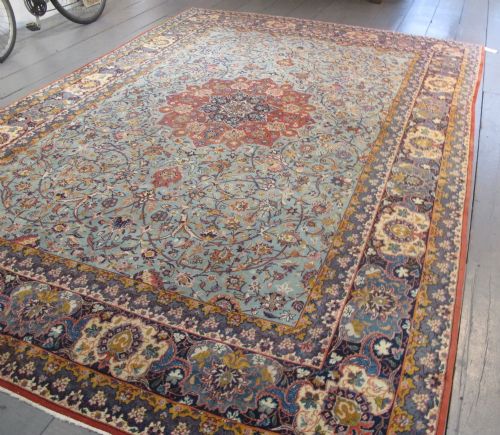
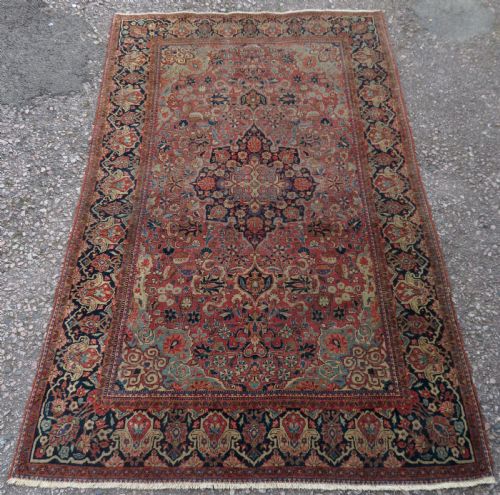
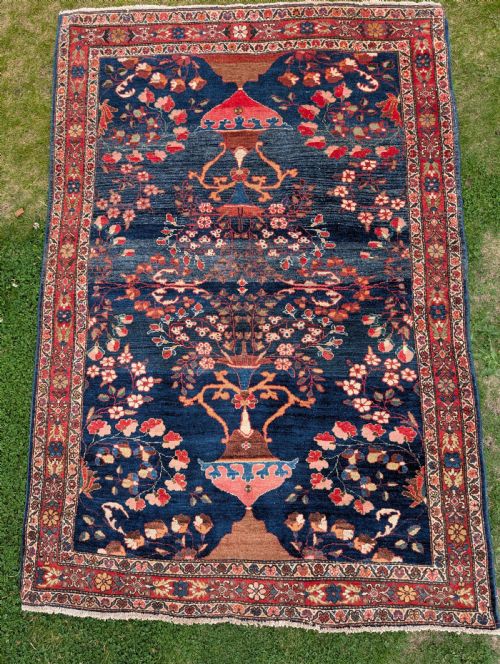


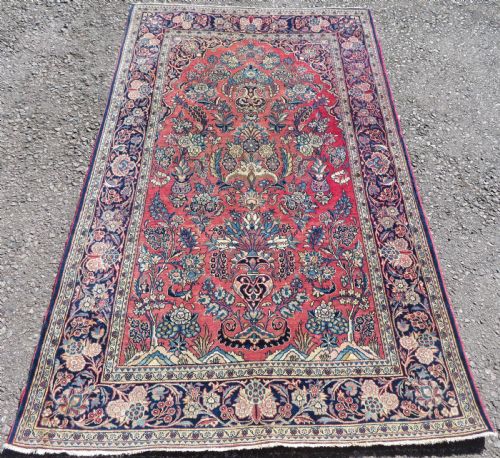
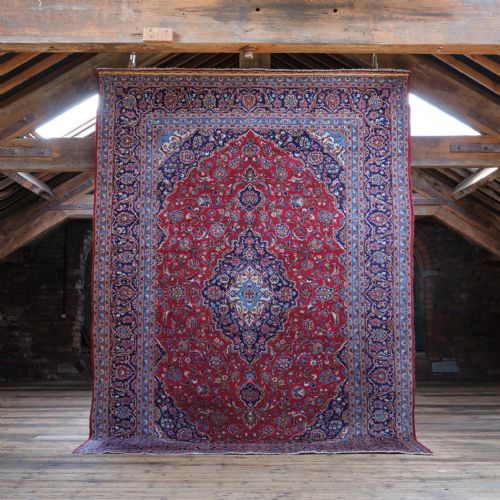


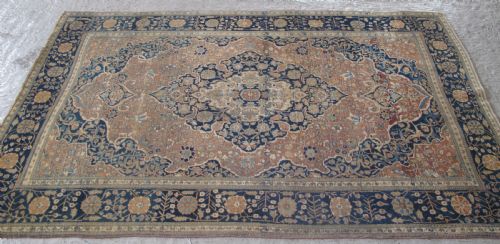
Persian Kashan Area Carpet
A Persian kashan area carpet brings centuries of central weaving heritage into a room through dense floral motifs and intricate medallion layouts.
Persian Kashan Area Carpet
A Persian kashan area carpet represents a central weaving tradition originating from the town of Kashan in Persia, known for elaborate floral patterns and vase designs. Buyers searching this phrase typically encounter hand-knotted room-sized carpets and smaller area rugs dating from the late nineteenth century through the early decades of the twentieth century.
The physical formats span from compact prayer rugs and standard area dimensions to large palace sizes exceeding five metres in length. Stylistic variations include traditional Persian layouts, pictorial compositions, and regional adaptations such as Indo-Persian pieces sharing the characteristic knotting and design vocabulary.
Most examples found on this page arrive from the Edwardian era and the nineteen-twenties, displaying classic red grounds, rose pink tones, or complex all-over floral arrangements. These floor coverings function both as historical artefacts and as durable foundations for traditional interiors.
How they were made
Weavers constructed these carpets by hand-knotting foundation yarns of sturdy cotton with dense piles of wool, cork wool, or occasionally pure silk. Kork wool and kurk wool utilised fine fleece collected from young sheep, yielding a softer texture and a tighter knot count.
Specialised workshops employed natural dyes to produce deep reds, blues, and rose pink grounds that hold their character across generations. Artisans knotted pictorial scenes, floral vases, and khatami geometric frameworks with high precision, securing the structure with finished selvedges.
Persian Kashan Area Carpet Retail Price Guide 2026
Typical asking prices for persian kashan area carpet among the pieces listed under this phrase on Sellingantiques today, from the lower quarter to the upper quarter. They describe what is for sale here now, not the wider market.
Listings feature pieces spanning from the nineteenth century through the Edwardian period and the nineteen-forties.
What varies in quality
Quality rests on the density of the hand knotting and the fineness of the fleece utilised in the pile. Pieces woven with soft kork wool or pure silk exhibit greater definition in the floral motifs and superior tactile suppleness.
The integrity of the central design, the complexity of the vase or pictorial elements, and the preservation of the original hand-knotted edges distinguish standard room rugs from exceptional examples. Age alone matters less than the crispness of the drawing and the quality of the wool.
Mohtasham Kashan·Mokhtashem Keshan·Haroon Kashan
The Persian Kashan Area Carpet Glossary
- Kashan
- A historic city in central Persia famous for producing finely knotted wool and silk carpets with sophisticated floral designs.
- Kork Wool
- A fine, high-grade wool gathered from the neck and shoulders of young sheep, offering exceptional softness.
- Hand-Knotted
- A traditional technique where individual yarn tufts are tied by hand onto a cotton warp and weft foundation.
- Prayer Rug
- A smaller format rug featuring a mihrab or niche design, historically used for personal devotion.
- Pictorial Rug
- A woven textile depicting figures, portraits, or narrative scenes rather than purely geometric or floral patterns.
Persian Kashan Area Carpet: Frequently Asked Questions
How do I identify a genuine Kashan carpet?
Examine the reverse of the rug to check for fine hand-knotted cotton foundations and dense wool piles. Traditional Kashan pieces typically display central medallions, floral vase motifs, or classic red and rose pink colour palettes.
Look closely at the intricacy of the drawing and the quality of the wool. Signed pieces or those attributed to historic workshops like Mohtasham often exhibit superior knot density and finer materials.
Where were these carpets made?
These textiles originate primarily from Kashan in north-west central Persia, a historic centre renowned for silk and wool production. Some related pieces were also woven in surrounding workshops or nearby regions influenced by Persian designs.
Regional variations include Indo-Persian examples that adapt traditional Kashan floral vocabulary onto alternative looms. The geographic origin directly influences the specific dye shades and knotting techniques employed.
What materials are used in these rugs?
Foundation structures utilise sturdy cotton threads for both warp and weft to ensure long-term stability. The surface pile consists of sheep wool, premium kork wool, or delicate silk.
Some examples feature partial silk highlights that accentuate floral outlines against the wool background. Natural dyes provide the characteristic red, blue, and pink tones seen across the pile.
How should I care for an antique carpet?
Position the rug in a low-traffic area out of direct sunlight to protect the natural wool pile and dyes from fading. Vacuum gently with a suction-only attachment without a rotating brush bar to avoid pulling the knots.
Rotate the carpet periodically to ensure even wear across the surface. Consult a specialist rug conservator for professional cleaning rather than attempting wet washing at home.