

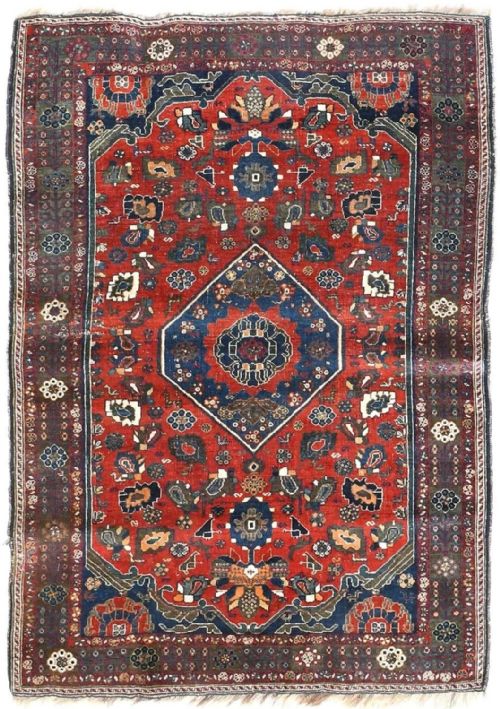
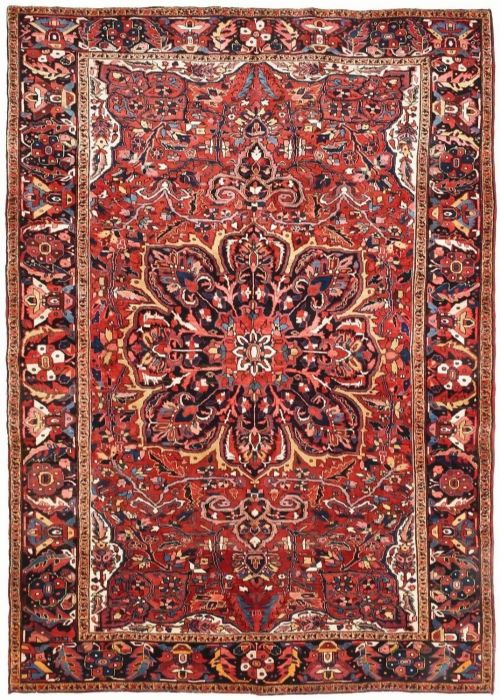


Hand Woven Heriz Carpet
A hand woven heriz carpet is a substantial floor covering of Northwest Persian origin, prized by collectors for geometric medallion designs and heavy utility.
Hand Woven Heriz Carpet
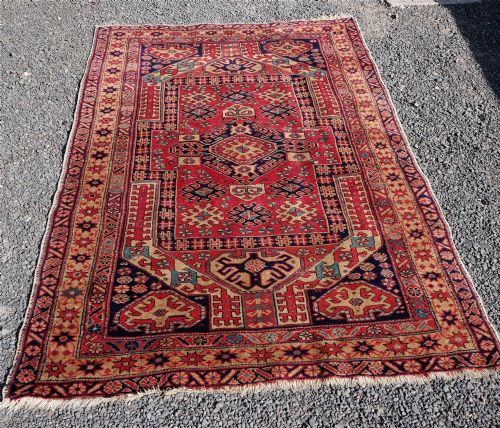
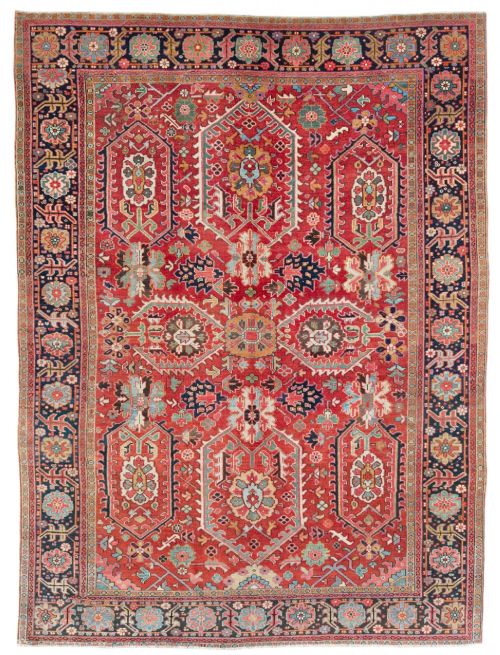
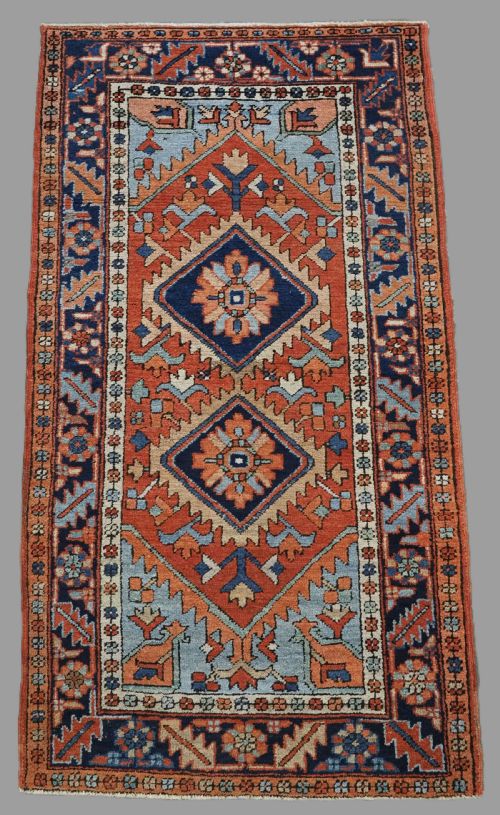
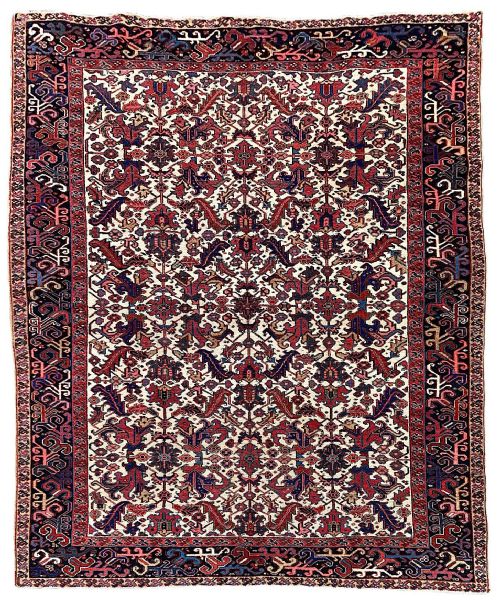
When you examine a hand woven heriz carpet, you are looking at floor coverings originating from the mountainous regions of Northwest Persia. These textiles appear primarily as large carpets, alongside smaller scatter rugs and elongated runners suitable for hallways.
The pieces available span from the mid nineteenth century through the early decades of the twentieth century. The standard formats encountered on this page include room sized carpets and traditional Persian tribal formats with distinct geometric central medallions.
How they were made
These carpets are constructed using durable wool piles knotted onto sturdy cotton foundation warps and wefts. This combination yields a heavy, resilient structure designed to withstand generations of floor use.
Weavers utilised traditional upright looms and hand knotting techniques native to the Heriz region and surrounding districts. Natural dyeing methods supplied the characteristic red and blue palettes seen across the period.
Listings span from the mid nineteenth century to the early twentieth century, utilising wool and cotton materials.
What varies in quality
Quality in these textiles rests upon knot density and the precision of the geometric drawing. Finer weaving allows for crisper articulation of the central medallions and corner spandrels.
The condition of the wool pile and the integrity of the original cotton foundation dictate the durability of the piece. Well preserved examples retain rich colour saturation and strong structural perimeters.
The Hand Woven Heriz Carpet Glossary
- Heriz
- A region in Northwest Persia known for producing large scale geometric carpets with bold central medallions. These pieces often incorporate robust wool and distinct angular drawing.
- Karaja
- A style of rug from a neighbouring village within the Heriz district, frequently featuring repeated geometric motifs or small medallion layouts. They share similar materials with larger regional carpets.
- Bakshaish
- An older village weaving tradition associated with the broader Heriz area, characterised by more relaxed geometric designs and muted palettes. These examples often date to the mid nineteenth century.
- Runner
- A long, narrow carpet format specifically proportioned for corridors, hallways, and staircases. These pieces maintain consistent design motifs adapted to linear dimensions.
Hand Woven Heriz Carpet: Frequently Asked Questions
How do I clean an antique Heriz carpet?
Professional specialist cleaning is essential for antique wool carpets to protect natural dyes and fragile cotton foundations.
Regular gentle vacuuming without a beater bar prevents dust accumulation within the pile.
Where were Heriz carpets made?
These floor coverings were woven in the town of Heriz and surrounding villages located in Northwest Persia.
Weaving traditions in this mountainous district relied on local sheep wool and traditional geometric pattern books.
How do I date an old carpet?
Dating relies on structural analysis, wool texture, natural dye palettes, and stylistic evolution of the geometric medallion.
Comparative study of nineteenth and early twentieth century pieces helps narrow the decade of production.
Are these carpets suitable for heavy traffic?
The dense wool pile and sturdy cotton foundation make traditional Heriz carpets exceptionally durable for everyday flooring.
Placing an appropriate underlay beneath the carpet prevents slippage and reduces friction against hard floors.