


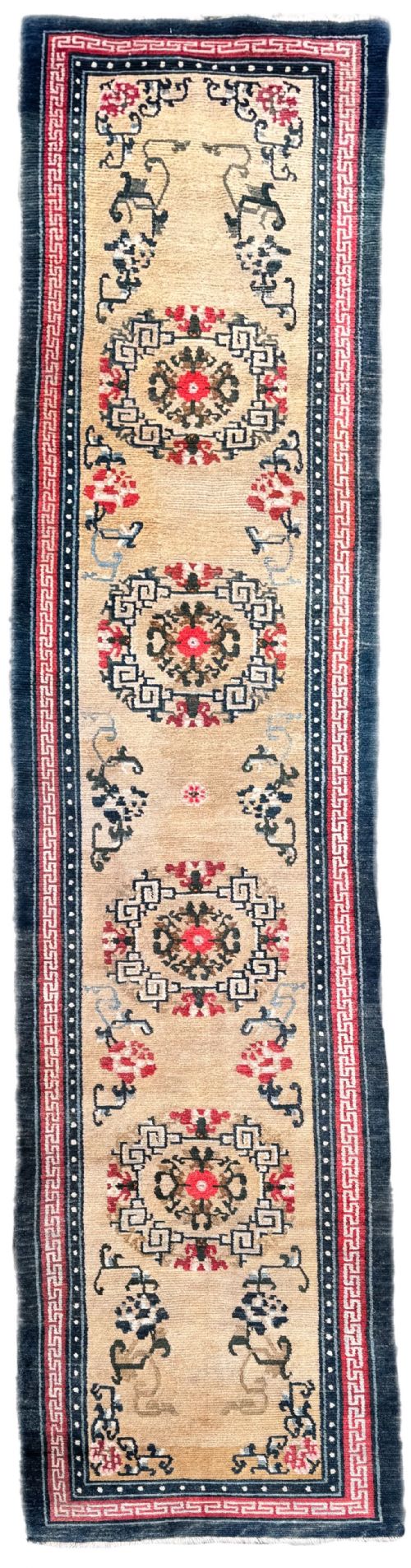

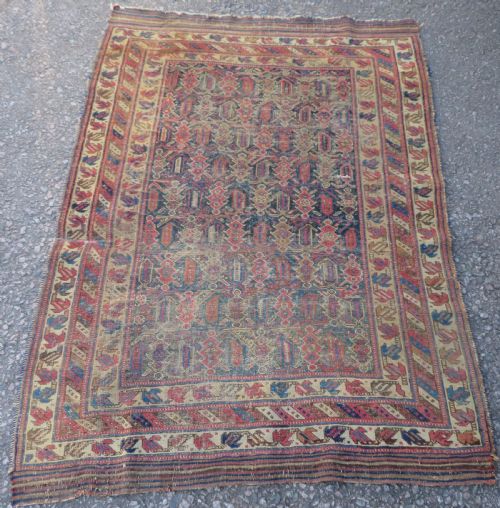

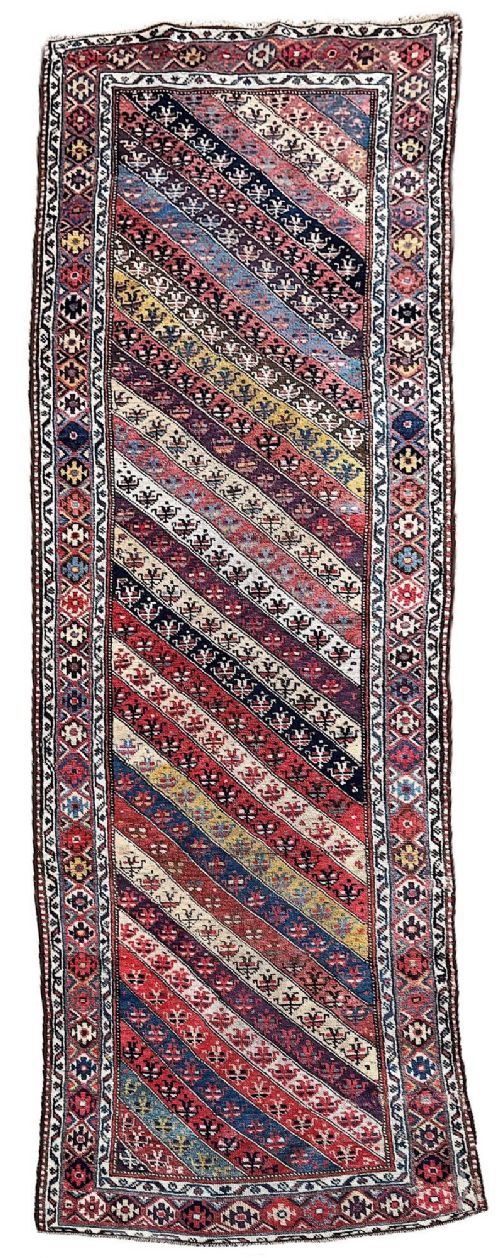


Hand Woven Hallway Runner
A hand woven hallway runner brings warmth, character and centuries of village weaving traditions directly to narrow passages.
Hand Woven Hallway Runner
A hand woven hallway runner is a long, narrow textile designed specifically to span corridors and passageways while introducing distinct cultural geometry to utilitarian spaces. When exploring this phrase, buyers encounter elongated formats originating predominantly from Persian, Caucasian and Kurdish weaving traditions spanning the nineteenth and early twentieth centuries.
The selection centres on tribal and village pieces, including Heriz, Bidjar, Malayer and Caucasian long rugs that suit linear floorplans. These textiles balance robust wool construction with intricate medallion, latch hook or boteh motifs developed by nomadic and settled weavers alike.
Most examples date from the Victorian and Edwardian eras down to the nineteen-thirties, showcasing regional designs that reflect the specific sheep breeds and natural dye palettes of their local origins.
Materials and construction methods
These textiles rely on hand-spun wool and cotton foundations, utilising sturdy pile knots that withstand the heavy foot traffic typical of hallways. Weavers knotted natural wool onto wool or cotton warps and wefts, creating dense structures designed to endure decades of daily use.
Village and nomadic workshops employed traditional upright looms, embedding natural dyes derived from local plants and minerals to achieve rich indigos, madders and earthy browns. The combination of hand-spun materials and tight knotting yields the enduring resilience visible across these nineteenth and early twentieth-century runners.
Listings feature pieces spanning from eighteen-seventy through the nineteen-thirties, dominated by wool and hand-spun wool constructions from Persian and Caucasian regions.
Distinctions in execution and balance
Quality in these runners rests upon the tightness of the knotting, the precision of the tribal geometry and the clarity of the natural dye palette. Superior examples display high knot density that keeps intricate motifs sharp and prevents the foundation from distorting along lengthy formats.
The choice of wool also dictates tactile and visual success, with hand-spun yarn offering a lustrous finish and depth of colour that mechanical carding cannot replicate. Balance between field proportions and border guards reveals the weaver's mastery over traditional pattern books.
The Hand Woven Hallway Runner Glossary
- Runner
- A long, narrow carpet format intended for corridors, staircases and passage spaces. These pieces measure significantly longer than they are wide to fit restricted floor areas.
- Boteh
- A stylised almond or pear-shaped motif representing a floral shoot or cypress tree. This ancient design appears frequently across Persian and Caucasian village textiles.
- Kelleh
- A large rectangular format rug that sits between standard rug proportions and extra-long runners. Such pieces often share the field designs found in corridor carpets.
- Latch Hook
- A geometric polygon motif featuring small square projections along its edges. Tribal weavers utilised this stepped outline extensively for medallions and border fills.
- Warp
- The longitudinal threads stretched vertically on the loom before knotting begins. The visible fringes at either end of a runner are the untied extensions of these foundational cords.
Hand Woven Hallway Runner: Frequently Asked Questions
How do I choose the right length for a hallway?
Measure your corridor while leaving an equal margin of exposed bare floorboards or stone around the perimeter to frame the textile properly.
Account for door clearances at either end so the runner does not jam swing paths when doors open fully.
Can these runners handle heavy corridor foot traffic?
Dense wool pile and sturdy cotton foundations make these vintage village rugs exceptionally resilient against daily wear and tear in busy passageways.
Pairing the textile with a quality underlay prevents slipping and cushions the fibres from abrasive subfloors.
How do I identify a tribal design origin?
Look for characteristic geometric motifs such as latch hook medallions, stylized boteh sprays and asymmetric village layouts rather than formal court curves.
Regional palettes and coarse, hand-spun wool structures often point toward specific tribal groups in nineteenth-century Persia and the Caucasus.
Are these runners made with natural dyes?
Nineteenth and early twentieth-century village pieces commonly relied on plant and mineral extractions for their deep reds, blues and earthy tones.
These natural colourants mellow gracefully over time, developing a rich patina that synthetic dyes fail to replicate.