




Hand Woven Afghan Carpet
When buying a hand woven afghan carpet, you are acquiring a tribal textile shaped by generations of nomadic and village weaving traditions.
Hand Woven Afghan Carpet
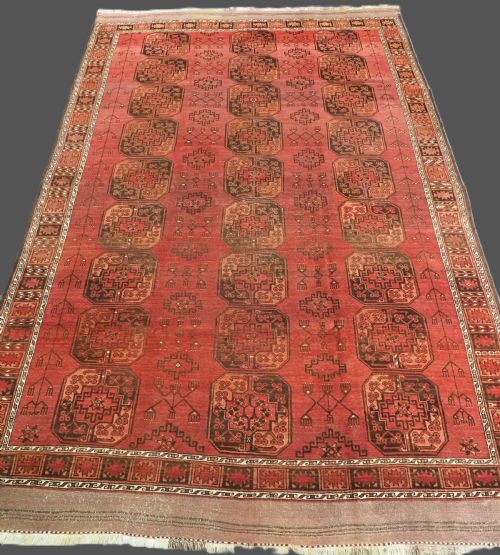
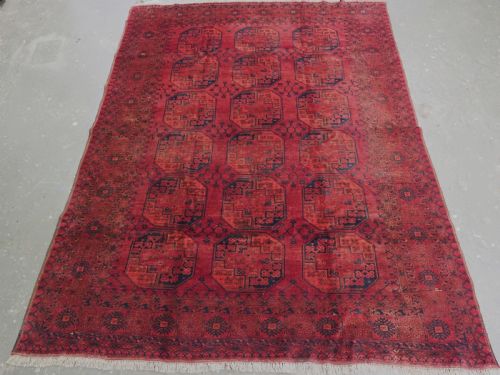
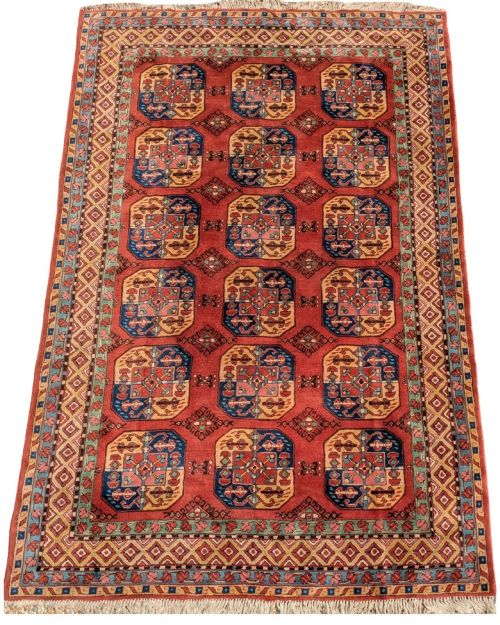
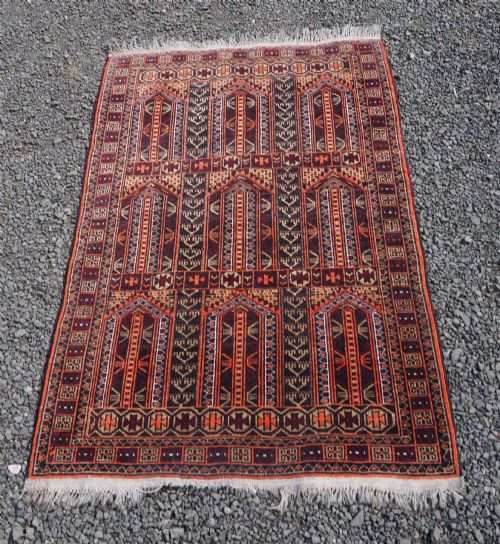
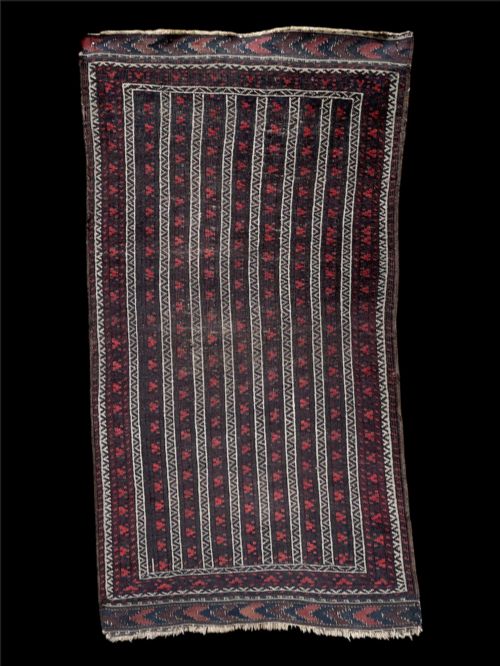
A hand woven afghan carpet represents the textile heritage of tribal groups including the Ersari, Kizil Ayak, and Baluch peoples. These pieces range from compact prayer rugs and runners to large room-sized main carpets woven across the nineteenth and early twentieth centuries.
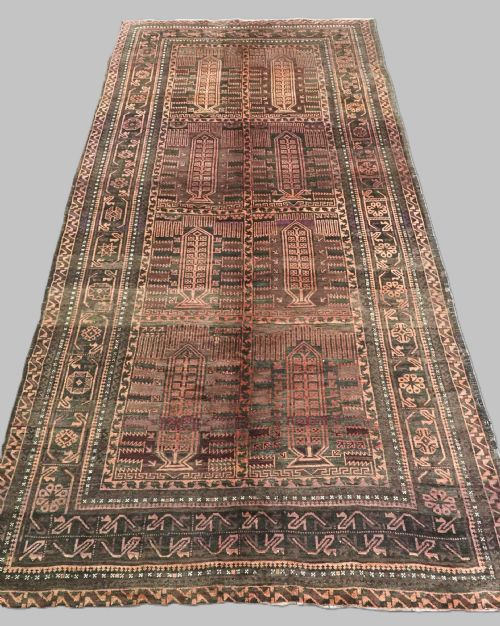
The most common examples on this page are antique Baluch and Ersari Turkmen carpets originating from western and northern Afghanistan. They display traditional geometric motifs, repeating guls, and prayer designs rooted in Central Asian tribal culture.
How they were made
Weavers constructed these carpets using hand-spun wool for the pile, supplemented by cotton, goat hair, horsehair, and camel hair in the foundations. Natural dyes provided the deep red, gold, and earthy palettes characteristic of the region.
Tribal workshops utilised traditional vertical and horizontal looms to knot the wool firmly by hand, creating dense structures designed to withstand decades of heavy floor use.
Listings span production dates from the nineteenth century through the early 1930s, featuring wool, cotton, and camel hair.
What varies in quality
Quality rests in the precision of the knotting and the integrity of the natural materials. Denser pile density and tightly beaten foundations produce longer-lasting textiles with crisper geometric definition.
The nuance and depth of the natural dye work distinguish finer examples. Subtle variations in tone across the wool indicate skilled dyeing practices that age gracefully over time.
The Hand Woven Afghan Carpet Glossary
- Gul
- A repeating octagonal or medallion motif used extensively in Turkmen carpet design. Each tribal group adapted the shape with distinct variations.
- Mihrab
- A niche design element found on prayer rugs, representing the direction of prayer. It typically frames the upper field of the carpet.
- Pencil box
- A descriptive term for the narrow, stacked compartment pattern seen on specific Baluch and Timuri rugs. It is also known by the design name kalam donneh.
- Foundation
- The underlying structure of warp and weft threads that supports the knotted wool pile. Weavers often incorporated goat or camel hair here for added durability.
Hand Woven Afghan Carpet: Frequently Asked Questions
How do I identify a Baluch rug?
Baluch rugs typically feature deep indigo and red tones, often incorporating camel hair in the foundation and distinctive geometric motifs like the kalam donneh or prayer niches.
They originate from the western regions of Afghanistan and reflect distinct nomadic weaving traditions that differ from larger Turkmen carpets.
What is an Ersari carpet?
Ersari carpets are woven by the Ersari Turkmen tribe, known for large format main carpets and traditional octagonal gul patterns. Their colour palette leans towards warm reds and earthy browns.
These pieces often display a more spacious layout compared to the denser patterns found in other Turkmen tribal groups.
How should I clean an antique rug?
Antique wool rugs require gentle maintenance such as regular light vacuuming without a rotating brush head to protect the hand-spun pile. Professional textile cleaners experienced in natural-dye tribal carpets should handle deeper washing.
Avoid excessive water and harsh chemical detergents that can strip natural colour from the wool and damage the foundation.
Can I place these carpets in high traffic areas?
Many of these antique tribal carpets were built for practical daily use and employ durable wool and sturdy foundations like goat or horse hair. Placing a quality rug pad underneath helps absorb friction and reduces wear in busy hallways or living spaces.
Rotating the rug periodically ensures even exposure to foot traffic and sunlight over the years.