

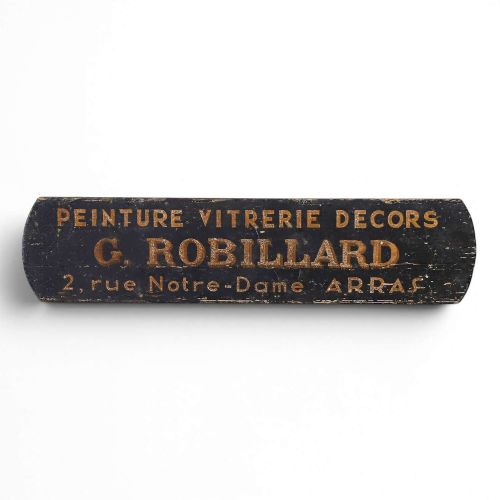
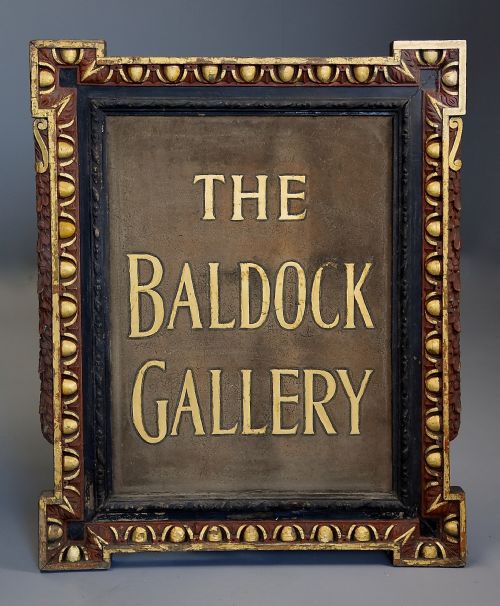

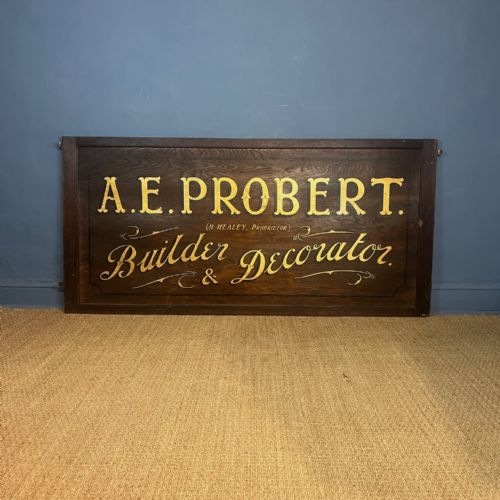


Hand Painted Trade Sign
These hand painted trade sign examples bring tangible commercial history indoors, offering authentic lettering and pictorial advertising from past centuries.
Hand Painted Trade Sign
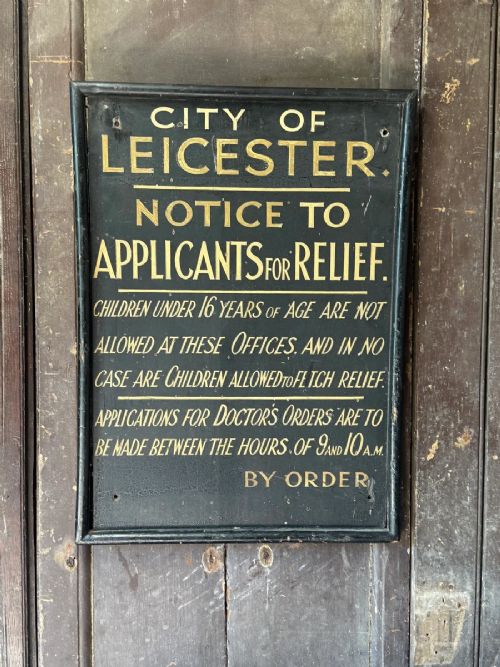
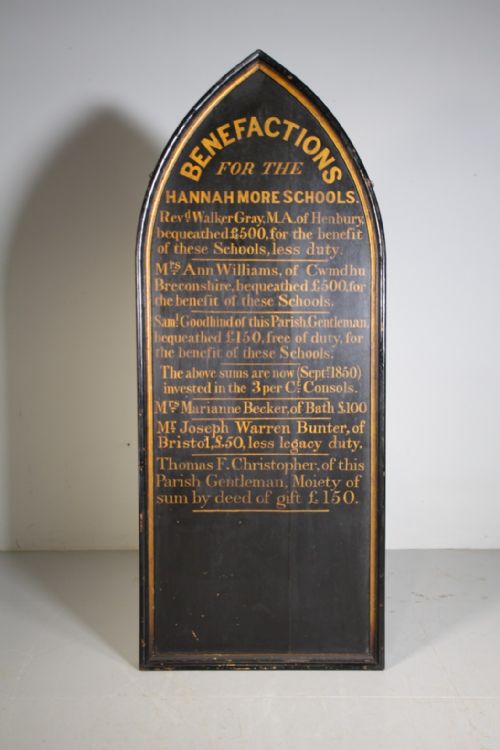
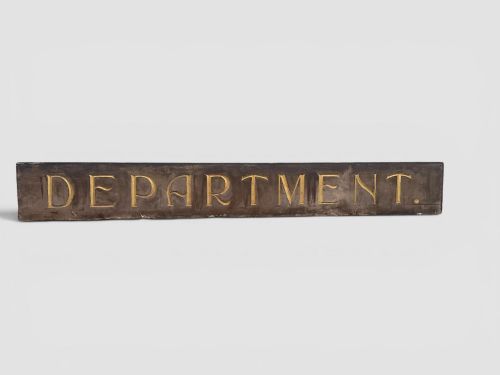
A hand painted trade sign represents the commercial identity of a former shop, business, or public house, created to attract custom from the street. Buyers look at these panels and boards to find surviving pieces of vernacular advertising with genuine historical character. The pieces appearing here span the Victorian era, the Edwardian period, and the interwar years.
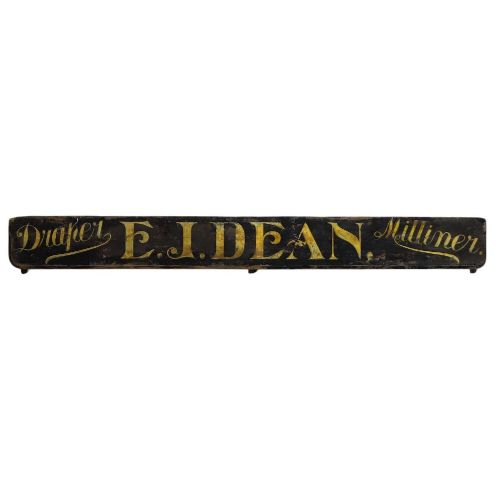
The assortment on this page includes large wall panels, hanging pub signs, shaped wooden figures, and painted clock face displays. Formats range from pine shop boards and pharmacy signs to iron hanging brackets and carved cigar store figures. These objects served practical advertising purposes for milliners, drapers, locksmiths, and dentists before modern signage took over.
How they were made
Maker's hands relied on timber such as pine, oak, and general wood substrates, alongside iron for structural hanging components and metal panels. Paint provided the primary background and pictorial surface, often highlighted with gold leaf for lettering and important details. Carving also shaped three-dimensional figures and specialised trade forms from solid wood blocks.
Workshops applied traditional signwriting techniques directly onto prepared wooden boards, canvas, or glass surfaces framed in timber. Surfaces accumulated layers of oil paint through repeated updates or weathering outdoors, creating the patinated finishes seen today. Metal elements received forged iron brackets or painted sheet construction suited to exterior exposure.
Hand Painted Trade Sign Retail Price Guide 2026
Typical asking prices for hand painted trade sign among the pieces listed under this phrase on Sellingantiques today, from the lower quarter to the upper quarter. They describe what is for sale here now, not the wider market.
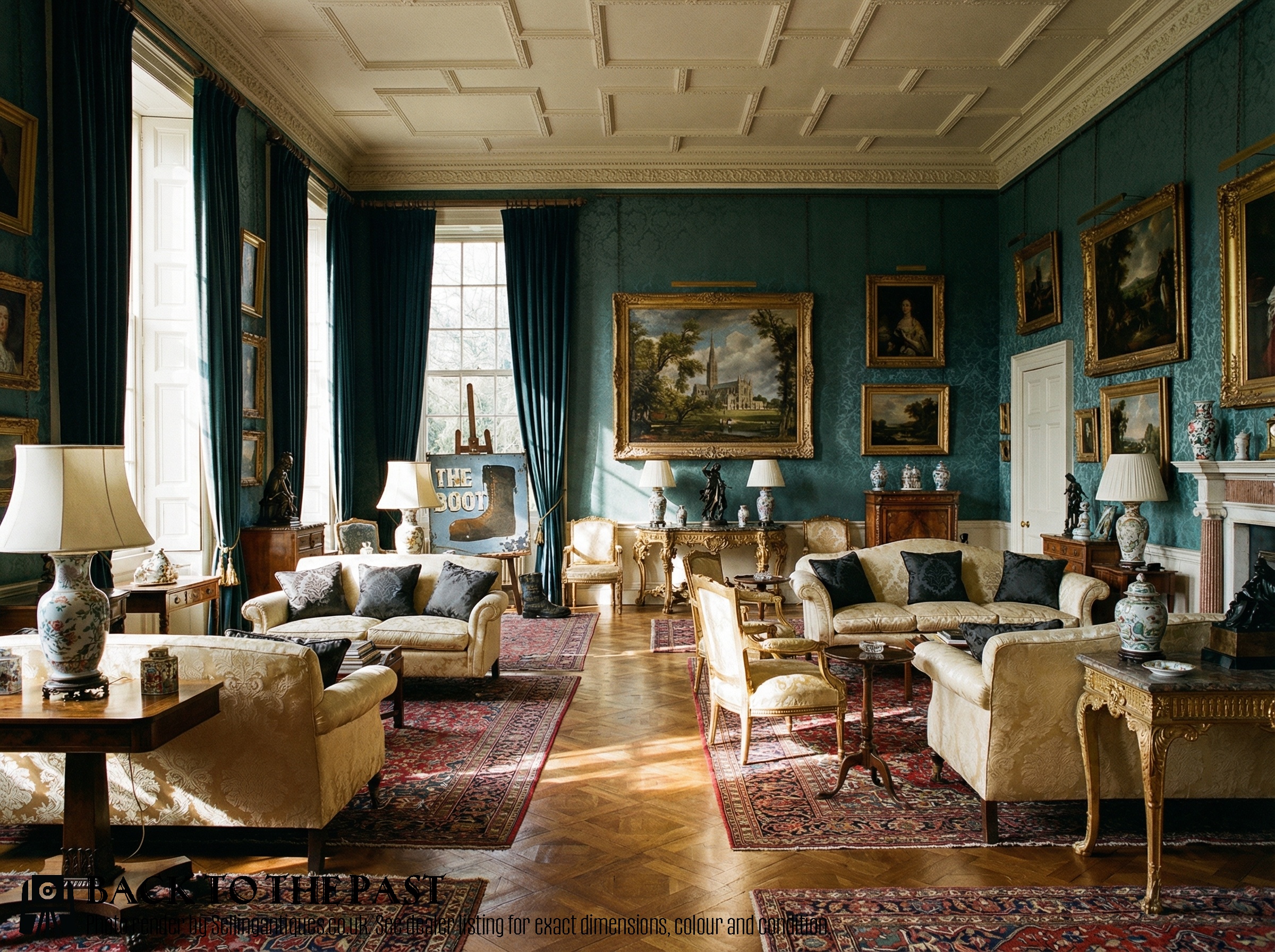
A giant wooden shoe once hung outside a forgotten establishment, standing ready to kick off your interior design scheme.
What varies in quality
Quality rests principally in the strength of the original typography, the skill of the pictorial brushwork, and the visual impact of the composition. Signboards featuring crisp lettering or well-executed folk art imagery sit above plain utility boards with minimal graphics. The clarity of the trade attribution, such as named galleries or specific professions, elevates the piece.
Condition and originality dictate the standing of an individual board within its type. Examples retaining their untouched painted surfaces and original wooden frames possess greater visual coherence than those stripped or heavily restored. Scale also plays a role, with unusually large wall panels or substantial hanging signs commanding greater presence.
The Hand Painted Trade Sign Glossary
- Trade sign
- A board, hanging bracket, or carved object displayed outside a business to advertise goods or services. These items rely on clear lettering and recognizable symbols so literate and illiterate customers alike could identify the trade.
- Folk art
- Artistic production created by self-taught or traditional craftsmen rather than academy-trained artists. In signwriting, this translates to vernacular lettering styles and charmingly naive pictorial representations.
- Gilding
- The application of gold leaf or gold dust to surfaces such as wooden letters and carved details. This technique catches the light and emphasises important business names or focal points on the sign.
- Substrate
- The underlying material upon which a sign is painted or constructed. Common examples in this group include pine planks, oak panels, iron sheets, and glass.
- Patina
- The surface appearance developed through age, wear, exposure to the elements, and layers of old paint. A desirable patina shows the natural history of a working object without modern interference.
Hand Painted Trade Sign: Frequently Asked Questions
How were trade signs displayed originally?
Most trade signs hung perpendicular to shopfronts from iron brackets so pedestrians could spot them from a distance. Others were fixed flat against exterior brickwork or placed directly above display windows.
Larger establishments utilised shaped panels, painted clock faces, or carved wooden figures positioned near the entrance to draw custom inside.
What trades do these signs represent?
The available signs cover a broad range of nineteenth and early twentieth-century commerce, including drapers, milliners, locksmiths, and dentists. Pubs, pharmacies, and general galleries also feature strongly among the listed occupations.
Specialised businesses often commissioned bespoke shapes, such as giant shoes or carved figures, to advertise their specific wares instantly.
How do I date a painted trade sign?
Dating relies on a combination of the timber substrate, the construction of the frame, and the style of the lettering. Victorian and Edwardian examples often feature hand-mixed oil paints on heavy pine or oak boards with distinct typographic proportions.
Comparing the specific trade and lettering quirks to documented commercial ephemera helps narrow down the active period of the shop.
Can these signs be hung on interior walls?
These pieces transfer readily to modern domestic or commercial interiors as striking wall art. Their substantial scale and graphic qualities make them effective focal points above fireplaces or along hallways.
Due consideration must be given to their weight, particularly with iron hanging brackets or large wooden panels, requiring secure fixings.