



Hanging Trade Sign
A hanging trade sign is a striking piece of commercial history that brings genuine character and narrative to a wall.
Hanging Trade Sign
When you search for a hanging trade sign, you encounter heavy commercial markers made to advertise a craft, shop, or profession from the street. These objects range from pictorial symbols like pocket watches and pestles to lettering boards and sign brackets from the nineteenth and twentieth centuries.
You are most likely to meet pieces originating from the Edwardian era, the nineteenth century, and the nineteen-twenties, often reflecting traditional British or French industrial and provincial origins. These items include double-sided chemist signs, locksmith boards, and pub markers designed to catch the eye of passersby.
The assortment on this page spans utilitarian wall signage to elaborate sculptural forms like oversized pocket watches and pawnbrokers' symbols. Each piece carries the distinct identity of a past trade, functioning as both functional street furniture and bold wall art.
How they were made
Makers shaped these objects using durable metals suited to the outdoors, employing iron, wrought iron, copper, sheet iron, and sheet metal. These structural components provided the necessary strength to withstand hanging on exterior brackets over prolonged periods.
Surfaces received hand-applied paint and lettering to communicate specific trades, often combined with carved wood or glass elements. Craftspeople relied on traditional metalworking and painting techniques to ensure the signage remained legible and robust in all weather conditions.
Hanging Trade Sign Retail Price Guide 2026
Typical asking prices for hanging trade sign among the pieces listed under this phrase on Sellingantiques today, from the lower quarter to the upper quarter. They describe what is for sale here now, not the wider market.
A giant pocket watch hangs frozen at twenty past eight, forever waiting for a customer who missed their train.
What varies in quality
The strength of the modelling dictates the visual impact, as sculptural forms like pocket watches, pestles, and boots require skilful shaping to remain convincing from a distance. Simpler boards rely entirely on the clarity of the typography and the integrity of the painted surface.
The choice of materials also creates distinction, with heavier forged iron brackets and copper components showing superior durability compared to simpler sheet metal alternatives. Original, undisturbed paint surfaces carry greater authority than later overpainting.
Josef Herzog
The Hanging Trade Sign Glossary
- Trade Sign
- A board or sculptural object displayed outside a shop or business to advertise the proprietor's profession. These items were essential for directing customers in busy streets before modern street numbering.
- Sign Bracket
- The metal arm or mount used to project a sign away from a building wall. These supports are frequently forged from iron and carry their own decorative or industrial merit.
- Sheet Iron
- A malleable iron rolled into thin sheets, commonly used for the body of flat or shaped signs. It allowed makers to cut out specific silhouettes with relative ease.
- Apothecary Sign
- A commercial marker associated with the preparation and sale of medicines, often taking the form of a pestle and mortar. These objects denoted the premises of a chemist or pharmacist.
- Pawn Brokers Trade Sign
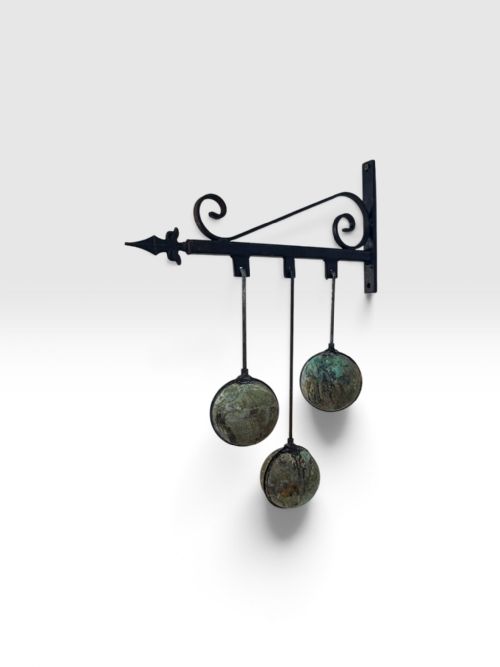
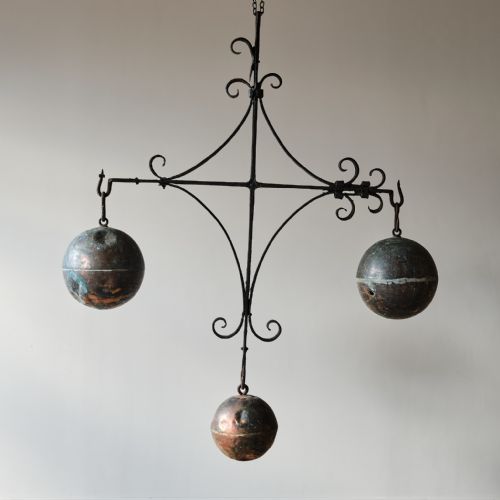
- A traditional symbol of three suspended spheres associated with pawnbrokers. These prominent signs served as unmistakable beacons for financial services in nineteenth-century towns.
Hanging Trade Sign: Frequently Asked Questions
What trades are represented on these signs?
The available pieces represent a variety of historic commerce, including pawnbrokers, chemists, locksmiths, painters, and jewellers. Specific sculptural shapes like pocket watches and pestles directly mirrored the services offered inside.
Other examples include pub signs and general trade boards that served the local community. Each item corresponds to the physical streetscape of the nineteenth and early twentieth centuries.
How were hanging trade signs mounted outdoors?
Signs typically hung from dedicated iron brackets that projected outward from the brickwork or timber framing of a shopfront. This placement allowed pedestrians approaching from either direction to view the advert.
Many listings still retain their original mounting hardware or come paired with sturdy brackets designed for exterior display. Proper installation requires securing the bracket directly into structural masonry or timber.
Are these signs double-sided?
Many examples are double-sided to ensure visibility for foot traffic moving in both directions along a street. This configuration was standard practice for projecting signs mounted perpendicular to a building.
Flat wall signs and certain pictorial boards were designed to sit flush against a facade and feature decoration on the front face only. Checking the specific description confirms whether a piece displays imagery on both sides.
How do I date a hanging trade sign?
Dating relies on the materials, construction methods, typography, and the specific trade depicted. Pieces from the nineteenth century often feature hand-forged ironwork and traditional signwriting, while Edwardian and later twentieth-century items incorporate sheet metal and distinct lettering styles.
Stylistic cues such as the complexity of the bracket and the wear on the painted surfaces also help establish the era. Comparing the form to documented commercial ephemera provides further chronological context.
Can these signs be hung indoors?
These pieces transfer readily to interior spaces, where their scale and sculptural forms make them effective focal points on large walls. They suit both domestic rooms and commercial interiors seeking historic industrial character.
When hanging indoors, ensure the wall construction and fixings can support the substantial weight of iron and metal components. Placing them away from direct moisture helps preserve the original painted surfaces.