




Blue Sky Painted Panel
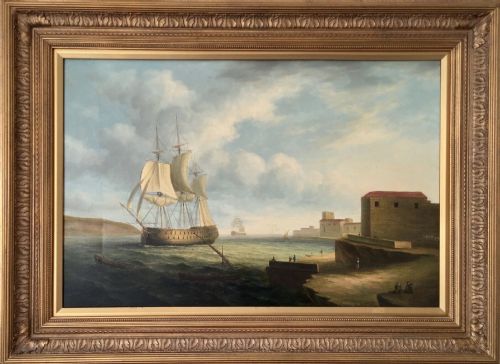
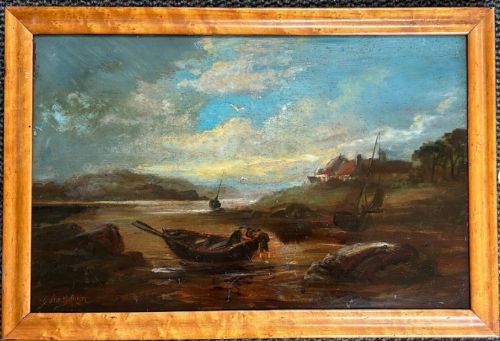
A blue sky painted panel captures a bright horizon or open atmosphere, offering an immediate window into the past through pigment and wood.
Blue Sky Painted Panel
A blue sky painted panel brings together diverse artistic movements, ranging from Victorian marine scenes and British Impressionism to Modernism and Folk Art. When exploring a blue sky painted panel, buyers encounter works executed across several decades, including the nineteenth century and twentieth century up to the modern era.
The subjects depicted on these supports vary widely, taking in coastal views, river landscapes, rural farmsteads, and architectural settings like French chateaux and pleasure piers. Most pieces employ straightforward rectangular formats designed for wall display as independent paintings or decorative panels.
Makers represented in this selection include named artists such as Hubert Wellington, Florence Hess, Sam Bough, and Edmond Defonte alongside anonymous practitioners. The handling reflects distinct regional traditions from Scottish estuaries to Yorkshire coastal towns and Mediterranean harbours.
Materials and construction
These works are executed primarily in oil paint applied directly to rigid supports of wood panel or board. Artists utilised the smooth or slightly textured surface of the wood to build up rich pigment layers, frequently working in the open air to capture fleeting atmospheric effects.
Frames of gilded wood often accompany the panels, enhancing the visual depth of the composition. The combination of oil medium and sturdy wooden panels ensures the physical stability of the artwork over many decades.
Listings feature oil paint on wood panel, board, and gilded wood, spanning periods from the Victorian era through the mid twentieth century.
Assessing quality and execution
The strength of a composition rests on the artist's confidence in handling light and atmosphere, particularly in rendering open expanses of sky and water. Finer examples display a assured brushwork and harmonious palette that convey a distinct sense of place and moment.
The condition of the wooden support and the stability of the oil paint layer influence the overall integrity of the piece. Works that retain their original surface texture without excessive retouching command greater appreciation among collectors.
Hubert Wellington·Florence Hess·Sam Bough·Edmond Defonte
The Blue Sky Painted Panel Glossary
- Oil paint
- A slow-drying paint made by mixing pigments with a drying oil, typically linseed oil. This medium allows for rich colour blending and varied surface textures.
- Wood panel
- A rigid wooden support used as a substitute for canvas. It provides a stable, flat surface that resists the flexing typical of fabric grounds.
- Plein air
- Painting outdoors to capture direct observations of natural light and atmosphere. This method was widely adopted by Impressionist artists.
- Impressionism
- A nineteenth-century art movement characterised by relatively small, thin, yet visible brush strokes and an emphasis on accurate depiction of light.
Blue Sky Painted Panel: Frequently Asked Questions
What periods do these painted panels come from?
The pieces span from the Victorian era and the mid nineteenth century through various twentieth-century decades including the nineteen-teens, twenties, thirties, and forties, up to the post-nineteen-sixties period.
This broad chronological range encompasses distinct movements such as nineteenth-century marine painting, British Impressionism, and Modernism.
How should I display a painted wood panel?
These works are designed as wall art and typically feature secure mountings or frames suited for domestic hanging. They require placement away from direct heat sources and excessive moisture to protect the wooden support and oil surface.
Proper wall placement ensures the panel remains stable and visible as a focal point in a room.
What subjects appear on these panels?
Subjects include coastal harbours, river landscapes, rural farmsteads, architectural landmarks like French chateaux, and seaside pleasure piers. Many works record specific topographical locations across Britain and continental Europe.
The variety of subjects reflects the diverse interests of marine, landscape, and modernist painters.
How do board and wood panel supports differ?
Both materials provide a rigid ground for oil painting, differing primarily in their composition and manufacturing date. Solid wood panels often reflect earlier traditional joinery, while manufactured boards became more common in twentieth-century works.
Both surfaces offer the firmness required for detailed brushwork and impasto application.