
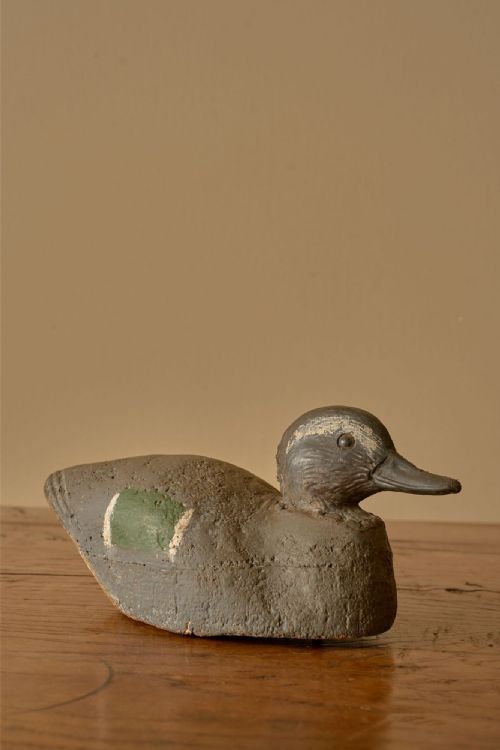
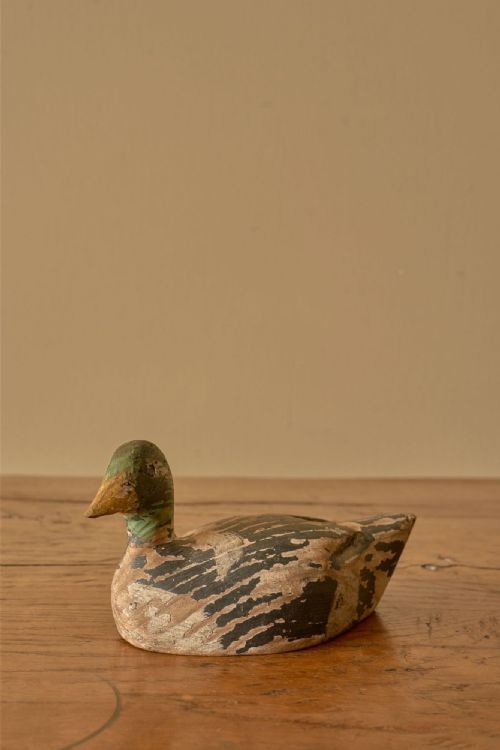
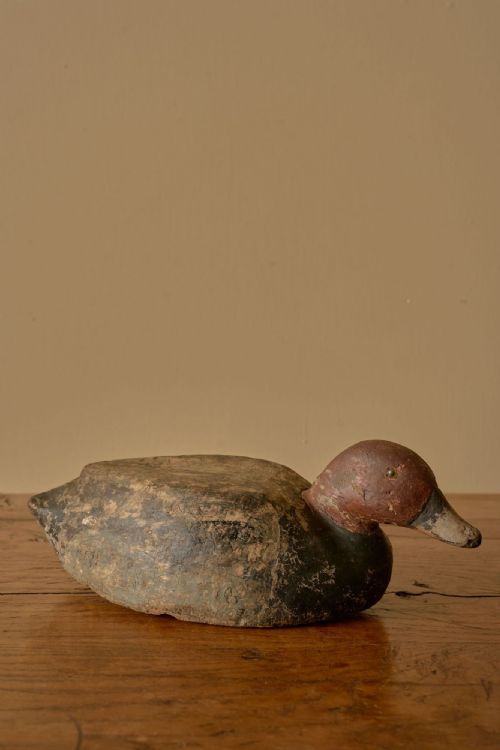
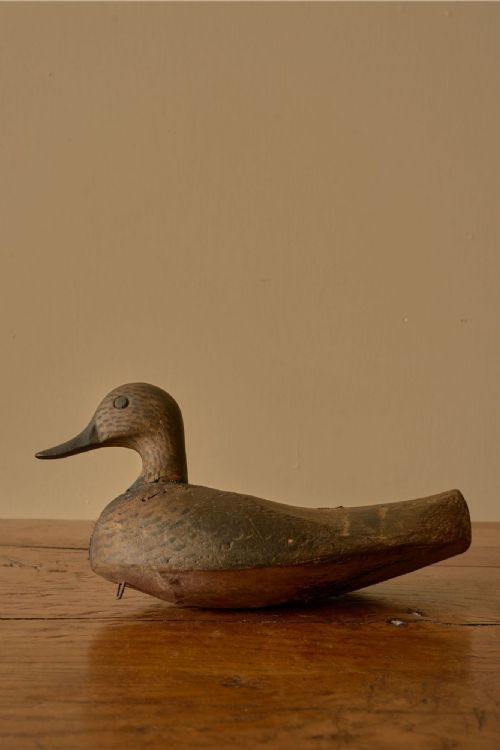
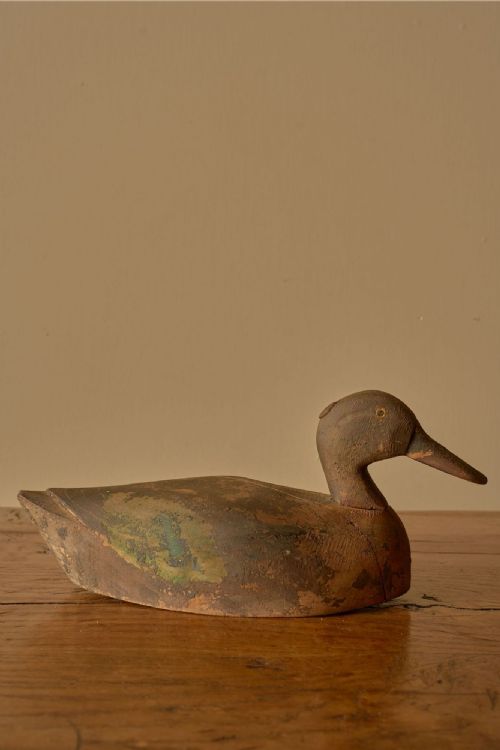
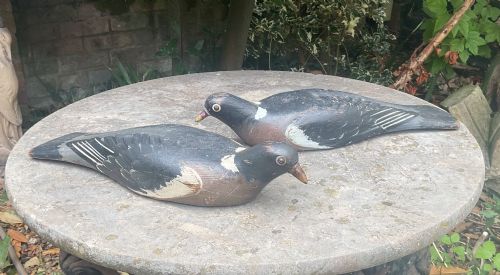
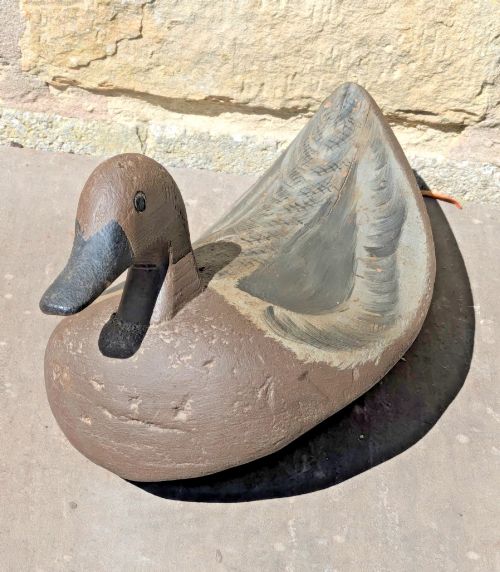
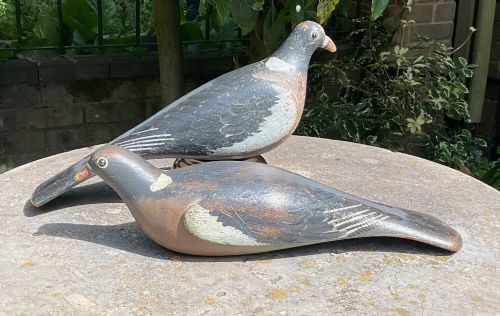
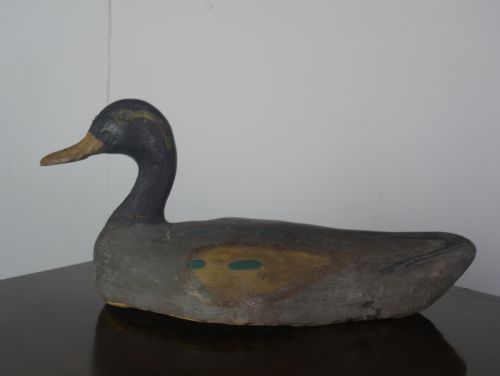


Hand Painted Timber Decoy
A hand painted timber decoy brings genuine vernacular character to a room, offering the bold shapes and weathered surfaces that collectors seek.
Hand Painted Timber Decoy
A hand painted timber decoy is a carved wooden bird originally made to lure waterfowl or pigeons, now collected as folk art. When exploring this selection, a buyer encounters working carvings that range from single ducks and geese to pairs of pigeons.
The objects seen here date predominantly from the nineteenth century through to the nineteen thirties, spanning the Edwardian period and the early twentieth century. Duck forms dominate the listings, alongside pigeons, geese, and specific species such as the black tailed godwit and the American loon with her chick.
How they were made
These pieces rely on solid timber, carved wood, and occasionally bark to form the body of the bird. Artisans shaped the material with hand tools to capture the natural posture of waterfowl and game birds before applying layers of paint.
Iron and other metals sometimes appear in the construction, whilst glass is utilised for eyes on particular carvings. The surface finish combines layered paint with natural wear acquired through outdoor use.
One notable sculpture captures an American loon travelling with her loyal chick.
What varies in quality
The distinction between standard and superior pieces rests on the strength of the carving and the originality of the painted surface. Bold folk art proportions and untouched, weathered patination elevate certain examples above simpler utility items.
An individual carver's ability to render anatomical detail in wood dictates the visual success of the sculpture. The retention of early pigment layers without extensive later repainting governs the desirability of these objects.
The Hand Painted Timber Decoy Glossary
- Folk art
- Objects created within a vernacular tradition by self-taught or local artisans, often for practical use rather than exhibition. These pieces display direct craftsmanship and unpretentious design.
- Decoy
- A carved representation of a bird used historically to attract wildfowl or game within range of a hunter. Surviving examples are now appreciated entirely as decorative sculptures.
- Patina
- The surface texture and coloration developed through age, handling, and environmental exposure. A genuine patinated surface reveals the history of the object.
- Edwardian
- Pertaining to the reign of King Edward VII, spanning the years from nineteen hundred and one to nineteen hundred and ten. Pieces from this era often exhibit traditional British craft methods.
Hand Painted Timber Decoy: Frequently Asked Questions
How were decoys used originally?
Hunters placed wooden birds on water or in fields to lure passing flocks within shooting range.
Their simple forms and painted markings were designed to deceive birds from a distance.
How do I style a decoy at home?
Decoys sit comfortably on bookshelves, sideboards, or windowsills where their sculptural form stands out.
They pair well with natural wood furniture and neutral interiors to highlight their folk art origins.
How do I identify nineteenth century pieces?
Nineteenth century examples generally show heavier timber construction and deeper wear from extended use.
Paint layers on older pieces tend to be chalky or absorbed deeply into the grain of the wood.