
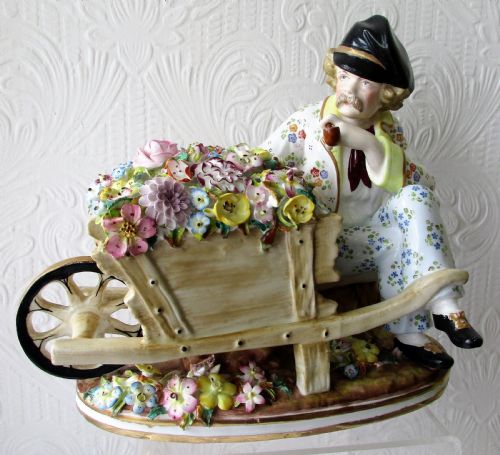
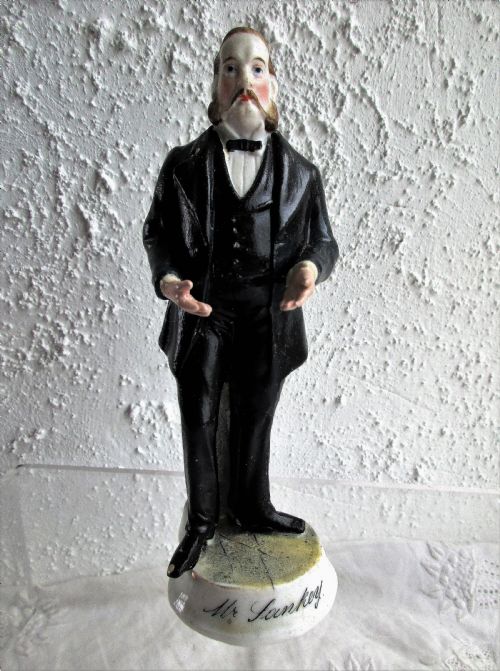


Hand Painted Staffordshire Figure
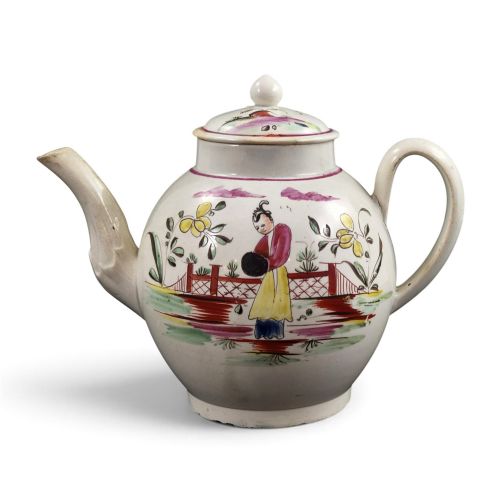
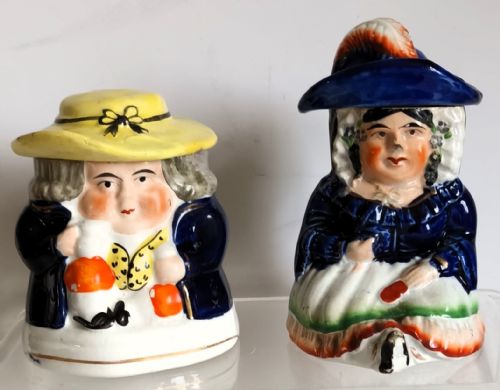
These hand painted staffordshire figure pieces bring nineteenth-century shelf pottery directly into your home.
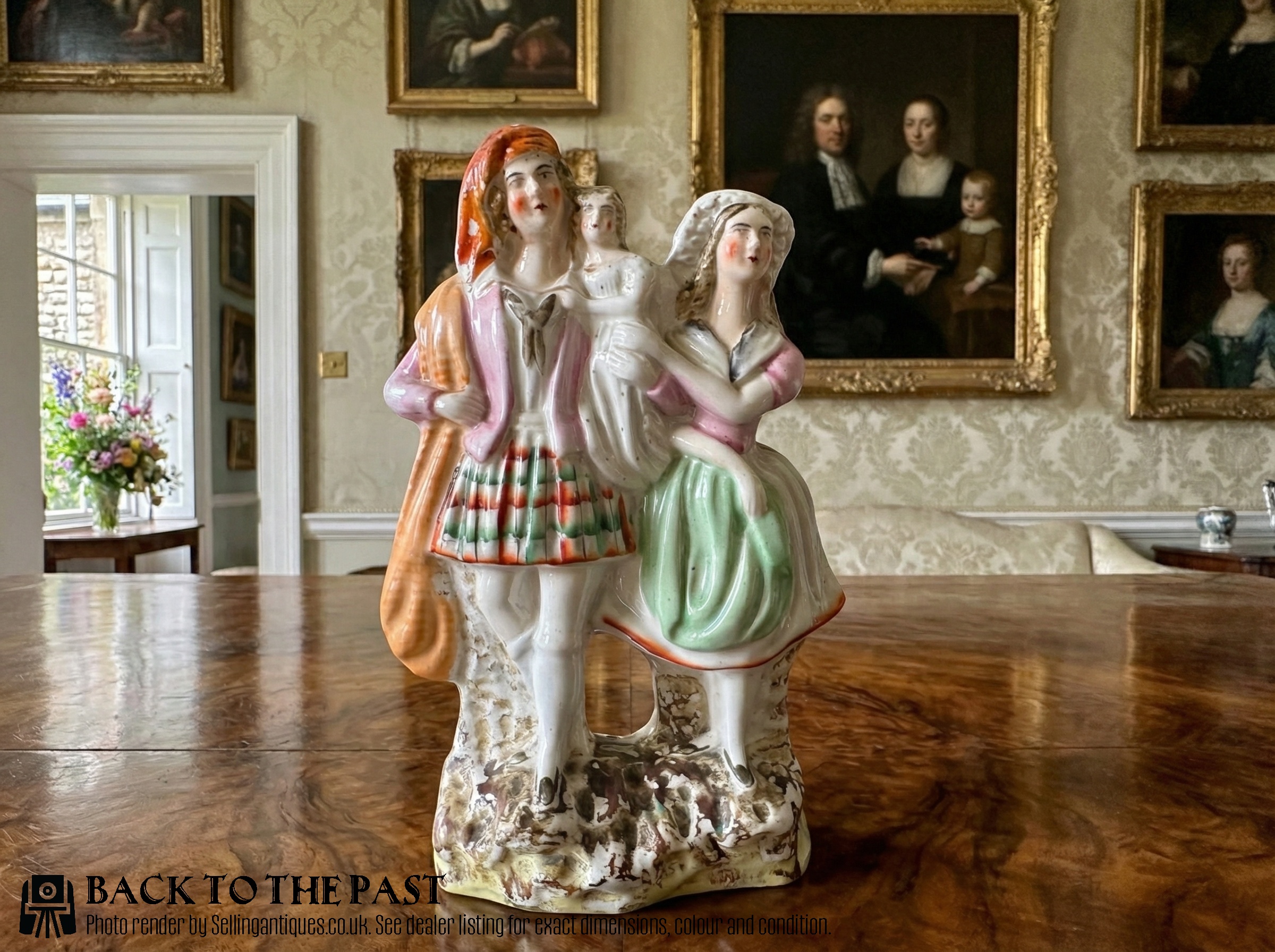
Hand Painted Staffordshire Figure
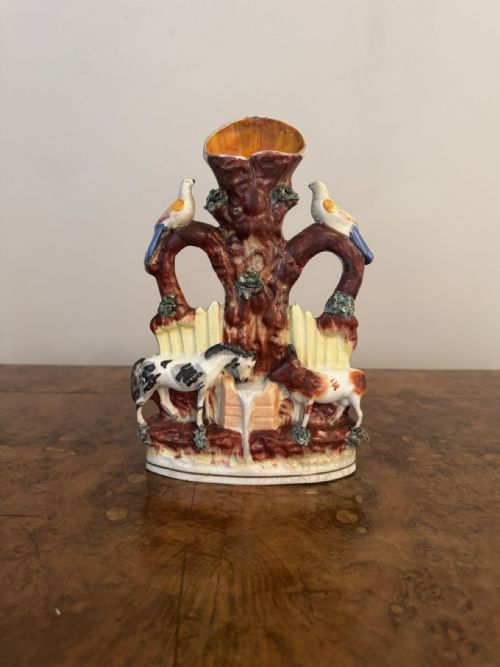
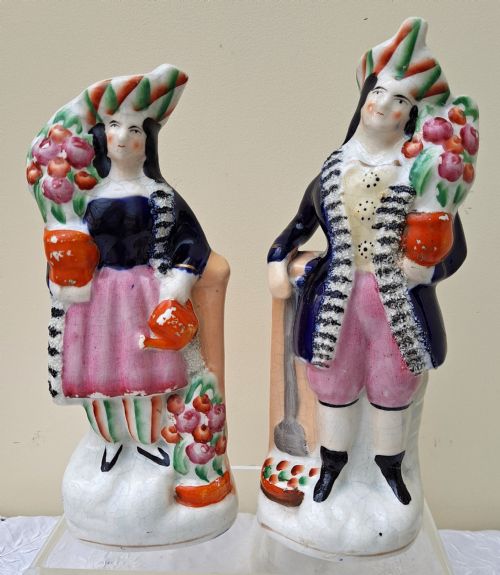
When you search for hand painted staffordshire figure, you are looking at ceramic figures and pottery groups produced across the nineteenth century, including the Georgian era and the Victorian period. You will frequently encounter flatback figures designed to stand against a mantelpiece, alongside pairs of spaniels, spill vases, tobacco jars, and portrait groups depicting historical or theatrical subjects.
The selection ranges from small miniature dogs and individual figurines to large grand figures and sets of five. Makers and subjects span domestic gardeners, royalty, literary characters, and patriot figures such as William Smith O'Brien.
Most examples originate from the 1850s, 1860s, 1870s, 1880s, and 1890s, with Victorian Staffordshire styles dominating the offerings. Buyers will also find related earthenware and porcelain works, including pieces associated with makers such as John Bevington and Minton.
How they were made
Potters shaped these objects using earthenware, ceramic, and porcelain bodies, applying lead glaze and enamel colours by hand. Many flatbacks and figurines received supplementary gilt highlights to catch the candlelight of a Victorian parlour.
Moulds formed the base shapes of the figures, animals, and spill vases, which were then hand painted with pigments before firing. Potters utilised earthenware for robust flatbacks and finer porcelain for detailed theatrical and portrait figurines.
Nineteenth-century mantelpieces gained loyal sentinels when potters paired up china spaniels to watch over the parlour hearth.
What varies in quality
Completeness of pairs, such as gardeners or spaniels, and the preservation of original enamel and gilt colouring heavily influence the desirability of a figure. Larger grand figures and well-modelled portrait groups display more ambitious composition.
John Bevington·Minton
The Hand Painted Staffordshire Figure Glossary
- Flatback
- A figure moulded with a finished front and a flat, unpainted or minimally finished rear designed to sit flush against a wall or mantelpiece.
- Spill vase
- A hollow ceramic cylinder incorporated into a figure group, intended to hold wooden spill splints for lighting fires and candles.
- Earthenware
- A porous pottery body fired at lower temperatures, commonly used for heavy Staffordshire figures and spaniels.
- Lead glaze
- A glossy vitreous coating applied to ceramics that gives nineteenth-century figures their characteristic shiny surface finish.
Hand Painted Staffordshire Figure: Frequently Asked Questions
What subjects do these figures show?
The subjects range from domestic animals like spaniels and dalmatian dogs to human figures including gardeners, country couples, and flower sellers. Historical personalities, royalty such as Prince Albert, and theatrical characters also appear across the listings.
Potters frequently commemorated contemporary events and political figures through portrait groups, providing a visual record of nineteenth-century interests and popular culture.
Where were flatback figures displayed?
Makers designed flatbacks with unadorned rears specifically to sit on mantelpieces, shelves, and sideboard tops inside Victorian homes. Their shallow depth allowed them to stand securely against walls in parlours and sitting rooms.
Pairs of spaniels were traditionally placed facing each other on either end of a fireplace mantel, a common arrangement in nineteenth-century domestic interiors.
How do I date a Staffordshire figure?
Dating relies on stylistic clues, costume details, and known production eras recorded in nineteenth-century pottery history. Pieces marked with specific reigns, like the Victorian era, or attributed to known potters help narrow the timeline.
Changes in glazing techniques and the transition from earthenware to finer porcelain also assist in distinguishing earlier Georgian items from later Victorian examples.
What is a spill vase figure?
A spill vase figure combines a decorative sculptural group with an integrated hollow cylinder designed to hold thin wooden spills. Victorian households used these spills to transfer flames from the hearth fire to candles and lamps.
These combined pieces offered both decorative charm on the mantelpiece and practical utility before the widespread adoption of matches.