
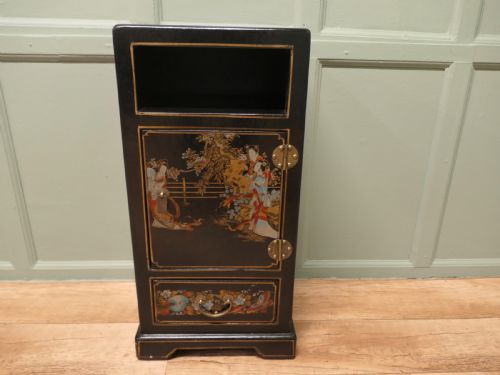
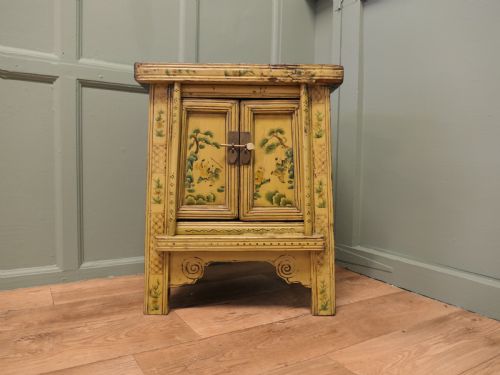
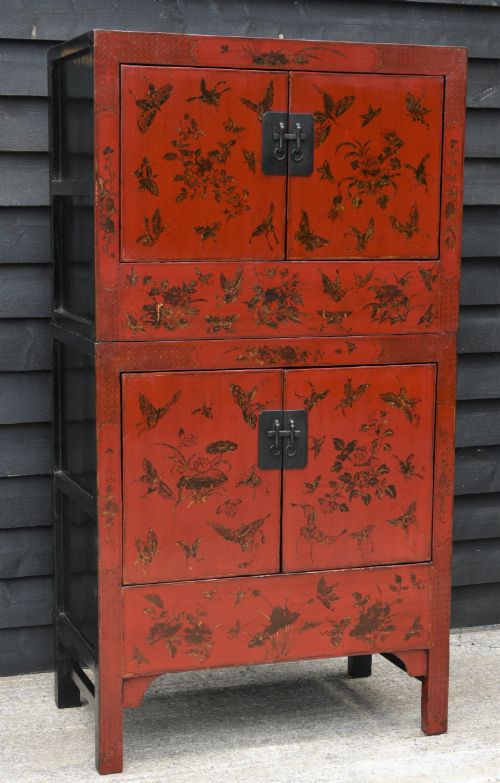
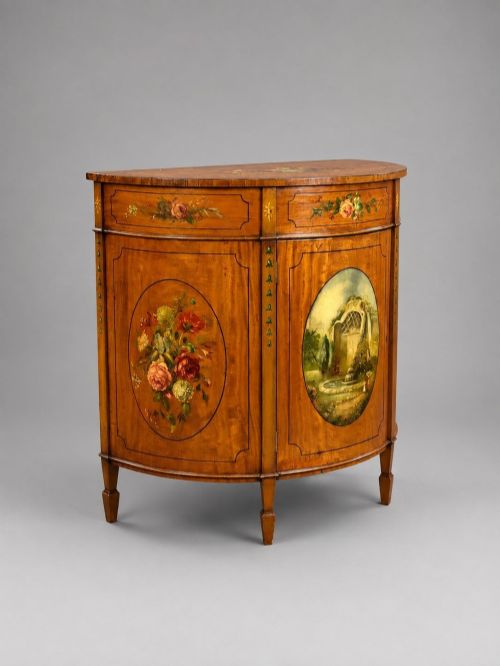
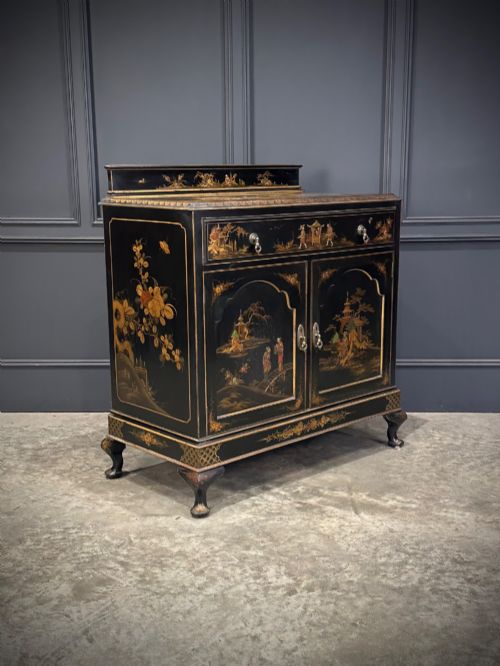


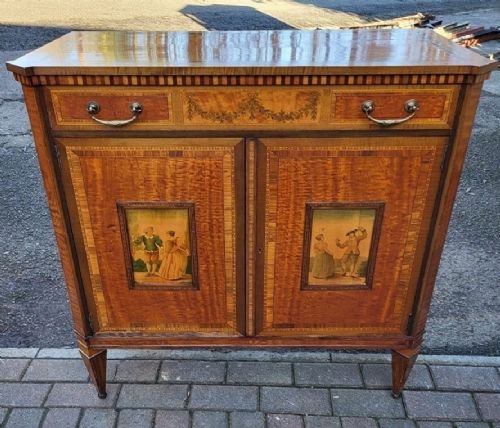


Hand Painted Side Cabinet
When you want a hand painted side cabinet, you are looking for a practical storage piece that carries decorative artistry on wood, lacquer or satinwood.
Hand Painted Side Cabinet
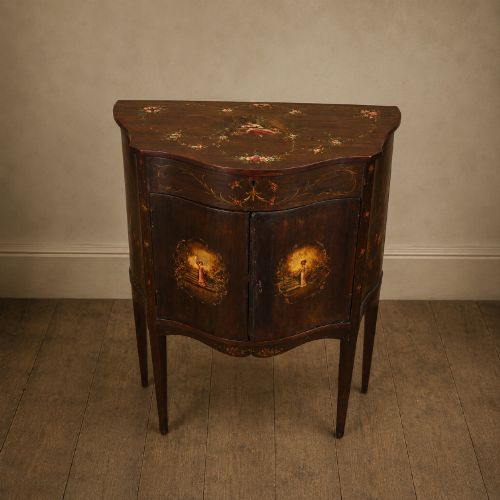
A hand painted side cabinet provides enclosed storage while displaying surface decoration ranging from Chinoiserie scenes to floral motifs. On this page, you will frequently meet Edwardian and Victorian satinwood pieces alongside 19th-century lacquered Chinese furniture and French Revival designs.
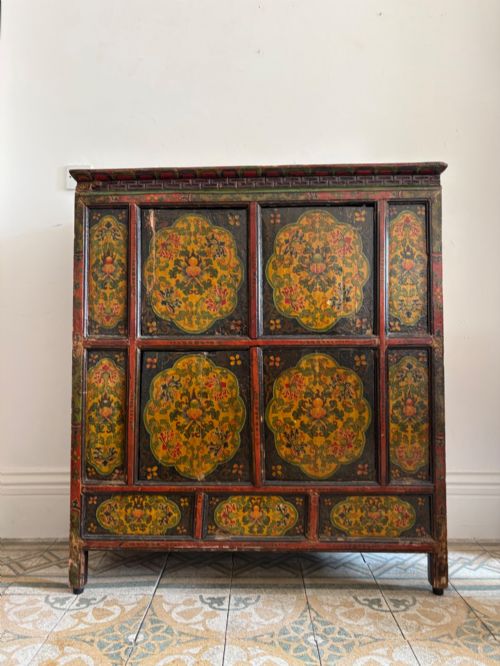
Forms vary from serpentine and bow-front commodes to demi-lune cabinets and tall cupboards. These pieces function as focal points in a room, offering both a flat top surface for display and internal shelving behind doors.
Origins stretch across British revival styles, continental workshops, and traditional Asian craftsmanship. The unifying element across these varied regions is the painted or lacquered finish applied to wood.
Materials and construction
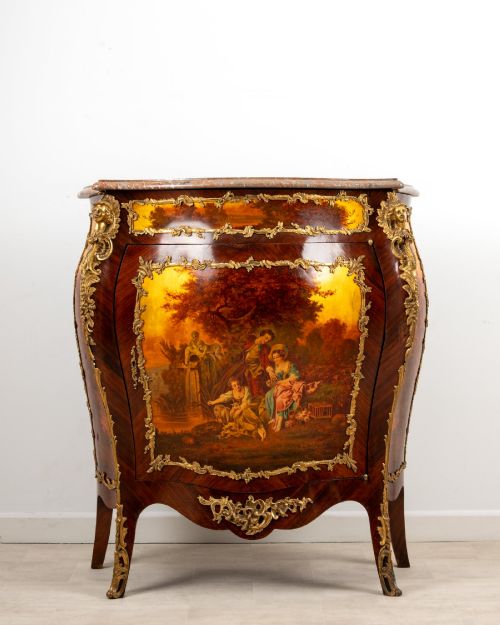
Cabinetmakers utilised woods such as satinwood, mahogany, maple, pine, and rosewood as a foundation for decorative schemes. Ormolu mounts, brass hardware, and marble tops frequently accompany the fine timber frameworks on French and Victorian examples.
Surface decoration relies on skilled brushwork, japanning, and Vernis Martin techniques. Artisans built up layers of paint, lacquer, and gilt, often finishing the work with protective varnish to preserve the delicate motifs over decades of use.
The listings on this site span from the 18th century through to the Art Deco period, featuring satinwood, mahogany, and lacquered wood.
What separates the fine examples
The distinction lies in the crispness of the hand-painted detail and the quality of the timber beneath. Superior pieces display confident, expressive brushwork in the figures and floral elements, whereas lesser items rely on mechanical stencilling or flat, lifeless application.
Construction standards also define the tier of a piece, seen in the selection of figured satinwood, tightly dovetailed drawer boxes, and original brass or ormolu mounts rather than later replacements.
Maple & Co.·Kornilov Brothers·Waring & Gillow
The Hand Painted Side Cabinet Glossary
- Chinoiserie
- European theatrical interpretation of Chinese and East Asian artistic traditions, commonly seen on lacquered and painted furniture with gilt landscapes and figures.
- Satinwood
- A lustrous, yellow-toned timber favoured by cabinetmakers during the Sheraton and Edwardian revival periods for its fine grain and ideal smooth surface for painting.
- Demi-lune
- Half-moon shaped furniture design with a flat back to sit flush against a wall, frequently produced as side cabinets and commodes.
- Vernis Martin
- An eighteenth-century European imitation of Asian lacquerwork, named after the Martin brothers, which utilised copal varnish layers to create a translucent, glossy finish.
- Japanning
- A European form of finishing that mimics Japanese and Chinese lacquer, involving layers of dark varnish and raised gold or coloured motifs.
Hand Painted Side Cabinet: Frequently Asked Questions
Where should I place a hand painted side cabinet?
These cabinets suit hallways, living rooms, and bedrooms where their decorative surfaces can be appreciated without heavy daily wear. They offer useful surface space for lamps or objects while keeping clutter hidden inside.
Because many examples feature delicate painted panels or lacquered finishes, keep them away from direct sunlight and strong heat sources to prevent fading and timber movement.
How do I care for painted wood and lacquer?
Dust the surface gently with a dry, soft cloth. Avoid using modern chemical polishes, abrasive sprays, or water on painted or lacquered panels.
Maintain a stable room temperature and humidity level to protect the wood substrate from expanding and cracking the delicate varnish layers above.
How do I distinguish between an original period piece and a later revival?
Examine the timber construction inside the cabinet, including drawer linings, backboards, and fixings. Older pieces show appropriate tool marks, hand-cut dovetails, and natural wear patterns in the wood.
Revival pieces, such as Sheraton Revival satinwood from the Edwardian era, exhibit machinery-cut elements and distinct finishing techniques that reflect the manufacturing standards of their own century.
What is the difference between Chinoiserie and traditional Chinese lacquer?
Chinoiserie represents European craftsmen interpreting Asian designs through their own aesthetic lens, typically executed on British or continental furniture frames. These pieces often feature whimsical pavilions, figures, and gilt motifs on black or cream painted grounds.
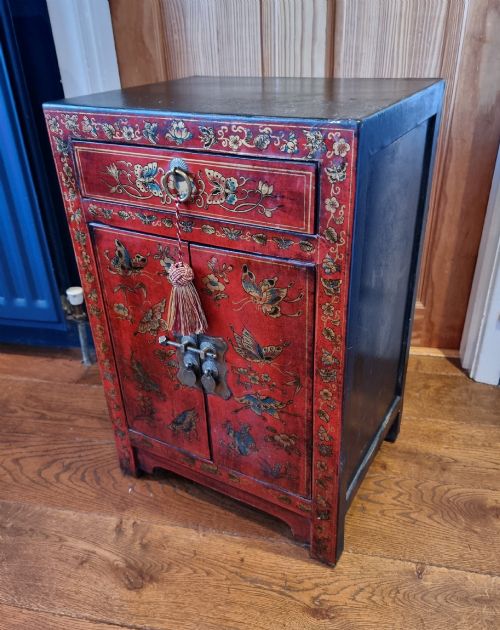
Traditional Chinese lacquer cabinets, such as wedding or marriage cupboards, originate from Asian workshops and utilise native joinery methods alongside authentic regional pigments and lacquering traditions.