


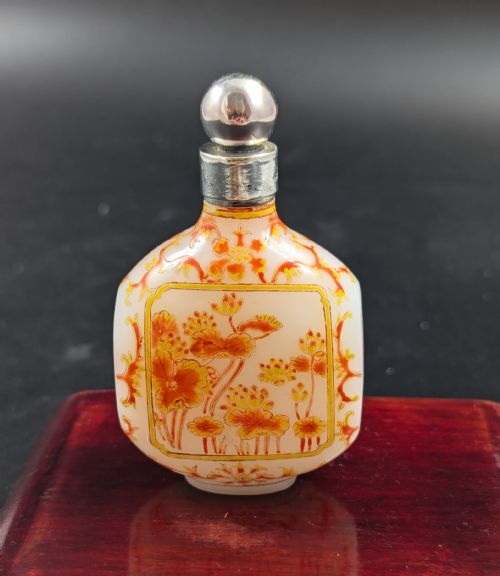

Hand Painted Scent Bottle
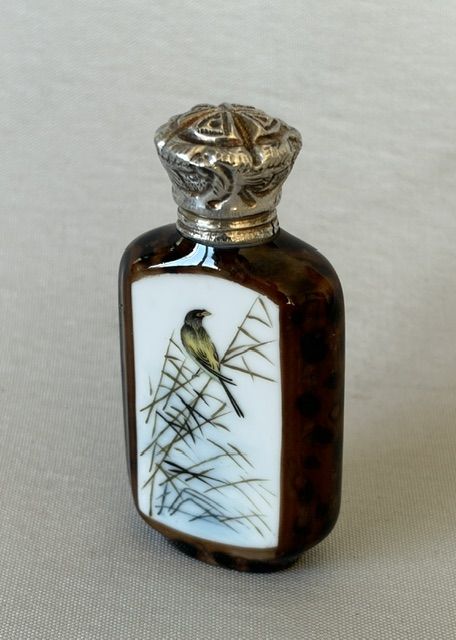
A hand painted scent bottle is a miniature vessel carrying elaborate brushwork, combining function with portable artistry.
Hand Painted Scent Bottle
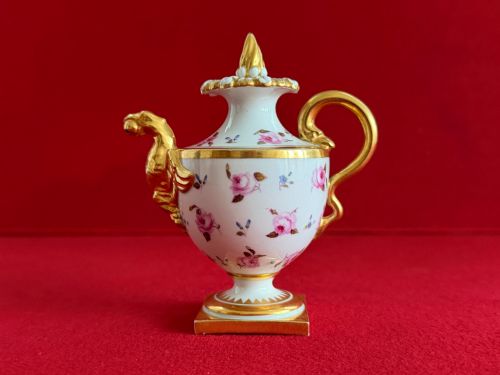
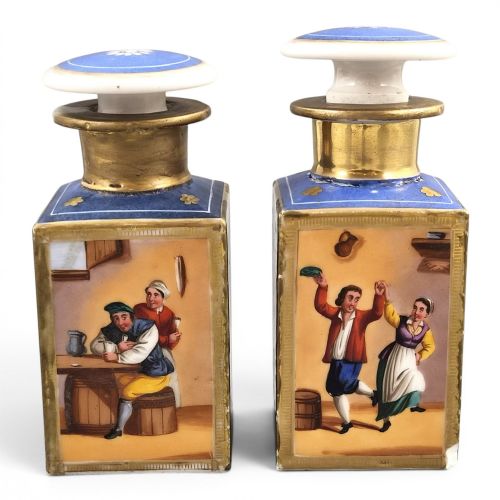
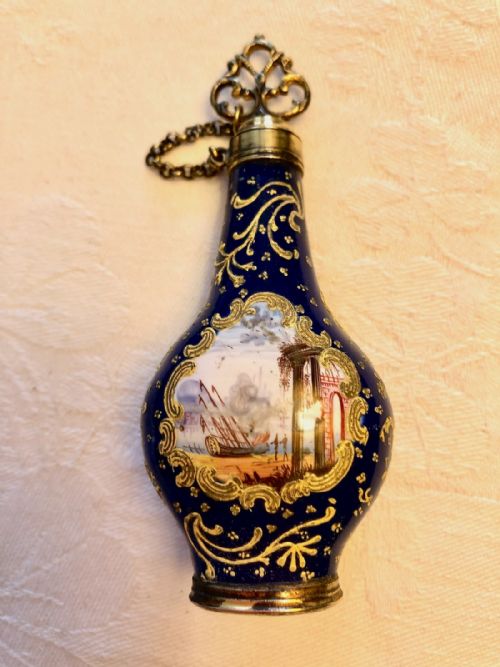
A hand painted scent bottle is a small receptacle designed for holding perfume, utilising delicate decorative surfaces to catch the eye. The pieces gathered here span the Regency and Georgian periods into the nineteenth century, taking the form of porcelain bottles, ewers, and rose water sprinklers.
You are most likely to encounter nineteenth-century Continental porcelain and English porcelain bodies featuring hand-painted scenes, alongside Chinese snuff bottles painted on the inside or decorated with famille rose enamels. These varied forms reflect both European manufactories and Qing dynasty workshops.
Makers such as Flight, Barr and Barr, Jacob Petit, and Minton appear across these items, showing the international appeal of miniature painted ceramics. Whether styled in Rococo revival motifs or orientalist designs, each piece relies on careful brushwork over glazed or enameled surfaces.
How they were made
The foundation of these pieces relies primarily on hard-paste porcelain, enamel, and glass, shaped into small vessels and fired in kilns. Artisans then applied cobalt oxide and enamel colours by hand before a secondary firing to fix the pigments.
Gilt and gold leaf often highlight collars, rims, and painted panels, adding metallic lustre to the ceramic or glass bodies. Some examples integrate repousse silver mounts or Papier Mache boxes to house the delicate glass or porcelain containers safely.
Georgian, Regency, and nineteenth-century periods form the chronological span of the ceramic and glass vessels documented here.
What varies in quality
The refinement of the brushwork distinguishes finer examples from simpler production, particularly in the rendering of facial expressions, floral details, and narrative figures. Crisp execution of hand-painted scenes shows the steady hand of a skilled artisan rather than hurried mass decoration.
The quality of the porcelain body and the richness of the glaze or enamel dictate the longevity and visual depth of the object. Weight, clarity of underlying marks, and the integration of gold leaf or gilt accents also mark the distinction between standard wares and exceptional workshop output.
Flight Barr and Barr·Jacob Petit·Minton
The Hand Painted Scent Bottle Glossary
- Hard-Paste Porcelain
- A dense, durable ceramic composed of kaolin and petuntse fired at high temperatures. It provides a smooth white ground ideal for detailed hand painting.
- Famille Rose
- A palette of opaque enamels dominated by rose pink, introduced in Chinese ceramics during the Qing dynasty. It allowed artists to achieve subtle tonal gradations in floral and figural scenes.
- Bleu de Roi
- A deep, rich royal blue glaze frequently used on nineteenth-century French porcelain. It often serves as a contrasting backdrop for gilt highlights and painted reserves.
- Repousse
- A metalworking technique where the design is hammered into relief from the reverse side. It appears on silver mounts and caps associated with scent containers.
- Rose Water Sprinkler
- A vessel featuring a slender neck designed for sprinkling scented water. These pieces often share decorative vocabularies with standard scent bottles.
Hand Painted Scent Bottle: Frequently Asked Questions
How do I display a scent bottle?
These miniature vessels sit well within cabinets or on dedicated display trays where their painted details can be examined closely. Because of their delicate handles and slender necks, place them away from high-traffic areas.
Keep them out of direct sunlight to preserve the vibrancy of the hand-painted enamels and gold leaf over time.
Were these bottles meant to be carried?
Many smaller nineteenth-century examples and snuff bottles were designed for pockets or purses, intended for personal daily use. Others, such as porcelain garniture pieces or rose water sprinklers, remained stationary as dressing table ornaments.
Examine the presence of stoppers and mounting hardware to understand whether a specific piece was built for travel or display.
How can I tell the period?
Stylistic cues such as Regency neoclassical lines, French Rococo revival curves, or Qing dynasty motifs offer initial chronological clues. Examining the paste, glaze characteristics, and any workshop marks helps narrow down the production decade.
Comparing the hand-painted palette against known factory output from makers like Minton or Jacob Petit confirms the timeframe.
What is inside Chinese snuff bottles?
Chinese snuff bottles were made to contain powdered tobacco used for clearing the nasal passages. The internal painting technique required artists to work through the tiny neck using specialised angled brushes.
Today these bottles are collected for their miniature interior artistry rather than their original contents.