



Vintage Silver Vanity Bottle
A vintage silver vanity bottle brings dressing table elegance to hand, holding perfume or cologne within glass and precious metal mounts.
Vintage Silver Vanity Bottle
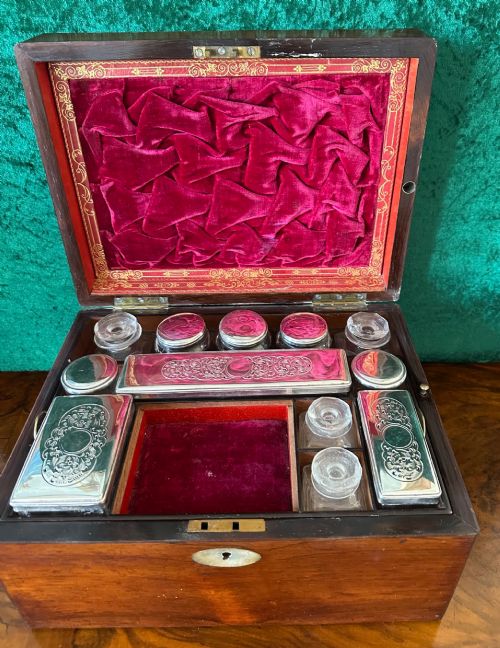
When searching for a vintage silver vanity bottle, buyers encounter scent bottles, perfume decanters, and dressing table jars produced across the Victorian, Edwardian, and Art Deco periods. These containers range from small globular flasks meant for travel to larger table pieces designed to sit upon a dressing case or mirrored plateau.
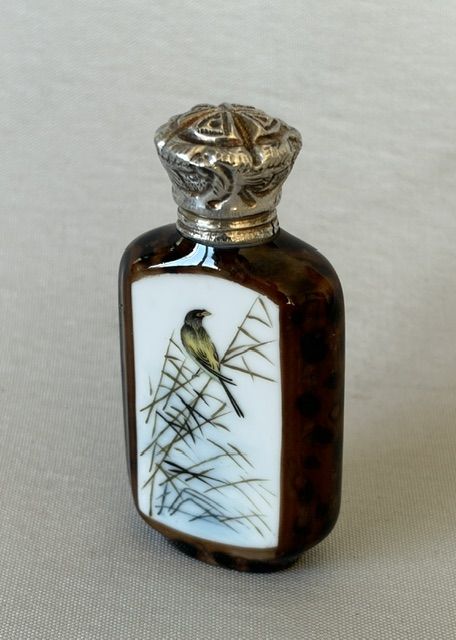
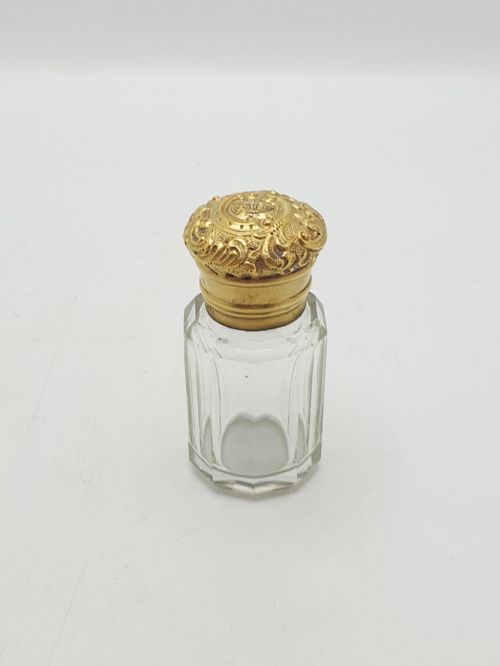
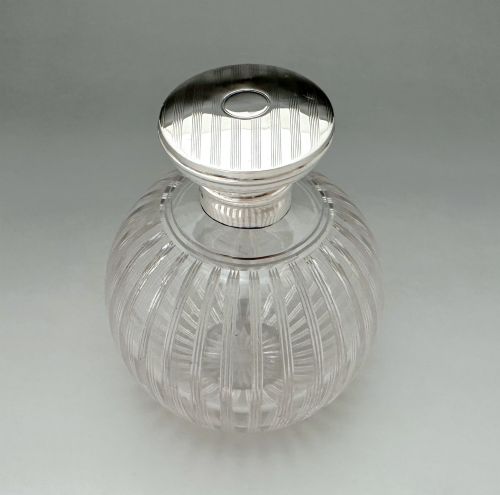
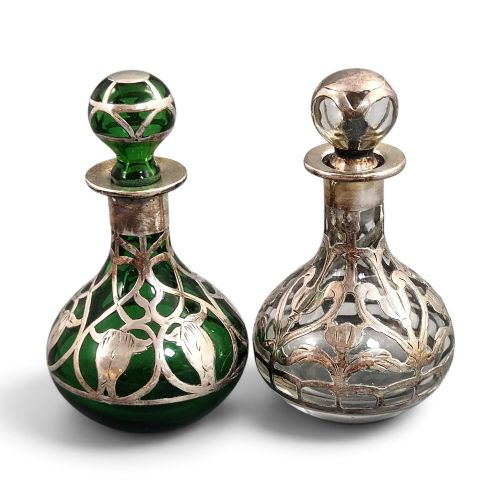
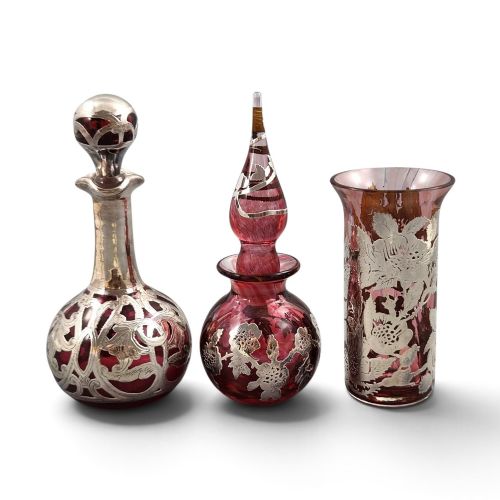
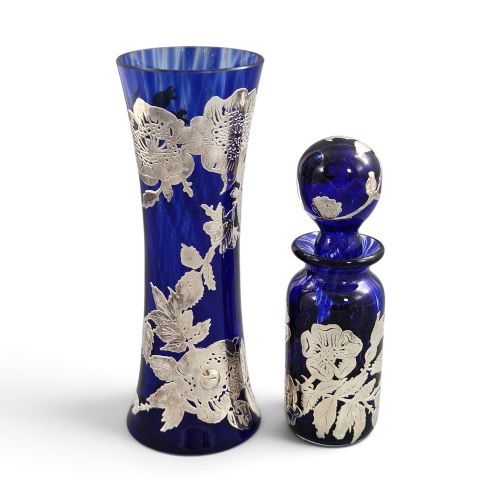
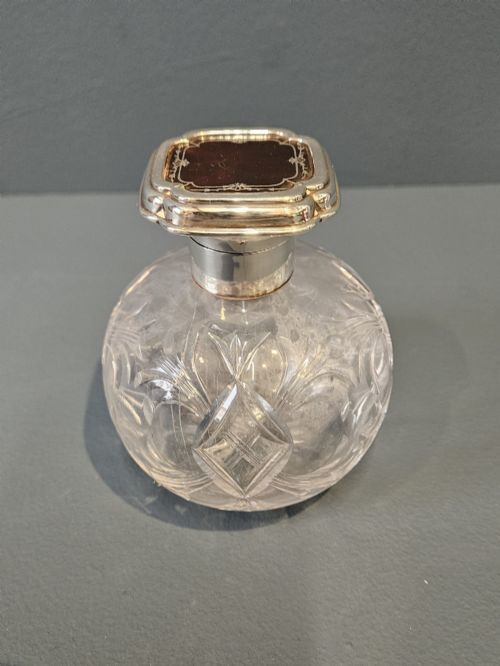
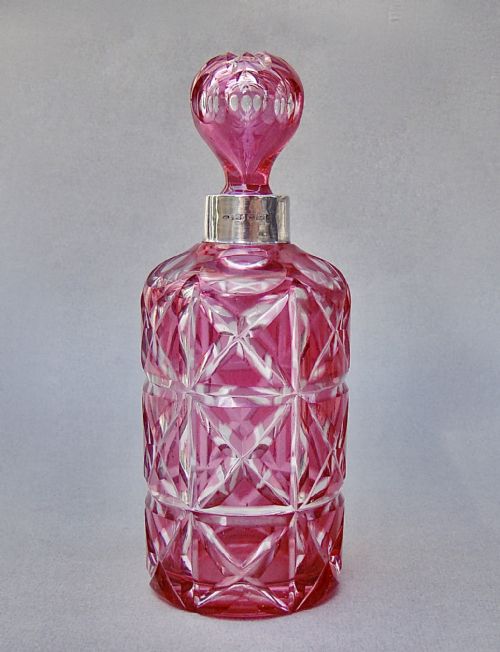
The most common versions on this page pair cut glass or crystal bodies with sterling silver collars, lids, or overlay mounts. Alongside standard clear glass, examples appear in ruby glass, cranberry glass, opaline glass, cobalt glass, and tortoiseshell.
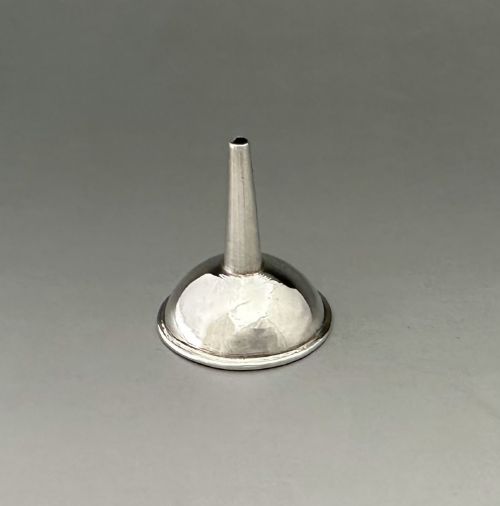
Origins span English workshops in Birmingham and London alongside Continental makers in France and Bohemia. Pieces take forms from simple cylindrical flasks to elaborate faceted shapes incorporating atomisers and funnels.
How They Were Made
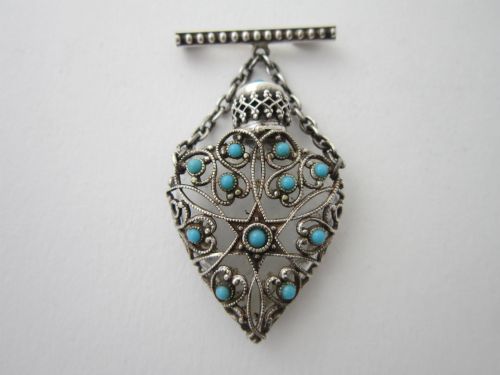
Glass bodies were mouth-blown and often heavily cut, wheel-engraved, or moulded to create facets that catch the light. Overlay techniques involved encasing the glass in pierced silver or sterling silver sheet cut into organic Art Nouveau motifs or geometric Art Deco patterns.
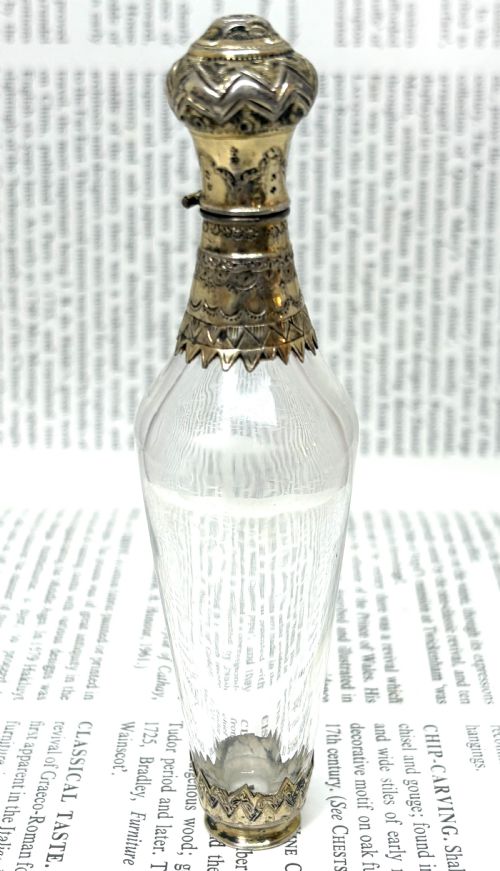
Silver mounts and lids were shaped by spinning, stamping, or casting, then hand-chased or engraved with floral and linear designs. Many incorporate glass stoppers beneath screw caps or hinged lids fitted with cork seals to prevent evaporation.
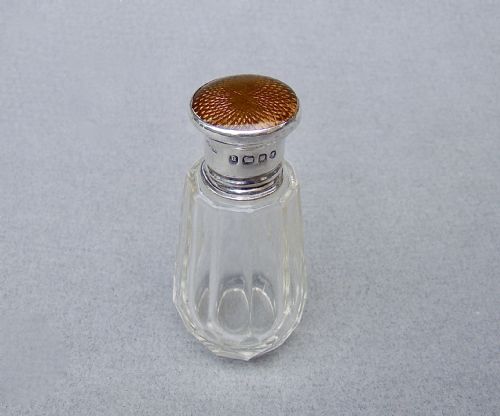
Enamel work appears as guilloché patterns beneath translucent coloured glazes or as painted enamel scenes applied directly to the silver mount. Tortoiseshell insets were shaped and polished to fit flush into silver lids.
Materials range from sterling silver and cut crystal to tortoiseshell, enamel, and opaline glass.
What Varies in Quality
Quality rests upon the weight and clarity of the glass coupled with the gauge of the silver. Thicker crystal with deep, crisp wheel-cutting stands above thin, pressed glass bodies.
The execution of the metalwork separates standard production from finer output. Hand-chased mounts, intact guilloché enamel without chips, and tightly fitted inner stoppers indicate superior craftsmanship.
The reputation of the silversmithing firm, demonstrated by clear hallmarks from established makers, contributes significantly to the standing of an individual piece.
Gorham·Laugharne Glass·Harold Bushell and Co·Henry Perkins·Karl Palda·G H James and Co·Barnsley and Co·Adie Brothers Ltd·Mappin and Webb
The Vintage Silver Vanity Bottle Glossary
- Sterling silver
- A silver alloy containing 92.5 percent pure silver by mass and 7.5 percent other metals, usually copper. This standard composition is found stamped on the mounts and collars of British vanity bottles.
- Guilloché enamel
- A decorative technique where a precise pattern is mechanically engraved into metal beneath a translucent layer of enamel. It produces a shimmering, repeating geometric effect popular on Art Deco pieces.
- Cut crystal
- Glass containing lead oxide that increases its weight, brilliance, and refractive index. It allows for deep, sharp facets on perfume bottles.
- Overlay
- A technique where a thin layer of silver is fitted over the glass body of a bottle. The metal is often pierced in floral or abstract designs.
- Opaline glass
- An opaque or translucent glass produced in white or pastel shades. It gained popularity during the nineteenth century for decorative vanity items.
- Atomiser
- A spray mechanism fitted to a perfume bottle using a bulb and internal tube to disperse scent as a fine mist. These appear frequently on twentieth-century vanity pieces.
Vintage Silver Vanity Bottle: Frequently Asked Questions
How do I clean a vintage silver vanity bottle?
Use a soft cloth and warm soapy water for the glass exterior while keeping moisture away from historic corks and paper linings. Polish the silver mounts gently with a dedicated cloth, taking care not to let polish stain surrounding glass or enamel.
Avoid submerging pieces that combine tortoiseshell or glued enamel elements in water. A cotton bud works well for clearing dried residue from the interior without disturbing fragile collars.
Are the stoppers original to the bottles?
Original glass stoppers fit snugly and often share a matching number or grinding mark with the neck of the bottle. Replacements may sit loosely or show slight variations in glass tint and weight.
Examining the ground glass mating surface reveals whether the stopper has ground down together with the neck over decades of use.
Can I still use these for perfume?
Most antique bottles function adequately for modern fragrances provided the internal cork or ground glass seal remains intact. Volatile oils can evaporate quickly if the closure has worn down over time.
Testing the seal with water before filling prevents accidental leakage of precious scents. Historic residue should be rinsed out thoroughly to avoid altering new perfumes.
How do I date an unmarked silver mount?
British pieces feature hallmarks denoting the assay office, standard mark, and date letter. Reference tables matching these assay letters provide the exact year of manufacture.
Continental and unmarked items rely on stylistic clues such as the flowing organic lines of Art Nouveau or the strict symmetry of Art Deco.