



Gilded Porcelain Scent Bottle
A gilded porcelain scent bottle offers a touch of vanity and refinement, crafted in porcelain and enriched with gold leaf for the dressing table.
Gilded Porcelain Scent Bottle
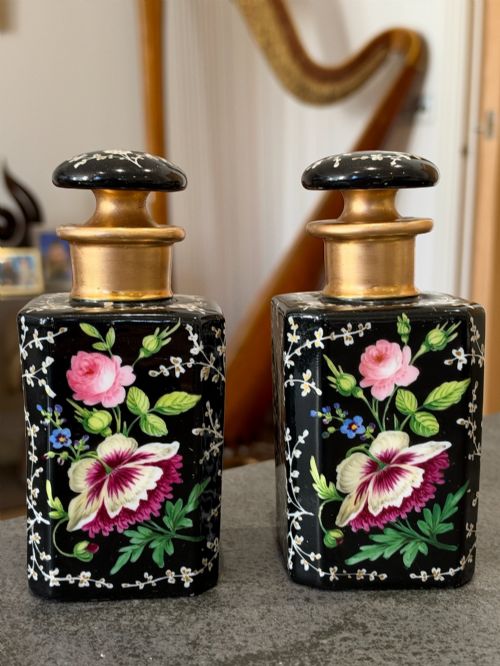
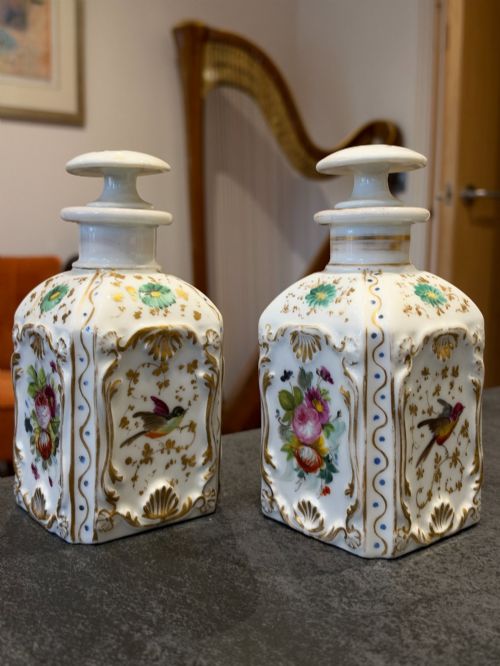
A gilded porcelain scent bottle brings together ceramic artistry and metallic decoration, spanning the nineteenth century from the Regency period to the Edwardian era. These pieces take various forms, including miniature vases with covers, figural perfume bottles, and rose water sprinklers designed for personal use.
Makers across England and the continent produced these items in styles ranging from French Rococo Revival to Continental Orientalist. Buyers encounter wares from notable factories like Worcester and Derby alongside French pieces by Jacob Petit.
The selection includes specialised items such as parian ware vessels and Chinese snuff bottles alongside traditional perfume containers. Each piece reflects the decorative tastes of its period, utilising glaze, enamel, and gold leaf upon hard-paste and soft-paste ceramic bodies.
How they were made
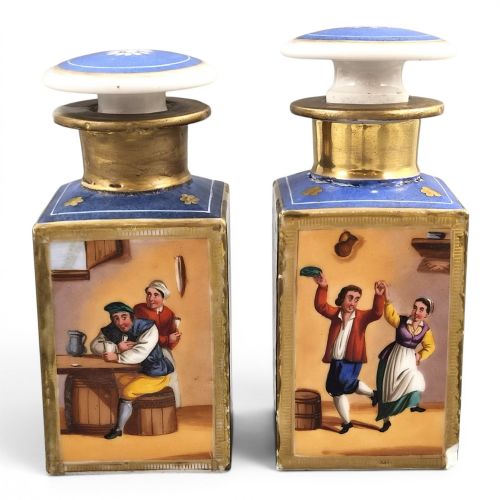
Potters shaped these vessels from hard-paste and parian ware, applying glaze before firing the ceramic bodies to a durable finish. Skilled artisans then painted delicate scenes, floral motifs, or encrustations directly onto the porcelain surface using enamels.
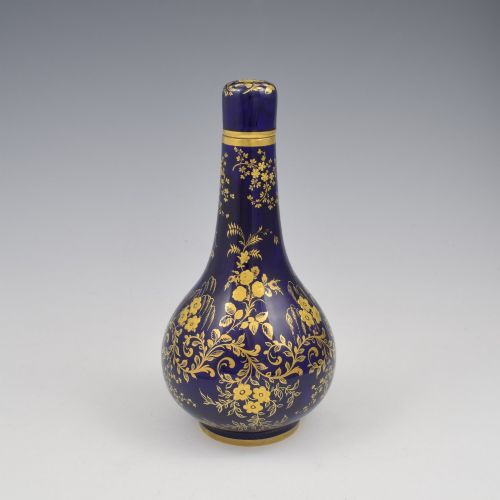
Guilders applied gold leaf and gilt highlights by hand, framing painted panels in blue grounds such as bleu de roi. Subsequent low-temperature firings fixed the metallic leaf and enamel colours permanently to the glaze.
Gilded Porcelain Scent Bottle Retail Price Guide 2026
Typical asking prices for gilded porcelain scent bottle among the pieces listed under this phrase on Sellingantiques today, from the lower quarter to the upper quarter. They describe what is for sale here now, not the wider market.
Forget-me-not encrustations cling to porcelain surfaces, ensuring flowers stay perpetually fresh without watering.
What varies in quality
The refinement of the hand-painted decoration separates standard production from superior examples, particularly where portraiture or detailed figures appear. Precision in the application of gold leaf and the crispness of moulded porcelain details also indicate higher workshop standards.
The distinction between factory-marked vessels, such as those from Flight, Barr and Barr or Royal Worcester, and unmarked continental wares influences character and attribution. The complexity of forms, from simple cylindrical bottles to figural sculptures and garniture sets, demonstrates the maker's ambition.
Derby Porcelain·Jacob Petit·Crown Staffordshire·Royal Worcester·Flight, Barr and Barr
The Gilded Porcelain Scent Bottle Glossary
- Bleu de roi
- A deep royal blue glaze developed at the Sèvres factory and utilised by nineteenth-century porcelain makers. This rich background colour frequently serves as a contrast for heavy gilding.
- Parian ware
- A fine-grained unglazed porcelain resembling marble, introduced during the nineteenth century for sculptural vessels. It allows for crisp relief work and figures.
- Garniture set
- A matched group of three or more decorative ceramic vessels designed for display on a mantelpiece or sideboard. They share decorative schemes including gilding and painted scenes.
- Hard-paste porcelain
- A durable ceramic material fired at high temperatures, composed of kaolin and petuntse. It provides a dense, white body suitable for intricate ornamentation.
- Rose water sprinkler
- A specialised vessel with a narrow neck designed for dispensing perfumed water. These often feature elaborate gilding and painted details.
Gilded Porcelain Scent Bottle: Frequently Asked Questions
What is a gilded porcelain scent bottle?
A small ceramic vessel designed to hold perfume, decorated with gold leaf or gilt highlights. These items date primarily across the nineteenth and early twentieth centuries.
They combine practical function with decorative art, often featuring hand-painted scenes or floral encrustations.
How were these perfume bottles used?
Owners kept them on dressing tables to store liquid scents and rose water for personal freshening. They served as portable luxuries for travel or social calls.
Many pieces included stoppers or covers to preserve volatile fragrances within the chamber.
How do I identify Regency pieces?
Regency items display neoclassical influences, clean lines, and meticulous hand-painting from makers such as Flight, Barr and Barr. They date roughly from the early nineteenth century.
Gilding on these examples is often paired with fine cobalt blue grounds and classical forms.
What distinguishes Victorian scent bottles?
Victorian examples often embrace revival styles, including French Rococo and ornate floral encrustations. Makers utilised parian ware and vibrant enamel colours during this era.
The decoration tends toward heavier gilding and more elaborate figural or botanical motifs.
How should I care for antique porcelain?
Display these delicate vessels away from direct sunlight and dust them gently with a soft dry brush. Avoid using liquid cleaners on the gilded surfaces.
Handle pieces by the body rather than protruding elements like necks or fragile covers to prevent damage.