




Pair of Scent Bottles
A pair of scent bottles brings dressing table symmetry and portable fragrance, cast in cut glass and silver.
Pair of Scent Bottles
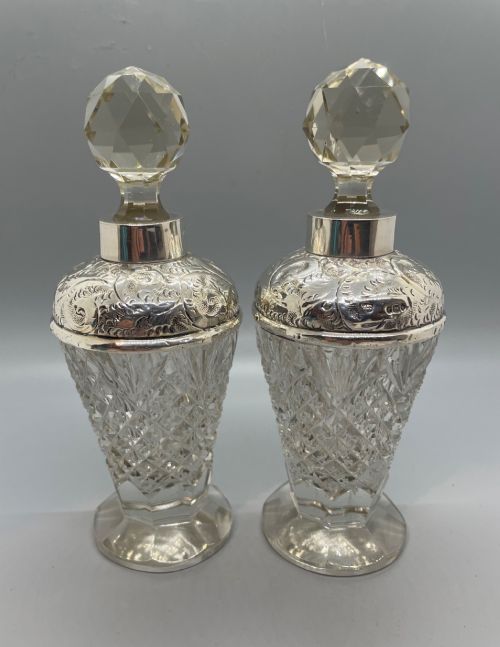
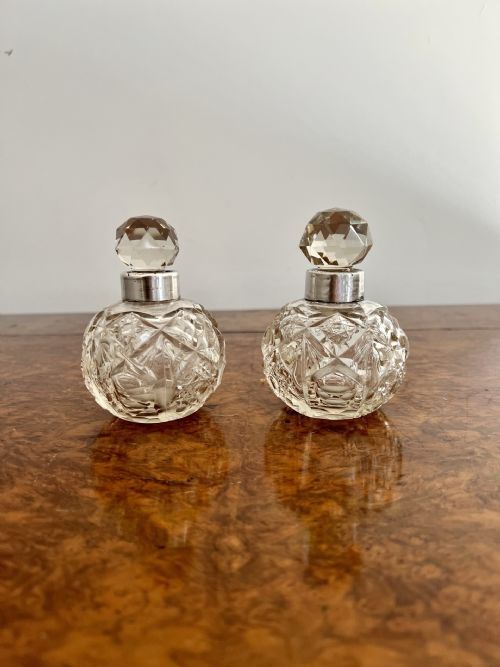
A pair of scent bottles unites vanity accessories that survived together from dressing rooms and travelling cases. The form appears most frequently in Victorian and Edwardian cut glass paired with sterling silver collars, mounts or hinged lids.
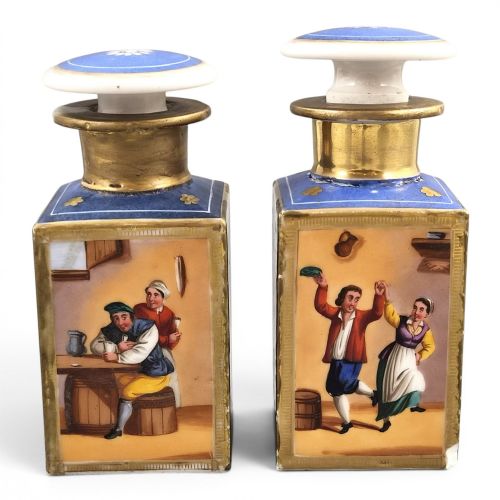
Makers from the nineteenth and early twentieth centuries also produced porcelain, enamel and pressed glass versions. Examples range from compact globular vessels to taller decanter forms designed for boudoir display.
Materials and Construction
Cut glass and crystal form the heavy bodies, shaped by wheel-cutting to create geometric facets that catch light. Sterling silver mounts, collars and enamel tops are secured by hand, often bearing hallmarks for assay offices in London and Birmingham.
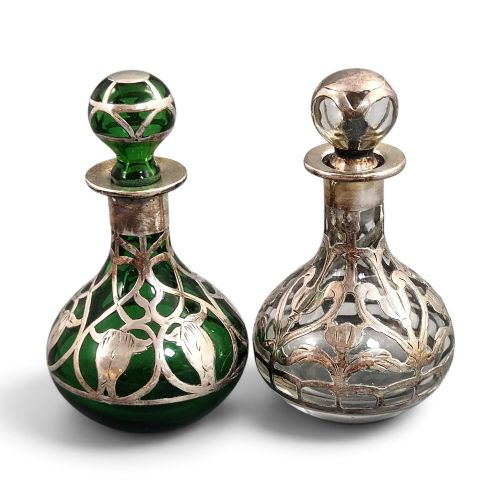
Specialised techniques include sterling silver overlay fused to glass, hand-painted porcelain panels and delicate gold leaf or gilt decoration applied to opaline and coloured glass.
Some Victorian travelling sets included secret spring-loaded lids designed to prevent precious perfume from spilling in horse-drawn carriages.
Distinctions in Execution
Quality rests upon the depth of the glass cutting and the weight of the silver mounts. Fine examples maintain crisp facets without rounding and retain tight, functional hinges on their caps.
Artistry in the enamel work, the purity of the porcelain body and the presence of clear maker marks or clear hallmarks separate standard production from exceptional studio output.
Gorham·Jacob Petit·Minton·Karl Palda·George Unite·John Newton Mappin
The Pair of Scent Bottles Glossary
- Sterling Silver
- An alloy of silver containing 92.5 percent pure silver and 7.5 percent other metals, typically copper. This standard alloy provides the durability needed for bottle collars and hinged lids.
- Cut Glass
- Glass shaped and patterned by holding it against a revolving abrasive wheel. The process produces sharp, light-refracting facets across the body of the bottle.
- Silver Overlay
- A decorative technique where molten or sheet silver is applied directly onto a glass surface in intricate patterns. It creates a striking contrast between metal and translucent material.
- Hallmark
- An official mark stamped onto precious metals to indicate purity, origin city and assay year. British pieces commonly show town marks and date letters.
- Opaline Glass
- An opaque or translucent art glass developed in France, coloured with bone ash or metal oxides. It presents a milky pastel appearance often paired with gilt painting.
Pair of Scent Bottles: Frequently Asked Questions
How were pair of scent bottles used?
These vessels held liquid perfumes for personal application on the skin or clothing during the Victorian and Edwardian eras. They sat upon dressing tables or travelled inside fitted leather vanity cases.
Their dual nature allowed owners to keep two distinct fragrances ready for daily use or evening wear.
How do I date an antique pair of scent bottles?
Dating relies heavily on silver hallmarks stamped onto the collars or lids, which reveal the assay office and exact year of manufacture. Stylistic shifts, such as Edwardian restraint or Art Nouveau botanical curves, also point to specific decades.
Material choices like opaline glass or tortoiseshell help narrow the period of production when metal marks are absent.
How should I clean silver mounts on glass?
Silver components require gentle polishing with a microfibre cloth while avoiding contact with the glass body or enamel sections. Liquid polishes can seep beneath collars and damage historical adhesives.
Routine dusting and minimal moisture preserve both the metal shine and the interior integrity of the bottle.
Are replacement stoppers common in these bottles?
Stoppers were easily misplaced or broken during daily use, meaning many surviving pieces feature matched replacements or lack them entirely. Buyers should inspect the neck interiors to see if stoppers are original to the glass body.
Matching glass facets and consistent wear patterns help confirm whether the stopper belongs to the bottle.