


Edwardian Dressing Table Bottle
These edwardian dressing table bottle pieces are the glass and silver vanity vessels you need to complete a period dressing table.
Edwardian Dressing Table Bottle
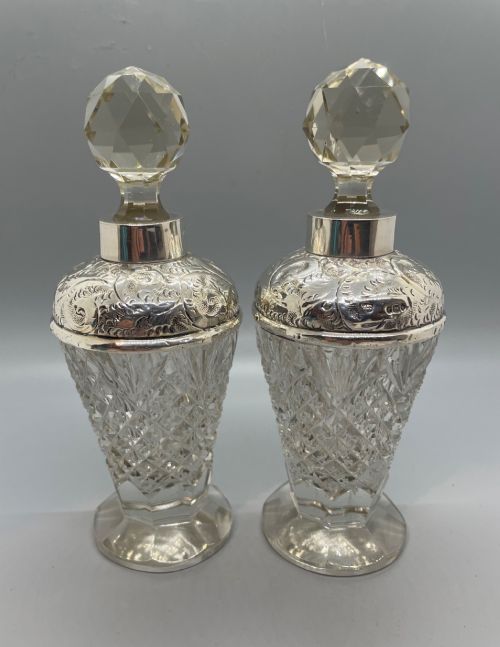
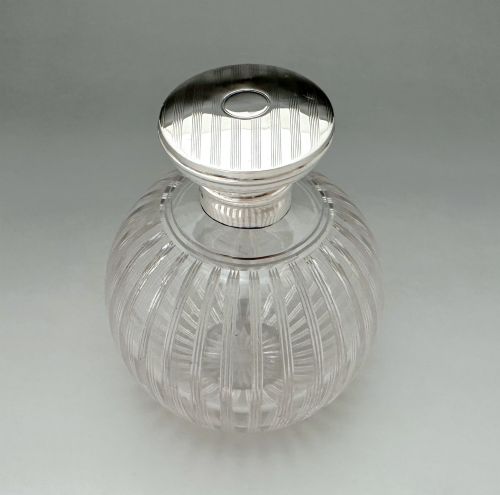
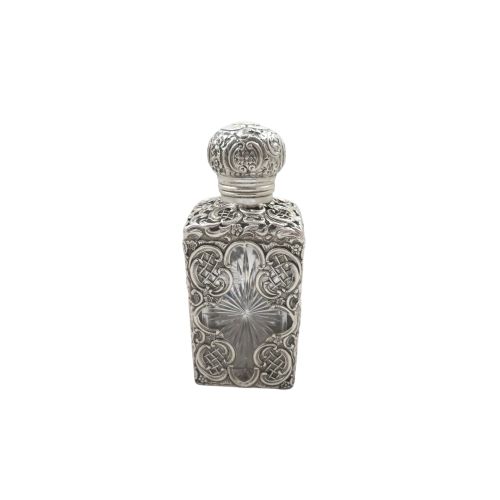
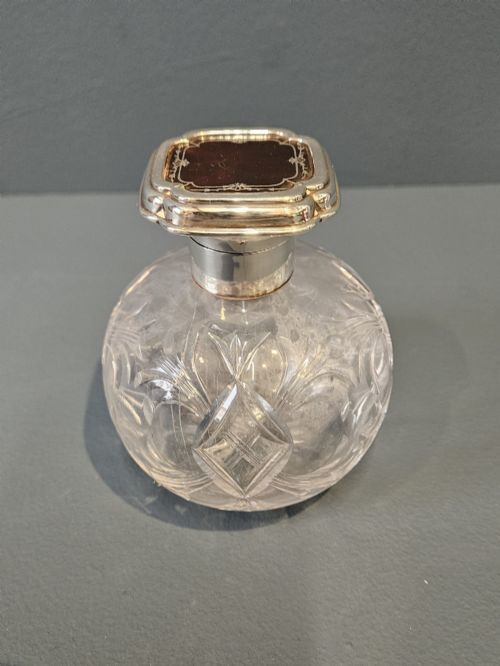
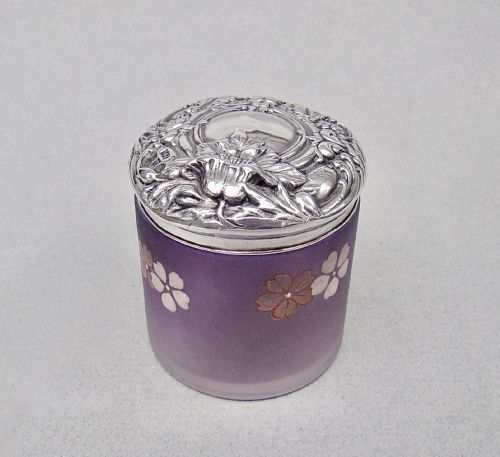
An edwardian dressing table bottle is a vanity accessory designed for holding perfume, cologne, or cosmetics on a dressing table. The pieces found here span scent bottles, perfume decanters, dressing table jars, and vanity containers made across the Edwardian era and adjacent periods like the Victorian and George V years.
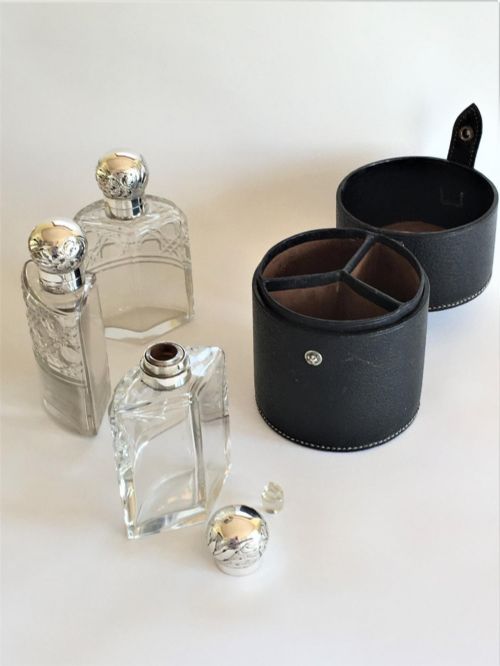
Most examples combine a glass or crystal body with a mounted metal top. You will encounter single bottles, pairs, cased trios, and broader collections of dressing table accessories.
The forms range from small pocket-sized scent bottles to larger perfume decanters and heavy vanity jars. They sit comfortably within Edwardian, Art Nouveau, Art Deco, and Victorian aesthetic traditions.
Materials and construction
The bodies are formed from glass, cut crystal, or frosted glass, frequently featuring cut or engraved patterns. Cut crystal and lead crystal provide weight and clarity to the vessels.
Mounts, collars, and lids are fashioned from sterling silver, often hallmarked for assay offices in London, Birmingham, or Chester. Certain pieces incorporate tortoiseshell, enamel, or guilloche enamel panels set into the silver tops.
The listings show items spanning the Victorian era, Edwardian period, and the 1920s and 1930s, using sterling silver, cut glass, tortoiseshell, and enamel.
What sets individual pieces apart
Quality rests in the crispness of the glass cutting and the weight of the metal mount. Thickly cast sterling silver lids and deep, sharp crystal facets distinguish finer examples.
The integration of secondary materials such as tortoiseshell or enamel introduces further distinction. Pieces that survive as matched pairs or complete cased trios carry greater substance than isolated items.
Barnsley and Co
The Edwardian Dressing Table Bottle Glossary
- Sterling silver
- A silver alloy containing 92.5 percent pure silver by mass, standard for quality British vanity mounts. It provides durability and a bright finish for bottle collars and lids.
- Guilloche enamel
- A decorative technique where precise patterns are mechanically engraved into metal beneath a translucent layer of enamel. It appears on select Art Deco and Edwardian bottle lids.
- Tortoiseshell
- Material sourced from the shell of certain turtle species, used as an overlay on silver-topped vanity jars and bottles. It brings a rich, mottled brown warmth to the design.
- Cut crystal
- Glass containing lead oxide that is faceted by grinding and polishing to increase brilliance and refraction. It forms the heavy, sparkling body of many perfume bottles.
- Hallmark
- A series of official marks stamped on precious metals indicating the standard of purity, the assay office, and the year of manufacture. These stamps help date silver bottle mounts.
Edwardian Dressing Table Bottle: Frequently Asked Questions
What is an edwardian dressing table bottle used for?
These vessels held perfumes, colognes, salts, and cosmetics on the dressing tables of the early twentieth century. They served both a functional role in daily grooming and a decorative purpose in the bedroom.
Today they function as display objects or usable vanity accessories. Their enclosed stoppers and fitted silver lids keep modern scents and oils securely stored.
How do I tell an Edwardian bottle from a Victorian one?
Dating relies heavily on the silver hallmarks found on the collars and lids, which record the exact year and assay office. Stylistic clues also help, as Edwardian pieces often lean towards lighter proportions compared to heavy Victorian lead crystal.
Examine the overall design for stylistic markers like Art Nouveau curves or strict George V symmetry. Comparing the cut glass patterns to the known production periods provides further confirmation.
Are these bottles watertight?
Many retain their original glass stoppers or internal cork liners within the silver lids. However, age can affect the tight fit of vintage stoppers and cork.
Testing with water should be done carefully if you intend to use them for liquids today. Many collectors prefer to display them dry to preserve the interior condition.
How should I clean silver and glass bottles?
The glass bodies can be washed gently with warm soapy water using a bottle brush if needed. Care must be taken to avoid submerging tortoiseshell or enamel panels in liquid.
Silver mounts respond well to a soft cloth and proprietary silver polish applied sparingly around the hallmarks. Keeping polish away from the glass and enamel protects the surrounding materials.