


Hand Painted Pottery Figurine
A hand painted pottery figurine brings shelf-ready character to a room through centuries of moulded clay and pigment.

Hand Painted Pottery Figurine
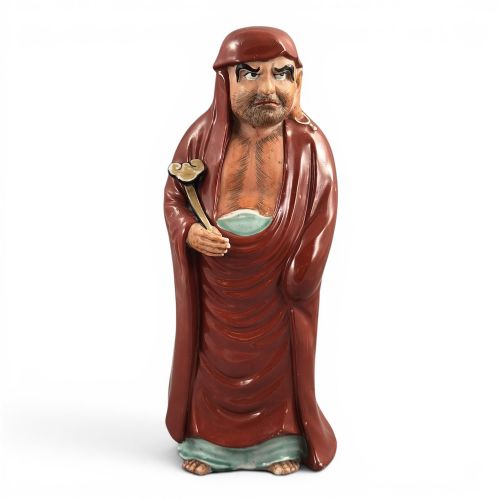
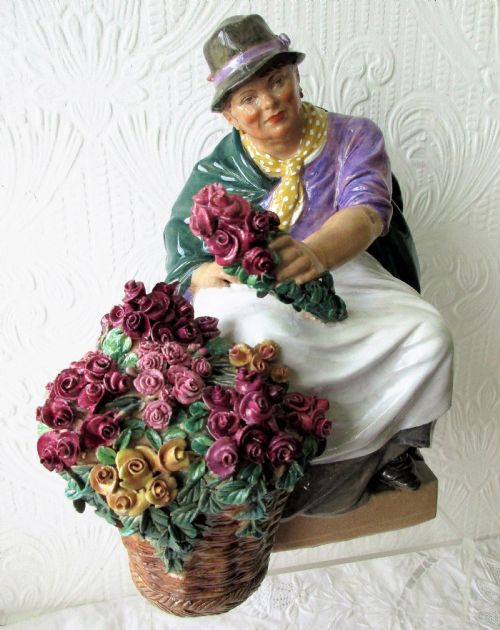
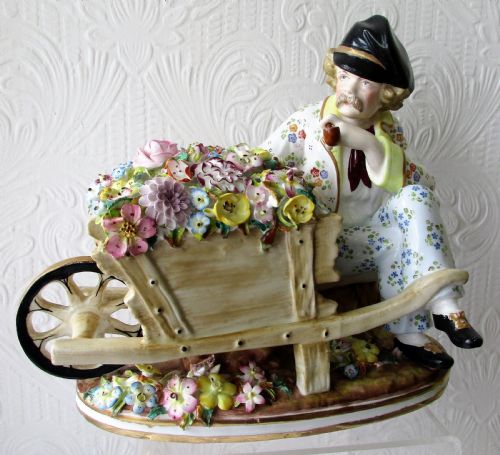
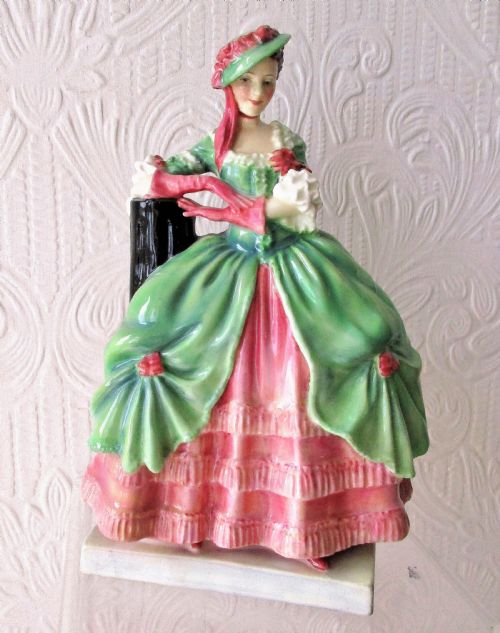
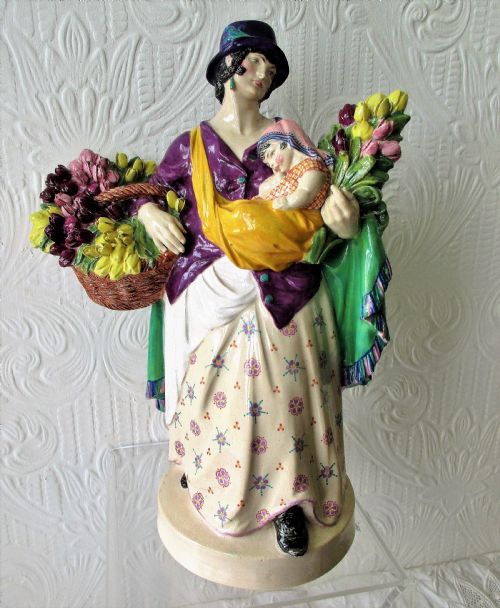
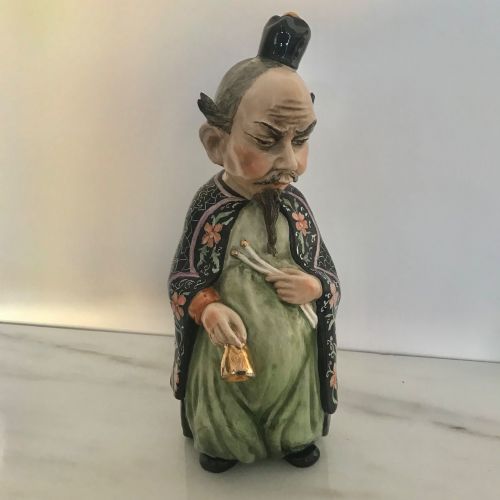
A hand painted pottery figurine encompasses moulded ceramic, earthenware, and porcelain sculptural pieces finished by hand with enamel, glaze, and gold leaf. These works span the nineteenth century into the twentieth century, originating from English potteries, French makers, Chinese kilns, and Japanese studios.
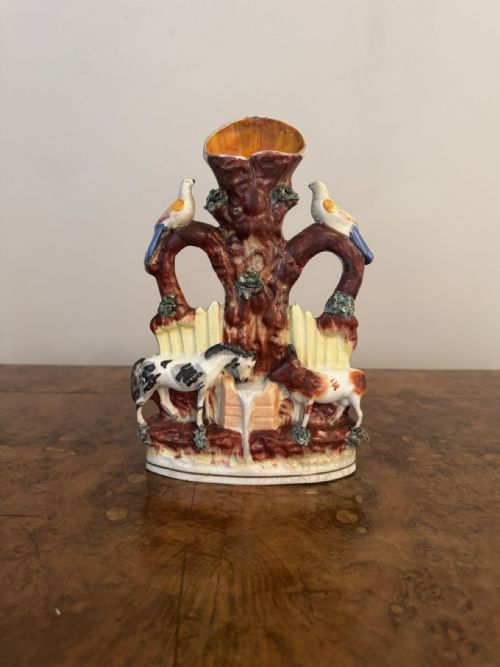
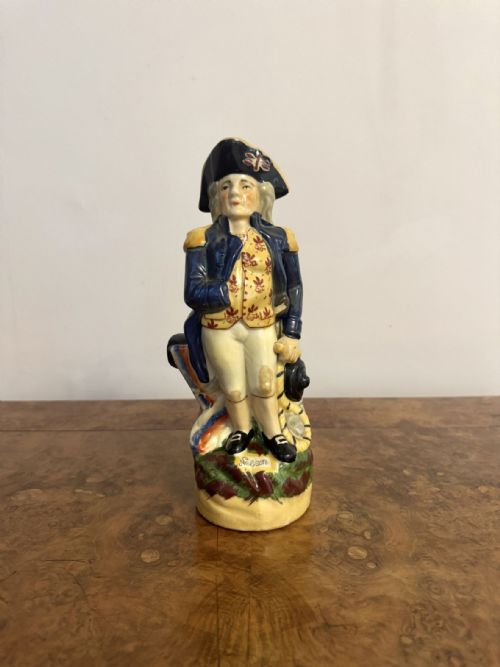
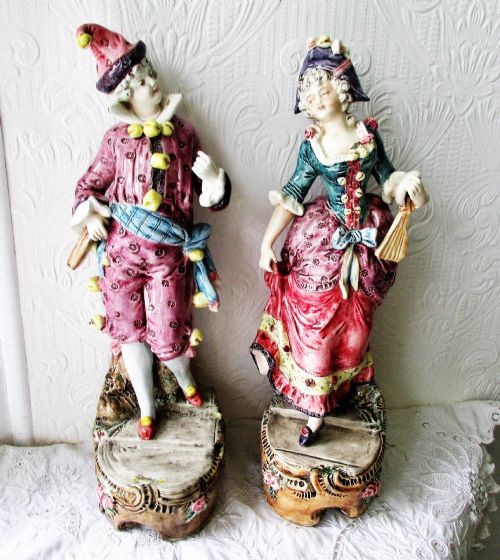
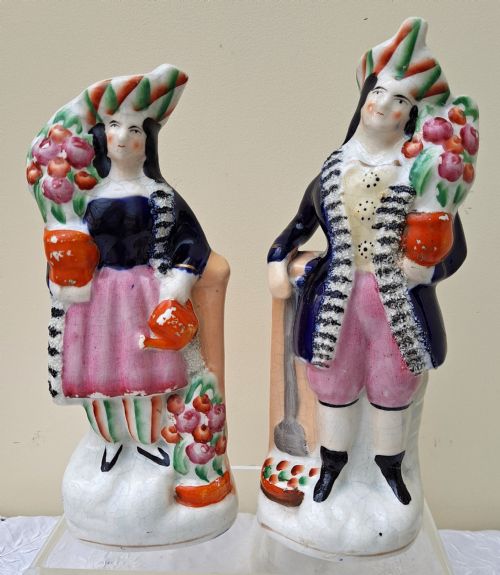
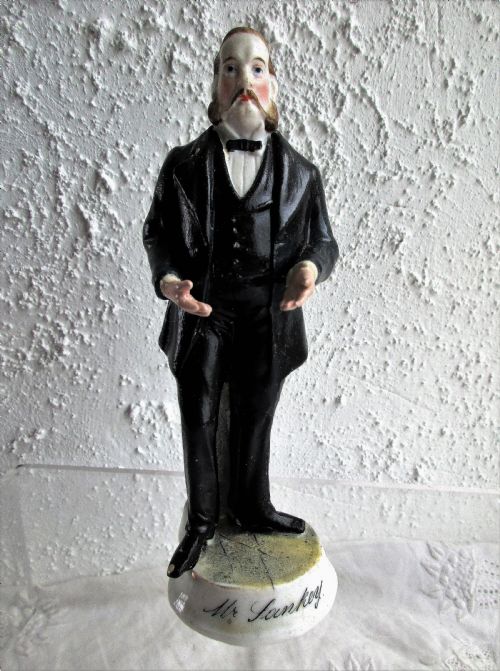
Victorian Staffordshire figures dominate the selections, appearing as flatbacks, animals, toby jugs, portrait groups, and literary characters. Alongside these Staffordshire works, buyers encounter Art Deco ceramic busts, French earthenware carnival figures, and Satsuma wares.
Forms range from single figures and pairs of spaniels to complex watch-holders and multi-figure groups. Makers and studios utilise traditional ceramic bodies finished with detailed brushwork to depict humans, animals, and historical subjects.
Materials and methods
Potters form these objects using earthenware, ceramic, and porcelain clays, shaping them through moulds or studio modelling before firing. Lead glaze and standard glazes provide the foundational glossy or satin coat.
Surface decoration relies on enamel and hand painting, sometimes accented with gold leaf. Kiln firing sets both the body and the applied pigments into permanent form.
Listings span from the mid-nineteenth century through the 1940s, featuring earthenware, porcelain, and lead glaze.
Assessing quality
Quality rests in the crispness of the moulding and the dexterity of the hand painting across the surface. Finer examples display precise facial expressions, controlled enamel brushwork, and well-defined details on garments or animal coats.
Substantial weight, balanced proportions, and careful application of gold leaf or glaze distinguish superior pieces from simpler utilitarian production.
Charles Vyse·John Bevington·Royal Doulton
The Hand Painted Pottery Figurine Glossary
- Flatback
- A figure moulded with a finished front and a flat, unadorned reverse designed to sit flush against a wall.
- Toby jug
- A pottery jug shaped as a seated, full-figured person, typically wearing eighteenth-century attire.
- Satsuma ware
- Japanese pottery featuring a crackle-glazed earthenware body decorated with enamels and raised gold.
- Earthenware
- Porous pottery fired at lower temperatures, commonly used for nineteenth-century Staffordshire figures.
- Okimono
- A Japanese decorative freestanding figurine intended for display in a home.
Hand Painted Pottery Figurine: Frequently Asked Questions
What is a Staffordshire flatback?
A Staffordshire flatback is a nineteenth-century earthenware figure designed to be placed on a mantelpiece or shelf against a wall. The back is left unpainted and flat because the maker intended the piece to be viewed only from the front.
These figures often depict royalty, historical events, domestic animals, or literary scenes. They reflect popular culture and news of the Victorian era translated into ceramic form.
How do I date these figures?
Dating relies on stylistic markers, clay types, and known production periods recorded in the listings. Nineteenth-century pieces typically utilise heavy earthenware bodies with hand-applied lead glazes.
Twentieth-century examples transition towards studio pottery, Art Deco styling, or refined porcelain bodies. Examining the base, glaze texture, and painting style helps place the piece within its historical decade.
Were these figures meant for display?
Most decorative figures and spill vases served as parlour ornaments for middle-class homes during the Victorian and Edwardian periods. They provided an affordable way to display moral lessons, patriotism, or decorative taste.
Functional items like toby jugs and pepperpots combined daily utility with figurative display. Their placement on mantelpieces brought colour and conversation topics into domestic spaces.
What is the difference between porcelain and earthenware?
Porcelain is a finer, denser ceramic material fired at higher temperatures until vitrified, resulting in a white, non-porous body. Earthenware is a coarser, porous clay body that requires a glaze to become waterproof.
Victorian Staffordshire figures are predominantly earthenware, while Japanese and English studios also utilised porcelain and ceramic bodies for specific sculptural forms.