






Hand Painted Oval Tray
A hand painted oval tray brings painted flowers, birds, and figural scenes into domestic service across porcelain, papier-mâché, and toleware.
Hand Painted Oval Tray
A hand painted oval tray spans serving dishes, decorative platters, and pin trays produced across the eighteenth, nineteenth, and early twentieth centuries. These pieces cross diverse traditions, including English porcelain, French faience, Chinese export, and toleware.
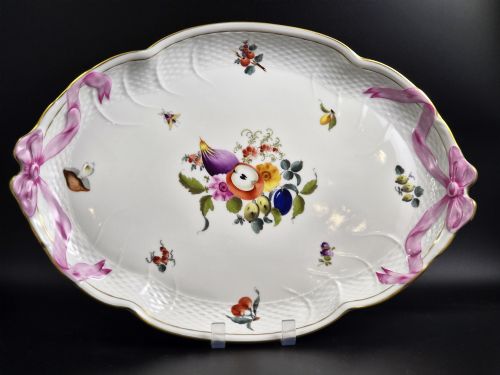
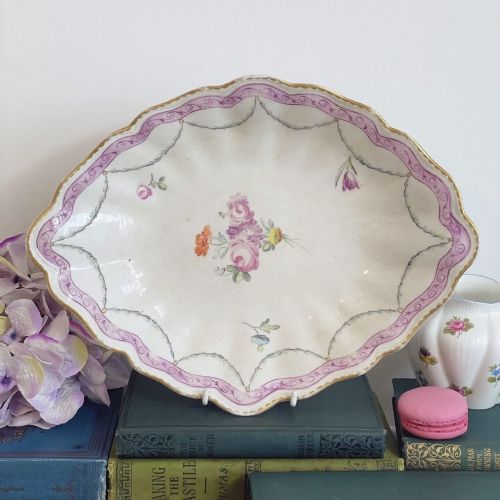
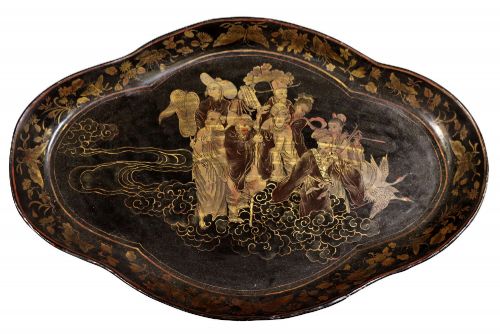
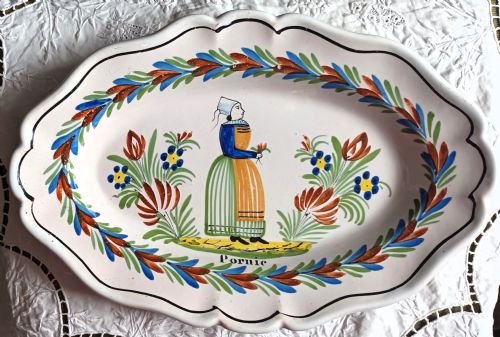
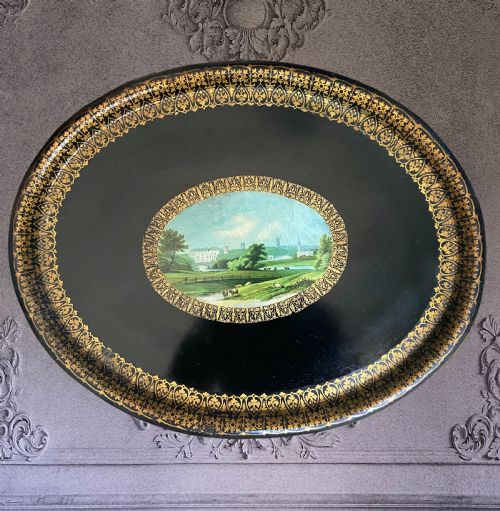
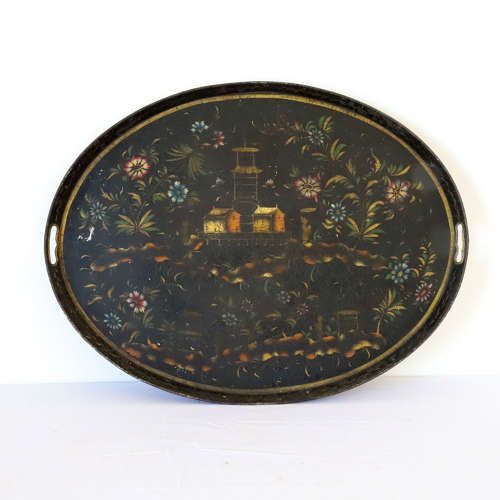
The version most commonly met on this page is the nineteenth-century porcelain dessert dish or serving platter, often decorated with polychrome flowers or birds. Papier-mâché and toleware trays also appear frequently, offering larger surfaces painted in Chinoiserie or floral motifs.
Origins stretch from English factories such as Derby, Worcester, and Coalport to continental houses including Sèvres, Meissen, Quimper, and Samson. Styles range from Georgian and Regency restraint to ornate Victorian Rococo Revival, French Second Empire, and Neo-Rococo designs.
How they were made
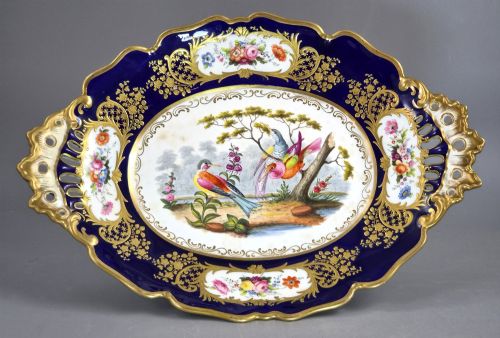
Porcelain trays utilise hard-paste or soft-paste ceramic bodies shaped in moulds, glazed, and painted by hand with polychrome or cobalt blue pigments before kiln firing. Gilding and gold leaf often accent the rims and handles of these ceramic pieces.
Papier-mâché trays employ layered paper pulp pressed, dried, and treated with dark varnishes or lacquers to create a rigid base for detailed paintwork. Toleware items rely on painted and japanned sheet metal, providing a durable surface for decorative scenes.
Listings feature ceramics decorated with hand-painted fruit bouquets, fancy birds, and Watteau scenes across eighteenth and nineteenth-century periods.
What varies in quality
The refinement of the painted brushwork defines the upper tier of these pieces, separating meticulous floral bouquets and figural scenes from simpler decorative applications. The crispness of porcelain moulding, the depth of cobalt blue or bleu céleste glazes, and the precise placement of gold leaf contribute equally to the distinction.
Substance and material integrity separate robust papier-mâché foundations and heavy iron-based toleware from lighter wares. Maker attribution, visible through factory marks from houses like Derby, Sèvres, Meissen, or Worcester, elevates pieces within their respective traditions.
Herend·Derby·Coalport·Quimper·Samson·Royal Worcester·Barr Flight And Barr·Royal Crown Derby·Sevres·Meissen
The Hand Painted Oval Tray Glossary
- Papier-mâché
- A composite material made of paper pulp mixed with binding agents, pressed and dried into sturdy trays. This medium provides a smooth dark ground for painted decoration.
- Polychrome
- Decoration employing multiple distinct colours. It appears frequently in the hand-painted floral bouquets across nineteenth-century porcelain.
- Chinoiserie
- European artistic style reflecting Chinese motifs and landscapes. This aesthetic appears on English and Swedish trays from the nineteenth century.
- Bleu Céleste
- A bright sky-blue ceramic glaze developed at the Sèvres porcelain factory. It provides a vivid ground for painted pastoral scenes.
- Faience
- Tin-glazed earthenware produced in European centres such as Quimper. The technique allows vibrant pigments to bond directly with the opaque white glaze.
Hand Painted Oval Tray: Frequently Asked Questions
What were hand painted oval trays used for?
These trays served functional roles at the table, carrying fruit, dessert, or fish dishes during formal meals. Smaller pin trays and decorative dishes accommodated domestic accessories in private rooms.
Over time, many larger platters and toleware trays transitioned into wall display pieces or decorative table centerpieces. Their painted surfaces were designed to be viewed closely during daily household use.
How do I care for an antique painted tray?
Keep ceramic, papier-mâché, and toleware trays away from direct sunlight and excessive moisture to protect the underlying pigments and lacquers. Dust them gently with a dry, soft cloth rather than using liquid cleaning agents.
Avoid submerging metal or papier-mâché pieces in water, as moisture compromises the painted ground and varnish. Handle ceramic trays by their borders to protect delicate handles and gilt rims.
How can I tell a porcelain tray's period?
Examine the painted style, the colour palette, and any factory marks stamped or painted on the underside. Eighteenth-century pieces often display hand-pencilled underglaze blue marks, while nineteenth-century items frequently feature impressed ciphers or specific decorator signatures.
Stylistic shifts also guide dating, moving from restrained Georgian and Regency forms toward the exuberant gilding and bright grounds of the Victorian era and the later Sèvres styles.
What is the difference between toleware and papier-mâché?
Toleware utilises sheet metal, typically tin or iron, coated in paint or dark japan lacquer to form rigid serving trays. Papier-mâché relies on compressed paper pulp treated with varnishes to achieve a lightweight yet strong dark base.
Both materials accommodate detailed hand-painted scenes, but metal toleware offers greater weight and resilience against surface knocks compared to the fibrous structure of papier-mâché.