




Vintage Chinoiserie Tray
A vintage chinoiserie tray brings hand-painted oriental motifs and rich lacquer to a room, offering both decorative presence and practical surface use.
Vintage Chinoiserie Tray
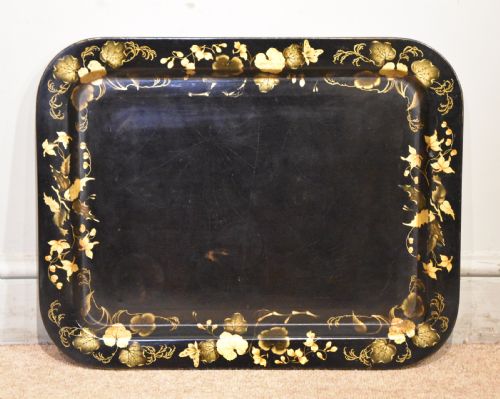
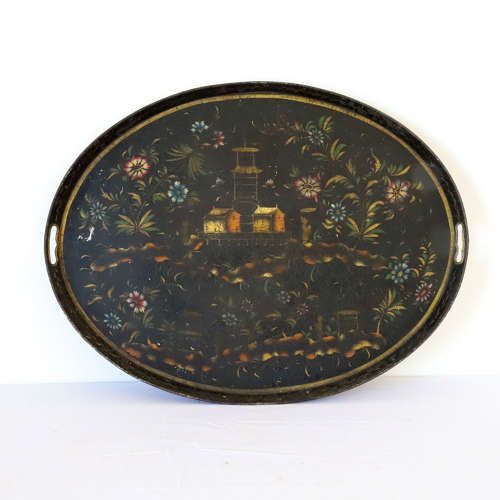
A vintage chinoiserie tray combines decorative Asian-inspired ornamentation with traditional European forms, spanning periods from the nineteenth century through the early twentieth century. These pieces appear in various configurations, including standalone serving objects, examples mounted upon folding bases as tables, and coordinated sets.
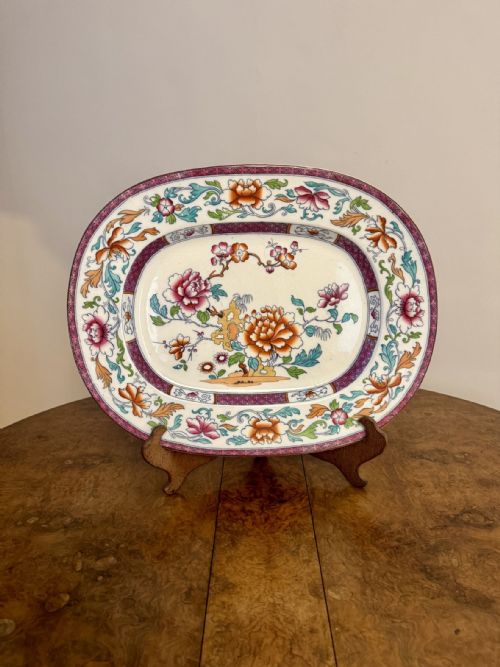
The materials and styles range widely on this page, encompassing deep lacquer finishes, toleware, and papier-mache alongside earthenware platters and ironstone pottery. Buyers encounter oval serving trays, circular coffee tables, and decorative boxes created across English, French, and Swedish workshops.
Materials and construction methods
Makers utilised traditional substrates such as papier-mache, sturdy wood, and ironstone pottery, applying smooth glaze or rich lacquer surfaces to create durable bases for detailed ornamentation. Gold leaf accents often highlight the painted motifs, contrasting sharply against dark lacquer backgrounds.
Ceramic platters and dishes employ transfer printing techniques to render intricate patterns like elephants and pagodas directly onto earthenware. Metal toleware trays rely on painted tin or iron finishes, while papier-mache constructions provide lightweight yet rigid bodies for large serving surfaces.
Materials represented across the current selection include lacquer, papier-mache, gold leaf, ironstone, and toleware.
Distinctions in quality
The refinement of the hand-painted detailing separates standard decorative items from finer works, particularly where gold leaf and intricate pictorial scenes are applied to the surface. Crisp lines in transfer-printed patterns on ironstone and earthenware platters also indicate superior production standards.
The integrity of the underlying material, whether papier-mache, lacquer, or ironstone, dictates the overall longevity and stability of the piece. Superior examples maintain the original brilliance of their glaze and decorative schemes without heavy obscuring overpaint.
John Rogers and Son
The Vintage Chinoiserie Tray Glossary
- Chinoiserie
- European decorative style reflecting Chinese artistic influences, typically featuring painted landscapes, figures, and pavilions.
- Papier-mache
- Composite material made from paper pulp or layers of paper bound with glue, pressed and dried into rigid forms.
- Toleware
- Enamelled or lacquered metalware, commonly tin or iron, painted with decorative scenes and floral motifs.
- Ironstone
- Heavy, durable earthenware developed in the nineteenth century as a robust alternative to porcelain.
- Transfer printing
- Method of applying designs to pottery by transferring a printed paper pattern onto the ceramic surface before glazing.
Vintage Chinoiserie Tray: Frequently Asked Questions
How were these trays originally used?
These pieces served practical functions for carrying food and beverages, or acted as display surfaces within period interiors.
Larger serving platters held meats at the dining table, while smaller trays organised personal items or supported tea services.
Are tray tables original or converted?
Many examples combine period trays with later folding stands or fixed bases to function as occasional tables.
Conversion practices occurred across different decades to repurpose decorative serving pieces into usable furniture items.
How do I care for lacquer surfaces?
Lacquer requires gentle dusting with a soft, dry cloth and protection from direct sunlight and excessive moisture.
Avoid using chemical cleaners or abrasive materials that can permanently dull or scratch the delicate finish.