


Hand Painted Mantle Vases
Hand painted mantle vases bring vibrant colour and intricate detail to a fireplace, pairing decorative presence with nineteenth-century craftsmanship.
Hand Painted Mantle Vases
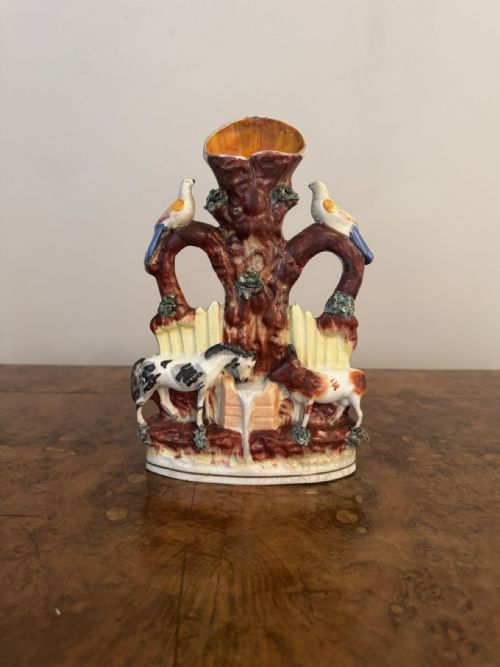
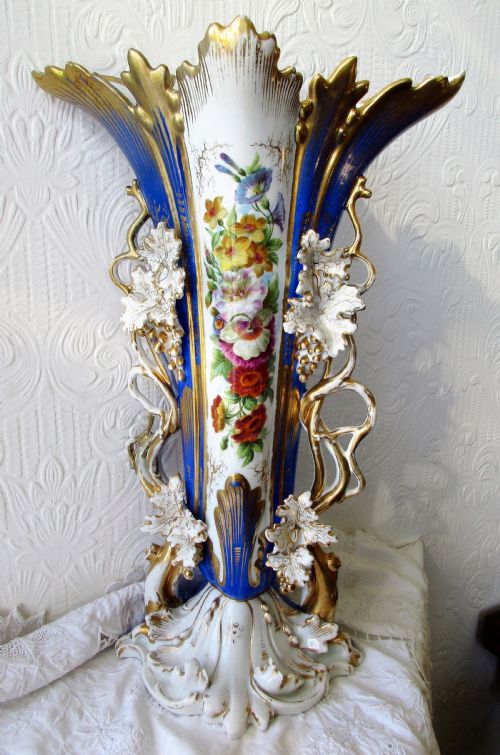
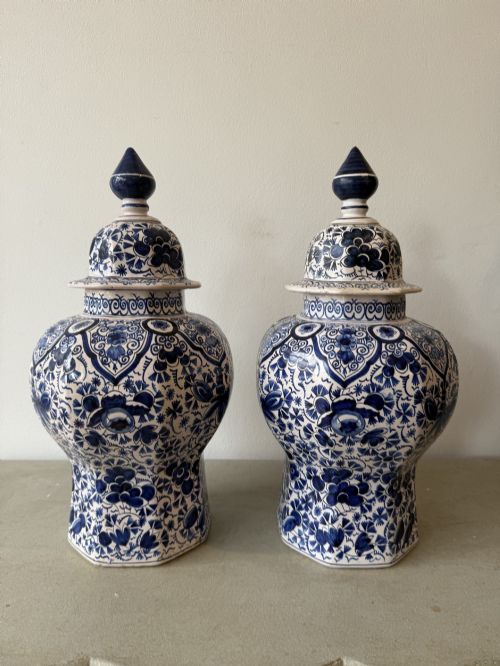
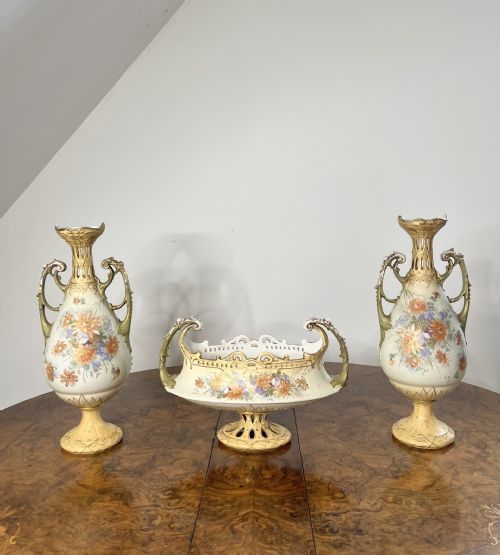
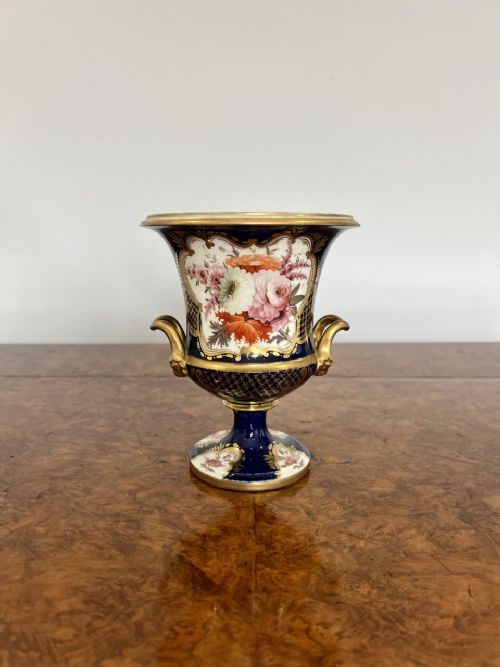
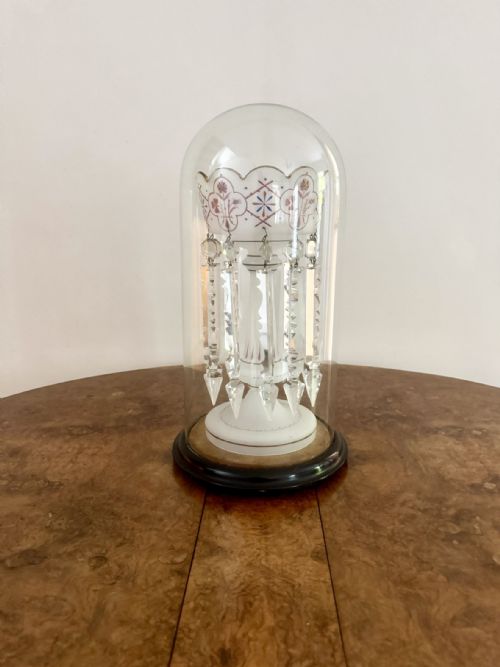
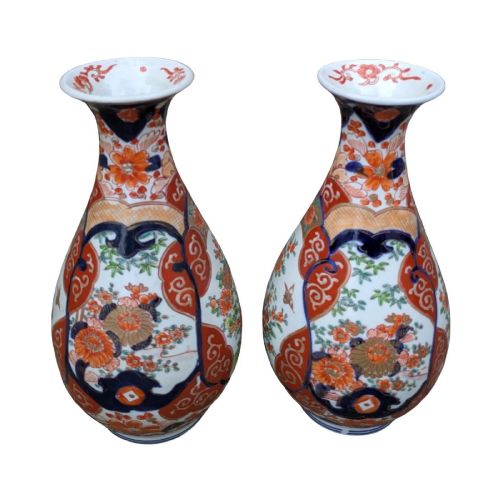
Hand painted mantle vases appear across nineteenth-century and early twentieth-century periods, taking forms such as paired lustres, garniture sets, and lidded urns designed to sit upon a fireplace. These decorative objects originate from English, continental, and Asian potteries, reflecting Victorian, Edwardian, and Rococo Revival tastes.
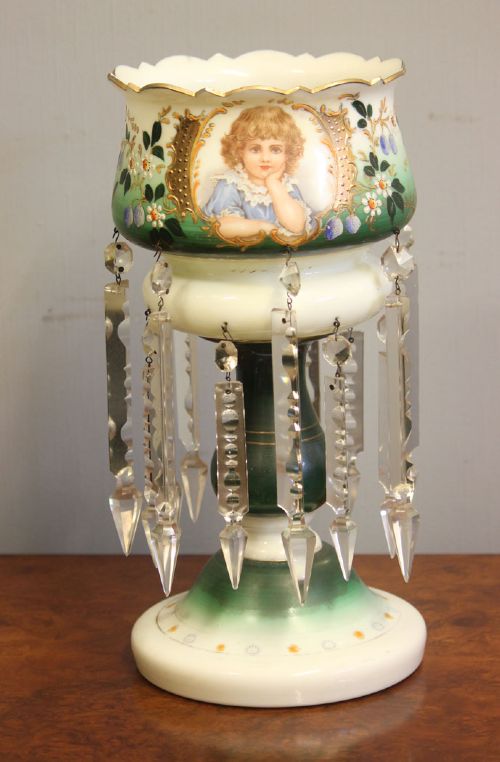
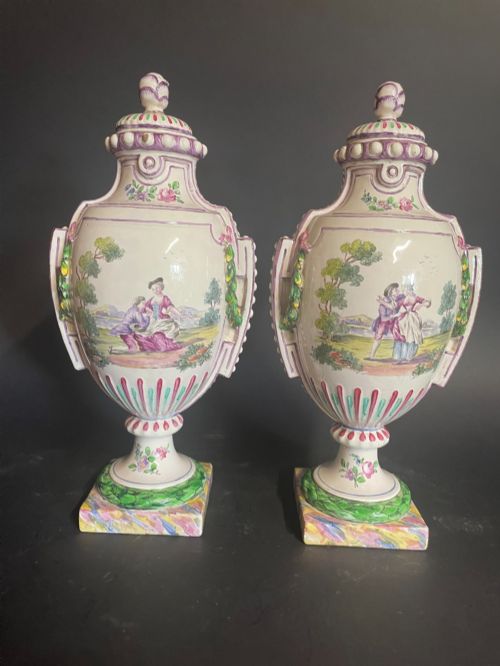
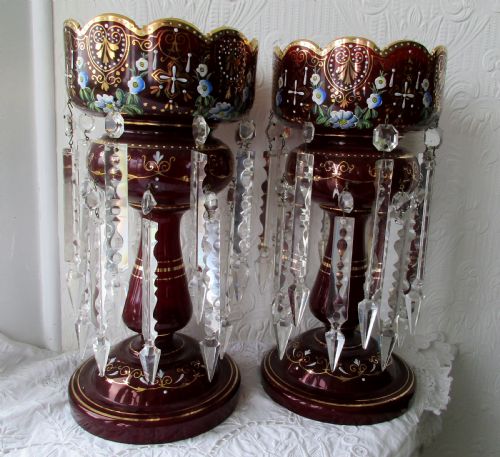
The versions most commonly met on this page include ruby and green glass mantle lustres hung with crystal drops, alongside porcelain garniture sets decorated with floral motifs or hand-painted portraits. Makers ranged from Staffordshire potteries and major English porcelain works to continental factories such as Royal Vienna and Sevres.
How they were made
Makers utilised porcelain, earthenware, and glass as the foundational bodies for these pieces, applying tin-glaze, enamel, and gold leaf by hand. Glass lustres were shaped with faceted bodies and fitted with hanging crystal prisms, while porcelain and earthenware vessels received detailed brushwork in botanical or figural scenes.
Metal mounts in ormolu frequently secured porcelain components or combined with glass bodies to form garniture sets. Firing techniques across the nineteenth century allowed for complex blush ivory finishes, cobalt blue cobalt grounds, and raised enamel detailing.
Mantle lustres doubled as nineteenth-century lighting accessories, using hanging crystal prisms to bounce flickering candlelight around dim parlours.
What varies in quality
The distinction between tiers rests upon the precision of the hand-painted decoration, from standard floral applications to named artist works featuring intricate storks, cattle, or portraits. Painted subjects signed by known decorators command greater attention for their artistic execution.
Material application also separates the output, such as the weight of the glass, the depth of the gilding, and the presence of ormolu mounts. Intact crystal prisms on lustres and matching multi-piece garniture sets preserve the integrity of the original display.
Royal Worcester·Royal Vienna·Doulton Lambeth·Royal Crown Derby·Vion et Baury
The Hand Painted Mantle Vases Glossary
- Mantle Lustre
- A decorative glass or porcelain vase fitted with hanging crystal pendants that catch the firelight. These pieces often appear in pairs alongside a matching centrepiece.
- Garniture
- A matched set of three or more ornamental vases designed to be displayed together on a mantelpiece or sideboard. They typically share a central larger vessel flanked by smaller matching pieces.
- Ormolu
- Gilded bronze mounts cast and applied to porcelain vases and garnitures during the nineteenth century. This French technique added structural ornamentation and a polished metallic finish.
- Blush Ivory
- A cream-coloured porcelain ground developed by Royal Worcester featuring soft tinted underglazes and gilt highlights. The style became prominent during the late nineteenth century.
- Spill Vase
- A small tall cylindrical vessel used to hold wooden spills for lighting candles or fires. These practical ceramic items were frequently hand-painted with botanical scenes.
Hand Painted Mantle Vases: Frequently Asked Questions
What is a mantle lustre?
A mantle lustre is a decorative vase fitted with hanging glass prisms designed to reflect candlelight from a fireplace.
These pieces were typically produced in matched pairs during the Victorian period using coloured glass or porcelain.
How are garniture sets arranged?
Garniture sets comprise three or more matching vases displayed together as a unified decorative scheme on a mantelpiece.
The largest vessel usually sits in the centre flanked by symmetrical smaller pieces.
What materials are used in these vases?
These decorative items utilise porcelain, earthenware, opaque glass, and crystal, often enhanced with enamel and gold leaf.
Some examples also incorporate cast ormolu metal mounts.
How do I identify a period piece?
Period pieces can be identified through material characteristics, hand-painted art styles, and manufacturer marks from nineteenth-century potteries.
Styles such as Rococo Revival and Victorian Aesthetic Movement provide clear temporal context.