




Hand Painted Glass Pitcher
A hand painted glass pitcher brings brilliant colour and intricate hand-applied detail to the table, combining functional utility with decorative charm.
Hand Painted Glass Pitcher
When you search for a hand painted glass pitcher, you are looking at vessel forms designed for serving water, wine, cream or cocktails, each adorned with surface decoration applied by hand. The examples seen here span from the Georgian period through the Victorian era and into the Art Deco twentieth century.
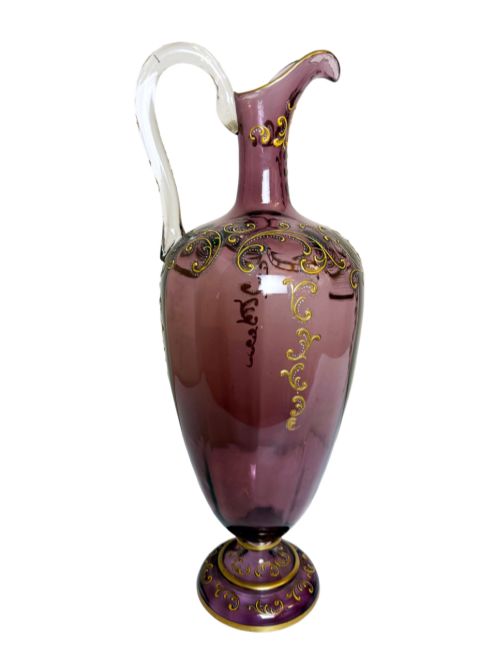
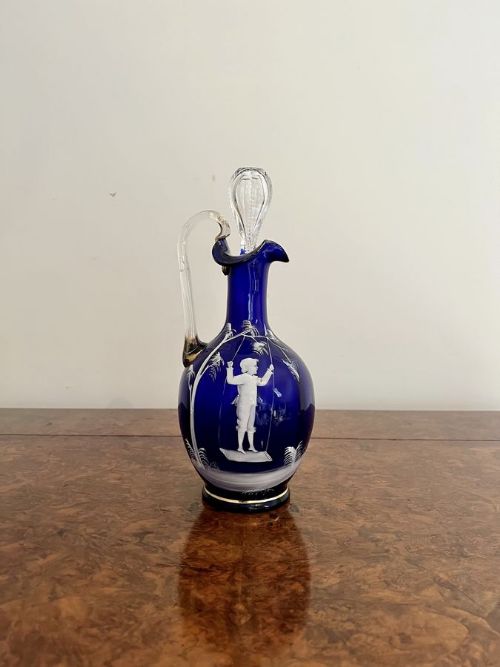
You are most likely to meet Victorian pieces on this page, particularly green or blue glass jugs and ewers decorated with enamel paint or gilt applique. These Victorian items frequently feature subjects like the characteristic Mary Gregory style figures alongside floral or foliate motifs.
Beyond standard water jugs and wine pitchers, the category extends to include decorative ewers, cocktail shakers, and even matching cream jugs and sugar bowls. The underlying glass forms vary from tall blown glass decanters to robust barware from the Art Deco period.
How they were made
Many of these vessels begin as blown glass, shaped by a glassblower before receiving their surface treatments. Makers utilised clear and coloured glass bodies, such as Bristol blue, emerald green, and violet tones, to provide a rich backdrop for painted decoration.
Enamel paint and gold leaf were carefully applied to the exterior surfaces by hand, creating raised motifs, gilded outlines, and pictorial scenes. In some instances, additional metal components like bronze or cast metal mounts were incorporated into the construction of ewers and decanters.
A Victorian glass rooster stands ready to shake up your evening drinks with an unexpected splash of Art Deco enamel.
What varies in quality
The distinction between ordinary and superior pieces rests largely on the precision and fineness of the hand painting and gilding. Skilled execution in enamel work and detailed gold leaf applique elevate certain ewers and jugs above simpler production standards.
The depth of colour in the glass itself and the crispness of the blown form play a significant role in overall character. Well-preserved painted details that retain their original vibrance separate better-maintained historical examples from those with heavy surface wear.
The Hand Painted Glass Pitcher Glossary
- Ewer
- A large jug with a wide spout and handle, traditionally used for holding water or wine. Many antique examples served a purely decorative purpose on sideboard displays.
- Mary Gregory
- A style of glass decoration characterised by white or tinted enamel silhouettes of children playing amidst foliage. This Victorian technique is commonly found on green and blue glass vessels.
- Gilt Applique
- Surface ornamentation created by applying thin layers of gold leaf to the glass body. This method adds metallic highlights and contrasting texture to the piece.
- Bristol Blue
- A deep, cobalt-tinted glass traditionally associated with English manufacture during the Georgian period. It provides a striking dark blue ground for painted decoration.
- Cocktail Shaker
- A specialised barware vessel designed for mixing drinks, represented here in Art Deco enamelled glass. These pieces combine utilitarian function with period-specific motifs like cockerels.
Hand Painted Glass Pitcher: Frequently Asked Questions
What is a Mary Gregory pitcher?
A Mary Gregory pitcher is a Victorian glass vessel decorated with a distinct white enamel silhouette depicting a child in a natural setting. These pieces are typically formed in green or blue glass.
While often called Mary Gregory after an American glass decorator, many such items were actually produced in various European glasshouses during the nineteenth century.
How do I clean an antique glass pitcher?
Cleaning antique glass requires gentle hand washing with lukewarm water and mild soap. Avoid abrasive sponges or harsh chemicals that can damage delicate enamel and gold leaf.
Because the painted decoration is applied to the exterior surface, soaking the entire piece for extended periods should also be avoided to protect the finish.
Were these pitchers used for serving drinks?
Many of these vessels were designed for practical dining table use, holding water, wine, milk, or cream. Ewers and jugs saw regular service during meals and formal gatherings.
Others, particularly highly ornate decorative ewers or delicate gilded pieces, functioned primarily as display items on sideboards and mantels.
How do I date a glass pitcher?
Dating relies on identifying stylistic markers, manufacturing techniques, and the specific colour palette of the glass. Georgian pieces often feature simple, elegant forms like Bristol blue cream jugs.
Victorian items frequently display heavy enamel painting or gilt applique, whereas 1930s pieces tend to reflect Art Deco geometric styling or modern barware shapes.