



Vintage Lemonade Jug
These vintage lemonade jugs are substantial vessels designed for summer refreshment, combining practical pouring capacity with period character.
Vintage Lemonade Jug
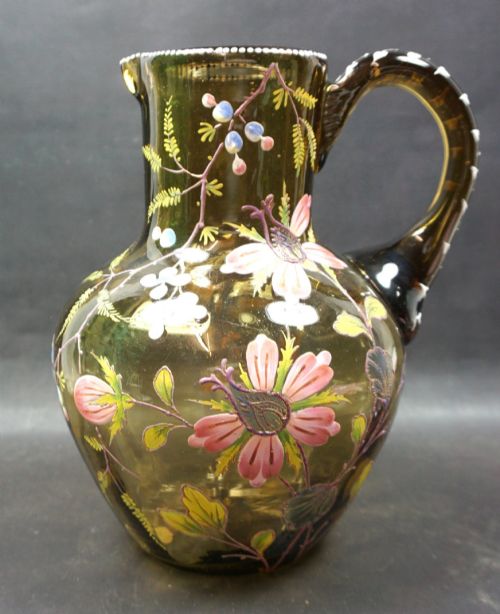
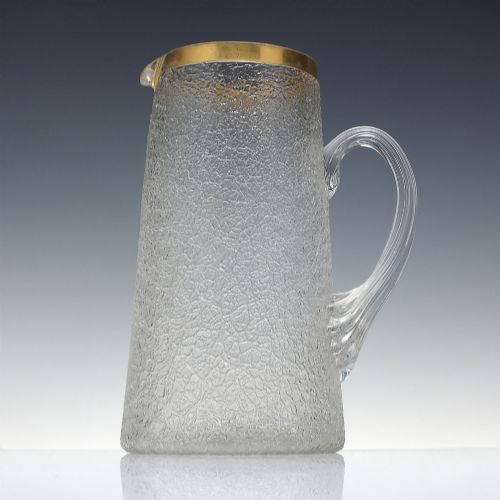
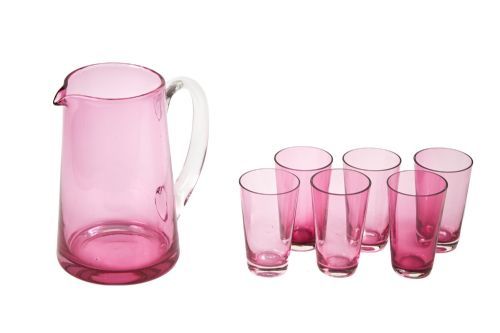
A vintage lemonade jug is a utilitarian pouring vessel encountered in several distinct forms across the nineteenth and twentieth centuries. The selection includes tall water pitchers, cranberry glass sets with matching tumblers, and Art Deco Czech glass drinkware.
Buyers most frequently meet Edwardian cut glass jugs and Victorian examples featuring overshot glass or silver-plated mounts. These pieces range from robust functional tableware to elaborate sets designed for parlour service.
The material vocabulary spans clear glass, lead crystal, cranberry glass, cut glass, and sterling silver, often augmented by gold leaf or enamel details. Certain configurations incorporate internal ice tubes to chill contents without dilution.
Materials and construction methods
Makers utilised heavy-lead crystal and clear glass, shaping them through blowing, moulding, and intricate wheel-cutting to achieve deep light-refracting facets. Cranberry glass achieved its rich hue through the addition of gold chloride to the molten batch.
Metal components involved silver plating and sterling silver smithing, creating sturdy mounts, hinged lids, and internal cooling receptacles. Artisans applied gold leaf accents by hand, fusing the metal to the glass surface through kiln firing.
Vintage Lemonade Jug Retail Price Guide 2026
Typical asking prices for vintage lemonade jug among the pieces listed under this phrase on Sellingantiques today, from the lower quarter to the upper quarter. They describe what is for sale here now, not the wider market.
Distinctions in quality
Quality rests upon the crispness of the glass cutting, the weight of the metal mounts, and the proportion of the handle to the body. Superior vessels display sharp facets that catch the light evenly without distortion.
The integration of functional accessories, such as fitted ice tubes or matched sets of glasses, separates standard utilitarian wares from finer parlour pieces. Metal elements demonstrate superior craftsmanship through robust hinges and secure silver plating.
Mappin and Webb·Tiffany
The Vintage Lemonade Jug Glossary
- Overshot glass
- A technique where fine threads of hot glass are rolled over the surface of a blown vessel to create a textured, icy appearance.
- Cranberry glass
- A transparent red glass produced by adding gold to the molten mixture, highly popular during the Victorian and Edwardian eras.
- Lead crystal
- Glass containing metal oxide that increases weight, brilliance, and workability for deep cutting.
- Silver plate
- A layer of silver fused to a base metal foundation, utilised for mounts, rims, and handles on nineteenth-century jugs.
- Ice tube
- A cylindrical metal compartment inserted into the centre of a jug to cool liquids without direct contact with melting ice.
Vintage Lemonade Jug: Frequently Asked Questions
How do I clean an antique glass jug safely?
Wash these vessels by hand in warm soapy water using a soft cloth rather than submerging them in automated dishwashers. Avoid sudden temperature changes to protect fragile nineteenth-century glass and delicate gold leaf decorations.
Dry the interior thoroughly with a lint-free cloth, particularly around metal mounts or internal ice tubes where moisture might cause tarnishing over time.
Can I use these vintage jugs for serving drinks?
Most of these vessels remain entirely functional for serving cold beverages, provided you handle them with care due to their age and material weight. Pieces featuring delicate enamel or overshot glass deserve more gentle handling during everyday use.
Silver-plated and sterling silver components should be washed promptly after use with acidic liquids like citrus juice to preserve the metal finish.
How can I tell Victorian jugs from Edwardian ones?
Victorian examples often display heavier ornamentation, textured overshot surfaces, or elaborate silver-plated additions typical of nineteenth-century manufacturing. Edwardian pieces frequently lean towards deep, brilliant-cut crystal patterns that emphasise clarity and weight.
Art Deco items from the later periods introduce geometric Czech glass designs and matched drinkware sets that break away from nineteenth-century revival styles.
What is the purpose of the internal metal tube?
The central metal cylinder holds ice to chill the lemonade without melting ice cubes directly into the beverage and diluting the flavour. This nineteenth-century innovation allowed hosts to keep drinks cold throughout extended summer gatherings.
These removable tubes require careful drying after use to prevent moisture retention inside the enclosed metal chamber.