


Bohemian Glass Pitcher
A bohemian glass pitcher brings vivid colour and tactile weight to a table, combining historic European craftsmanship with striking decorative presence.
Bohemian Glass Pitcher
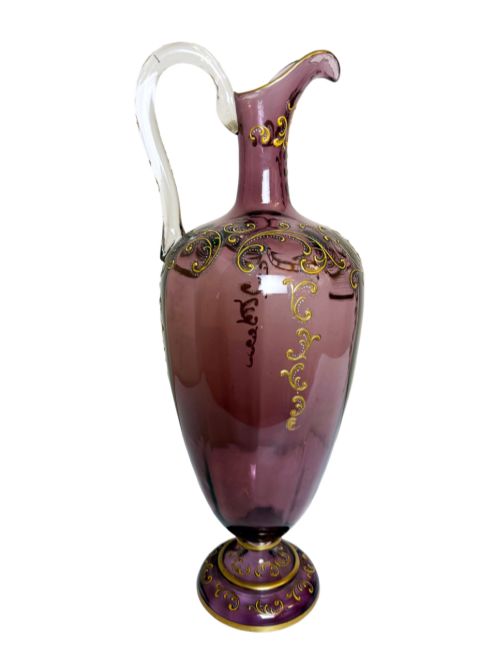
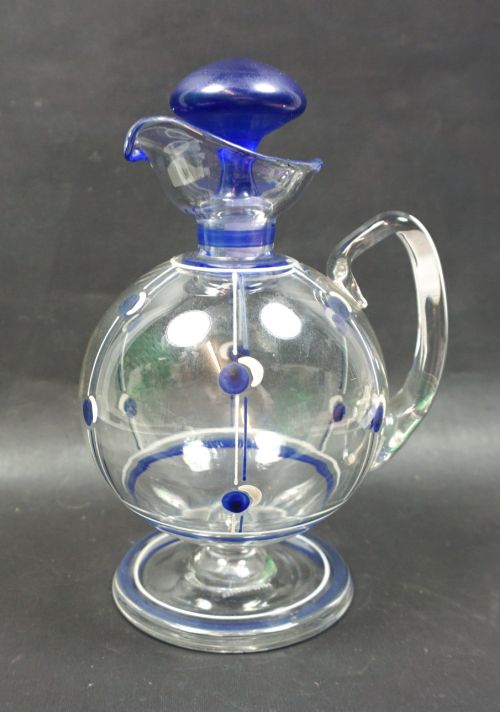
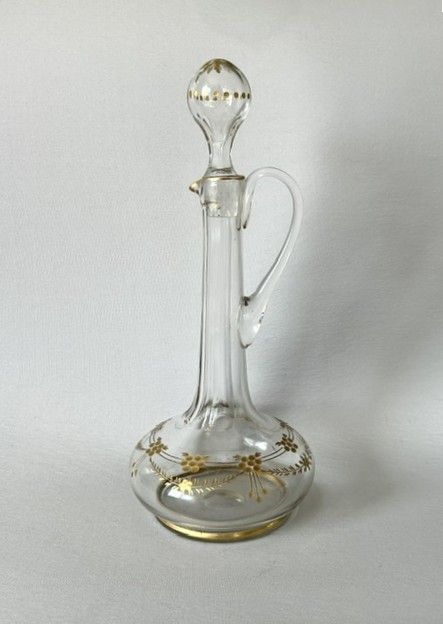
When you search for a bohemian glass pitcher, you encounter diverse vessel forms spanning nineteenth-century Victorian revival styles and twentieth-century Art Deco design. These pieces function as water jugs, wine jugs, claret jugs, and carafes, serving both practical and decorative purposes in domestic settings.
The selections on this page draw from periods including the Victorian era, eighteen-eighty, eighteen-ninety, nineteen-hundred, and nineteen-thirty. You are most likely to meet examples featuring rich coloured glass, traditional hand-painted enamel, or gilt highlights.
Origins span Bohemia and Czechoslovakia, alongside related European production. Forms range from traditional bulbous pitchers to novelty animal shapes and complete drinks sets.
How they were made
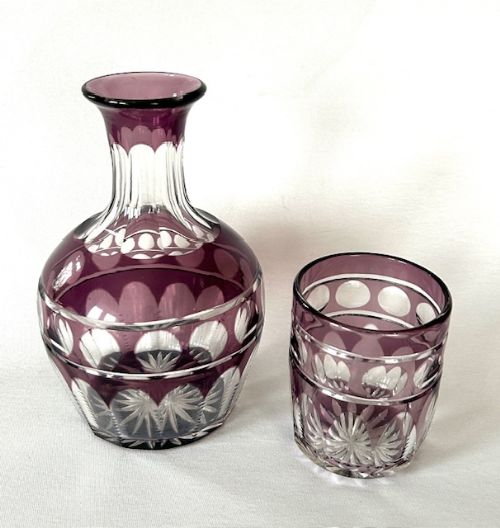
Makers utilised mouth-blowing and free-forming techniques to shape molten glass into heavy vessels, often applying overlay methods to combine contrasting colours such as green or amethyst with clear glass.
Decoration relied on hand-painted enamel and applied gold leaf or gold gilt, requiring skilled artisans to detail motifs directly onto the cooled glass surface.
Cut glass examples required meticulous wheel-cutting to create geometric facets that catch the light, demonstrating advanced workshop proficiency.
Listings feature periods spanning from eighteen-sixty to nineteen-thirty, incorporating materials such as crystal, enamel, and gold leaf.
What varies in quality
Quality rests in the depth and clarity of the glass itself, where heavy, well-balanced vessels with crisp overlay show superior material selection.
The precision of hand-painted enamel and the preservation of gilt appliques distinguish finer artistic execution from standard production, as does the sharpness of cut glass facets.
The Bohemian Glass Pitcher Glossary
- Blown glass
- Glass shaped by inflating molten metal on the end of a blowpipe. This foundational technique creates the hollow body of the pitcher.
- Gold gilt
- A thin layer of gold applied to the surface for ornamentation. It accentuates rims, handles, and painted motifs.
- Mary Gregory
- A style of white enamel painting depicting silhouetted Victorian children, frequently set against coloured glass backgrounds.
- Overlay glass
- A technique involving layers of different coloured glass fused together. Part of the outer layer is cut away to reveal the contrasting colour beneath.
- Crystal glass
- A high-clarity glass formulation offering enhanced brilliance. It allows intricate cut patterns to reflect light sharply.
Bohemian Glass Pitcher: Frequently Asked Questions
What is a bohemian glass pitcher?
A bohemian glass pitcher is a decorative and functional pouring vessel originating from Central European glassmaking traditions, known for rich colours and ornate surface decoration.
These pieces encompass water jugs, wine decanters, and claret jugs produced across various nineteenth and twentieth-century periods.
How were these pitchers used?
Historically, these vessels served at the dining table for water, wine, claret, and cordials during formal meals and gatherings.
Many also functioned as decorative display items within cabinet collections or sideboard arrangements.
How do I date a piece?
Dating relies on stylistic indicators such as Victorian aesthetic motifs, nineteenth-century overlay techniques, or nineteen-thirties Art Deco geometric forms from Czechoslovakia.
Material choices like amethyst, green glass, and specific enamel styles further anchor pieces to particular decades.
How do I care for antique glass?
Antique glass requires gentle hand washing in lukewarm water with mild soap, avoiding sudden temperature changes that can stress the material.
Care must be taken around gilt and enamel decorations to preserve their historic surfaces.