


Hand Painted French Vases
When you search for hand painted french vases, you encounter nineteenth-century decorative pieces combining porcelain or faience with gilt bronze and brass.
Hand Painted French Vases
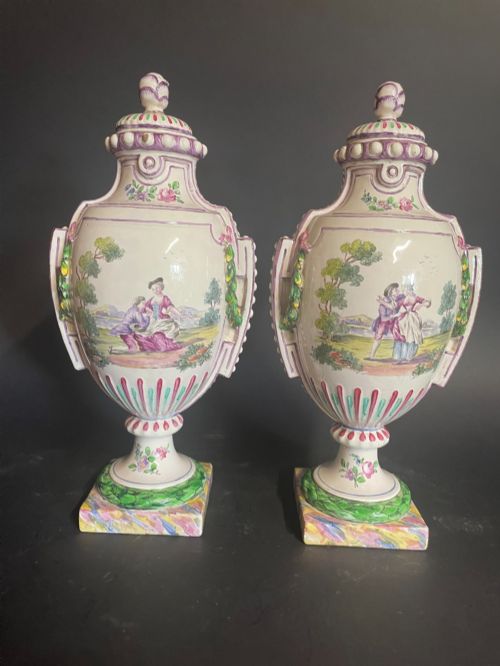
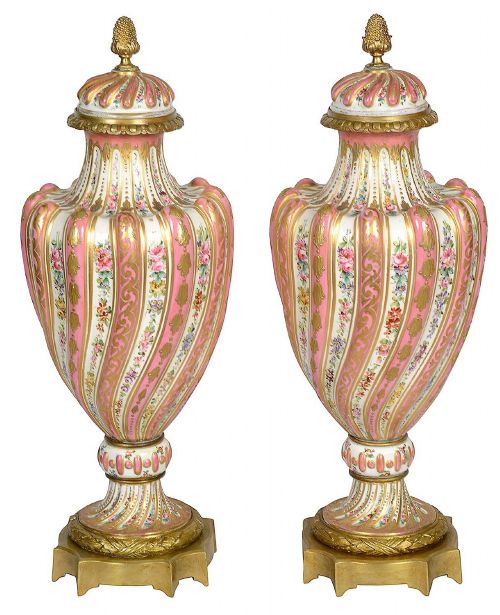
Hand painted french vases comprise nineteenth-century porcelain vessels, earthenware faience, and opaline glass mounted for display or utility. You will frequently meet pairs of lidded urns, potpourri jars, and mantel garnitures stemming from periods like the Victorian era and the Regency.
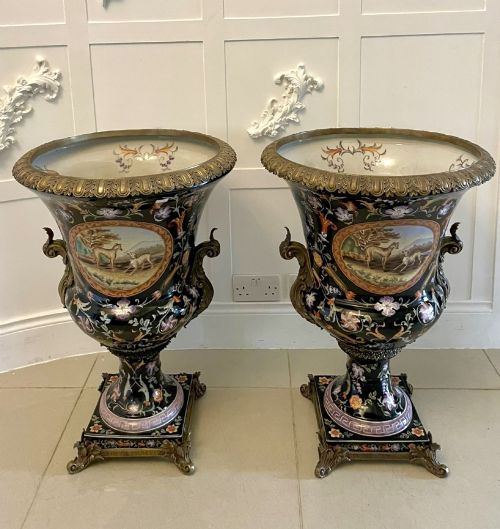
The forms range from classical Medici shapes and columnar goblet vases to jardinieres and table lamps adapted from earlier pottery. Makers and decorators drew upon historical vocabularies, producing pieces styled after Sevres, Empire, and Rococo Revival aesthetics.
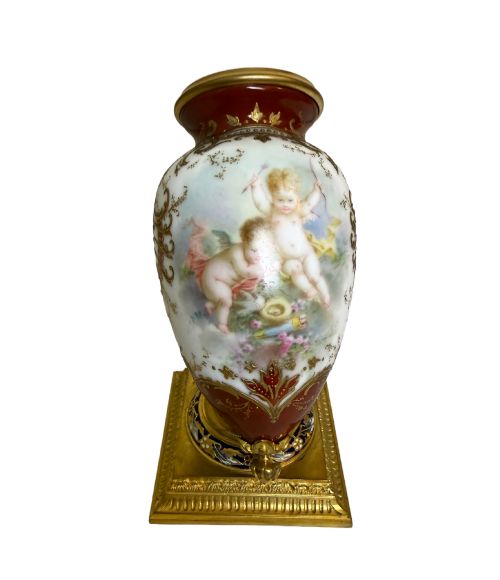
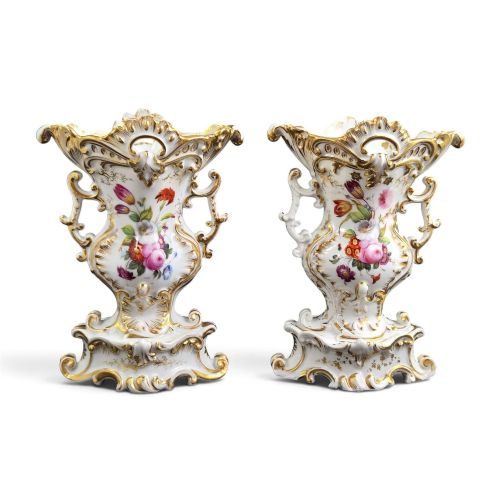
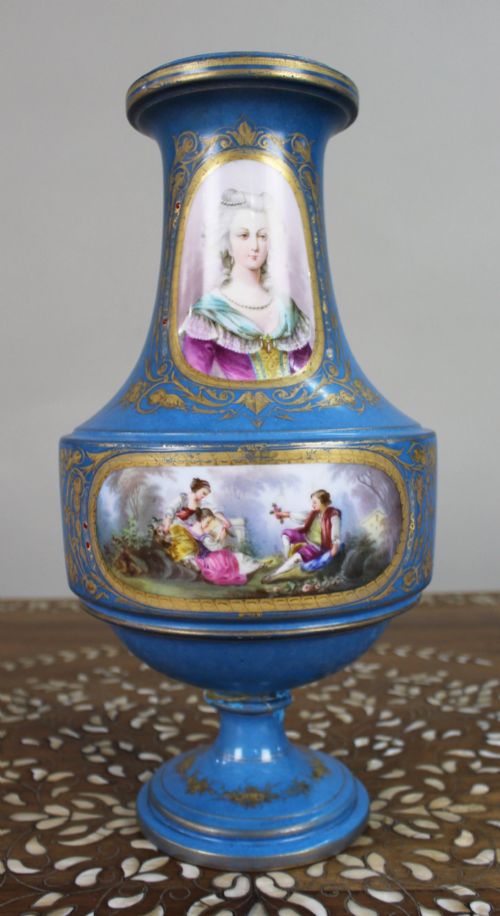
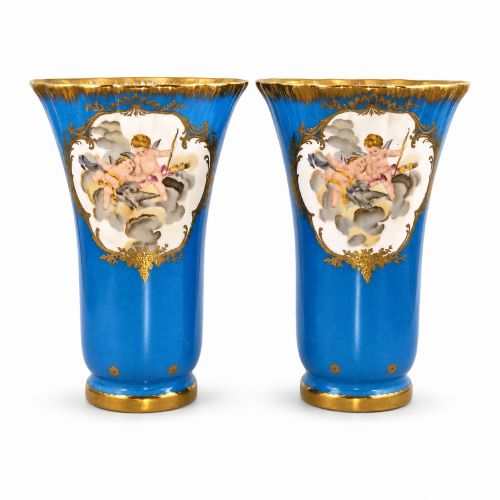
Many examples showcase hand-painted floral bouquets, landscapes, or avian motifs set against coloured grounds such as bleu celeste or pink. These objects functioned as parlour ornaments in nineteenth-century interiors, designed to catch the light and display refined craftsmanship.
Materials and construction
Potters shaped these vessels from hard-paste porcelain, earthenware faience, or opaline glass before applying polychrome enamel pigments by hand. Artisans often utilised raised white enamel or gilding in gold leaf to accentuate the painted scenes and borders.
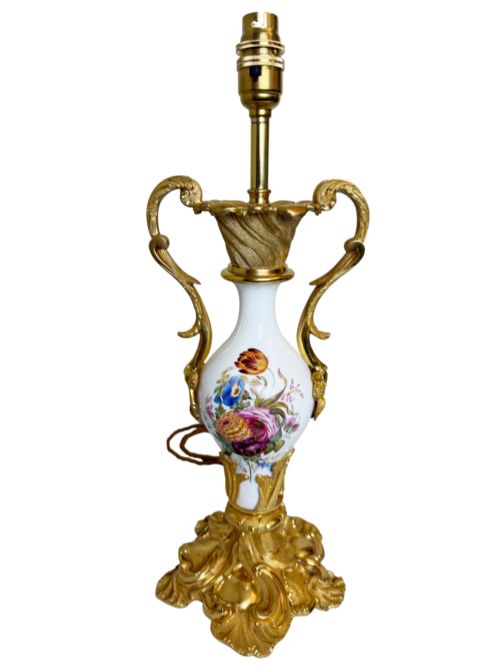
Mounts and fittings utilised cast or gilt bronze, ormolu, and brass to frame the ceramic bodies and provide stable bases. Metal components were frequently chased and secured with threaded fasteners or pins to the porcelain feet and rims.
Listings feature nineteenth-century French porcelain and faience, incorporating opaline glass, gilt bronze mounts, and hand-painted botanical or figural motifs.
Judging quality
Quality rests upon the precision of the hand painting and the crispness of the porcelain moulding or faience body. Superior examples display finely rendered brushwork in the floral panels and figures, whereas lesser pieces rely on transfer-printed outlines filled with flat colour.
The calibre of the metal mounts further separates tiers of production, with heavy, finely chased ormolu or gilt bronze indicating superior workshops. Well-integrated handles, lids, and mounts that fit the ceramic contours harmoniously elevate a piece above standard factory output.
Jacob Petit·Fourmaintraux Courquin·Samson of Paris·Vion et Baury·Jean Francois Robert
The Hand Painted French Vases Glossary
- Faience
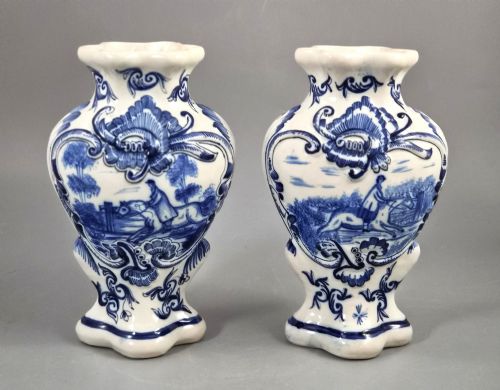
- Tin-glazed earthenware produced in France, often featuring hand-painted blue and white or polychrome decoration. It provides an opaque ground for colourful botanical or figural scenes.
- Ormolu
- Gilt bronze ornaments applied to furniture, clocks, and vases during the eighteenth and nineteenth centuries. The technique involves coating cast brass or bronze in a layer of gold amalgam.
- Bleu Celeste
- A bright turquoise or sky-blue porcelain ground colour popularised by the Sevres factory. It serves as a vivid backdrop for hand-painted reserves depicting birds and flowers.
- Potpourri
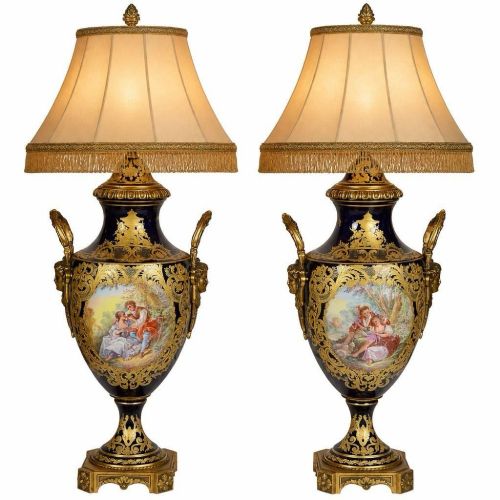
- A lidded vase or urn pierced with small holes to allow dried scented plant materials to fragrance a room. These vessels often feature elaborate gilt bronze mounts and hand-painted panels.
- Medici Vase
- A bell-shaped krater vessel with a footed base and flared rim, derived from classical antiquity. Nineteenth-century French makers frequently replicated this classical silhouette in porcelain and earthenware.
Hand Painted French Vases: Frequently Asked Questions
How do I identify Sevres style vases?
Sevres style pieces typically feature rich coloured grounds like bleu celeste or pink paired with elaborate gilding and hand-painted reserves. They often mimic eighteenth-century royal French aesthetics even when produced later in the nineteenth century.
Look closely at the quality of the enamel painting and the presence of decorative metal mounts. Many bear pseudo-marks or factory-style signatures on the base, though these require careful examination to verify age.
What is Old Paris porcelain?
Old Paris refers to porcelain manufactured by numerous independent workshops operating in and around Paris during the late eighteenth and nineteenth centuries. These pieces were unassociated with the royal Sevres manufactory.
They are characterised by bright hand-painted floral motifs, heavy gilding, and expressive neoclassical or rococo forms. The paste is typically thick and durable, designed for middle-class and aristocratic interiors.
How were these vases used originally?
Nineteenth-century households displayed these vases as ornamental centrepieces on mantelpieces, credenzas, and tables. Lidded versions often functioned as potpourri containers or garniture sets.
Many examples were later adapted into table lamps as interior lighting needs changed over time. Their primary purpose remained decorative, demonstrating the owner's taste and refinement.
Can I use them for fresh flowers?
Most antique porcelain and faience vases are better suited for dry arrangements or display without water. Glazes and historic bodies can be sensitive to moisture, particularly if hairline cracks are present.
Lined interiors or metal inserts help protect the ceramic body if water must be used. Careful handling prevents damage to fragile hand-painted enamels and delicate gilt bronze mounts.