


Rococo Style Porcelain Urns
Rococo style porcelain urns bring elaborate French flair to nineteenth century interiors through rich glazes, gilt bronze mounts, and sculptural forms.
Rococo Style Porcelain Urns
When you search for rococo style porcelain urns, you encounter nineteenth century vessels that adopt the curving asymmetry and ornate ornamentation of the eighteenth century French movement. These objects span decorative vases, lidded jars, potpourri containers, and complete garniture sets designed for mantelpieces and central tables.
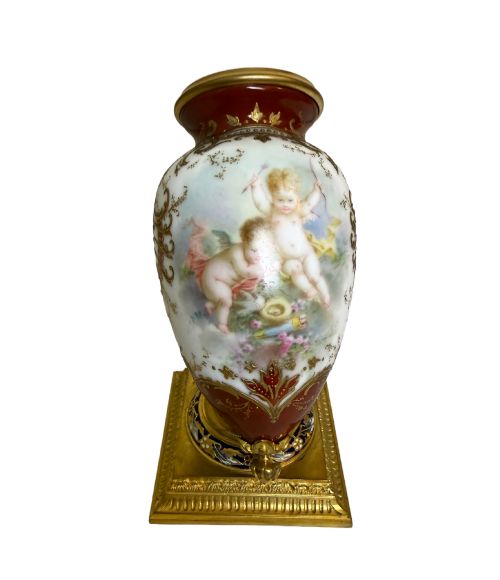
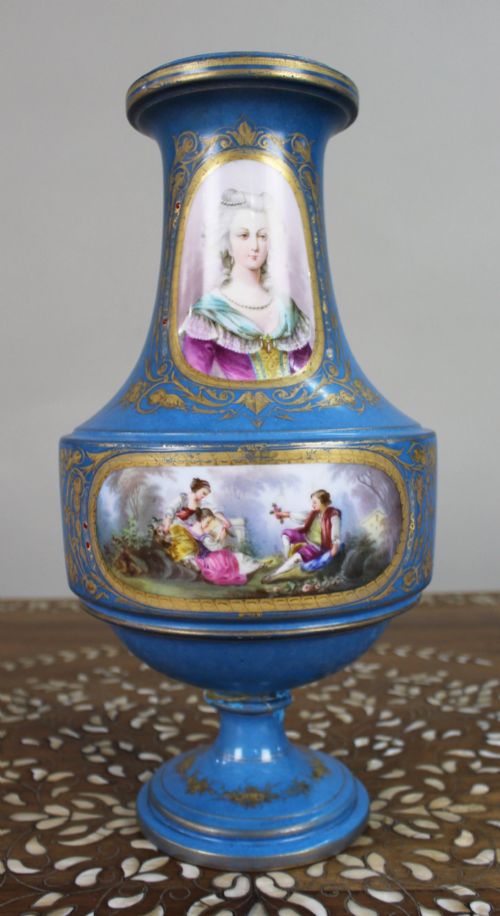
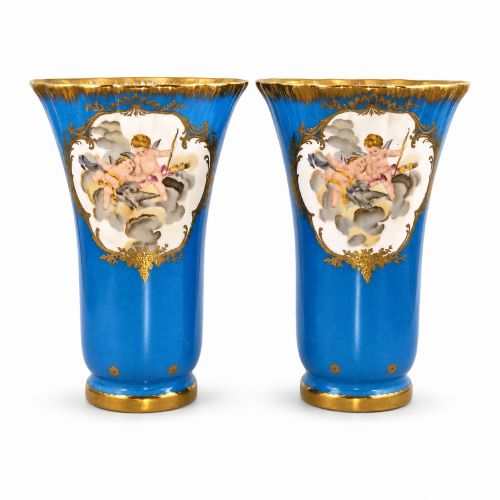
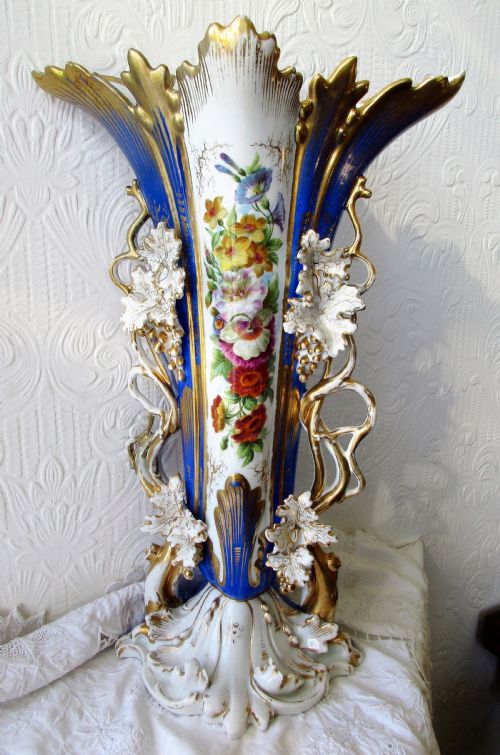
The examples most commonly met on this page belong to the French Sevres style, often featuring cobalt blue or bleu celeste grounds with hand-painted scenes and heavy gilt metal mounts. Other frequent variations include Dresden and Meissen-inspired works, alongside Victorian continental interpretations incorporating figures and ewers.
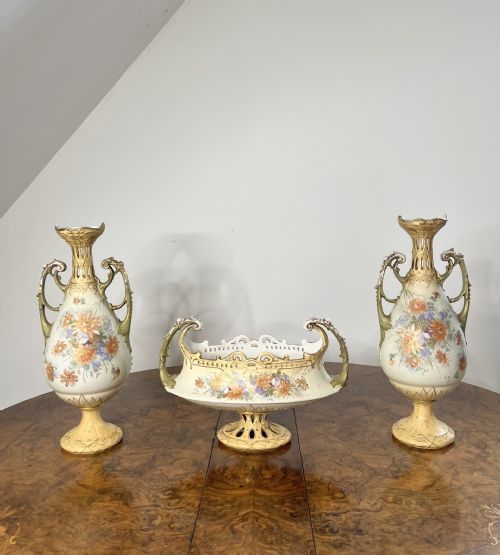
Many of these pieces function as pairs or three-piece clock sets, utilising brass, ormolu, and gilt bronze to frame the ceramic bodies. The dates stretch from the mid-nineteenth century up to the early twentieth century, reflecting a sustained Victorian and continental appetite for revivalist luxury.
Materials and construction methods
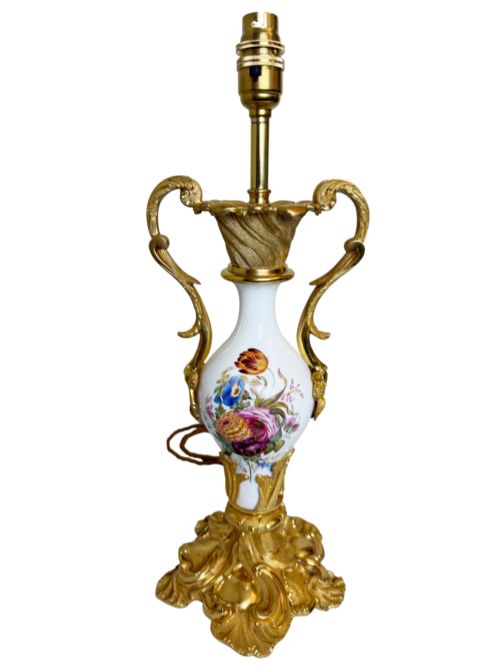
Makers shaped the ceramic bodies from high-fired porcelain or bisque, applying coloured enamel grounds such as cobalt blue and pale turquoise before hand-painting floral motifs and figurative panels. Artisans then fitted these ceramic sections with cast gilt bronze, ormolu, and gold leaf mounts that accent the flowing, asymmetrical contours.
Metal components were cast separately, chased to refine the surface detail, and fire-gilt or plated to contrast against the glazed porcelain. Lidded vases and garniture sets relied on precise joins between the ceramic collars and metal bases to support elaborate handles and finials.
Listings feature 19th-century porcelain vessels mounted in gilt bronze, ormolu, and brass, spanning the Sevres, Meissen, and Dresden styles.
Assessing quality and execution
The distinction between standard production and the finest workshops lies in the crispness of the hand-painted details and the weight of the metal mounts. Superior pieces display finely articulated brushwork on figurative scenes and botanical elements, whereas simpler versions rely on repetitive stencilled patterns or plain coloured grounds.
The quality of the ormolu and gilt bronze casting significantly affects the presence of an urn. Thicker, deeply chased mounts with sharp relief work indicate superior craftsmanship compared to thin, lightweight brass fittings that lack definition.
Samson Paris·Royal Vienna·Meissen·Helena Wolfsohn·Augustas Rex·Jacob Petit·Vion et Baury·KPM Berlin·Sitzendorf·Vincenti of Paris
The Rococo Style Porcelain Urns Glossary
- Garniture set
- A matched group of three or more decorative vases or urns designed to sit together on a mantelpiece or sideboard.
- Ormolu
- Finely ground high-carat gold applied to a bronze base metal using a mercury amalgamation process, or later via electroplating.
- Bleu celeste
- A bright sky-blue enamel ground colour frequently utilised on Sevres porcelain and later revival pieces.
- Potpourri
- A lidded vase or jar pierced with holes in the cover to release the scent of dried flowers and spices held inside.
- Bisque
- Unglazed white porcelain that has been fired once, presenting a matte, marble-like texture often used for figural elements.
Rococo Style Porcelain Urns: Frequently Asked Questions
What are rococo style porcelain urns?
These decorative vessels are nineteenth-century European ceramics modelled on eighteenth-century French designs, featuring ornate scrolling handles, painted panels, and gilt metal mounts.
They were produced across France, Germany, and England during the Victorian era to satisfy a widespread demand for revivalist interior decoration.
How were garniture sets used?
Garniture sets served as symmetrical decorative displays on drawing room mantelpieces, usually consisting of a central clock or large urn flanked by two matching smaller vases.
Households arranged them to create a balanced focal point within formal reception rooms during the nineteenth century.
How do I identify Sevres style pieces?
Sevres style pieces typically exhibit rich coloured grounds like cobalt blue or turquoise, combined with gilded rococo scrollwork and hand-painted pastoral scenes.
Many of these objects carry imitation marks or were produced by nineteenth-century factories such as Samson Paris emulating the famous French royal manufactory.
Where should I display these urns?
These substantial vessels suit prominent surfaces such as sideboards, mantels, and large console tables where their height and gilt mounts can catch the light.
Keep them away from direct sunlight and high-traffic edges to protect the delicate hand-painted enamel and gilded bronze surfaces.