




French Porcelain Lidded Urns
French porcelain lidded urns bring monumental presence and opulent hand-painted decoration to any interior, spanning styles from Rococo Revival to Chinoiserie.
French Porcelain Lidded Urns
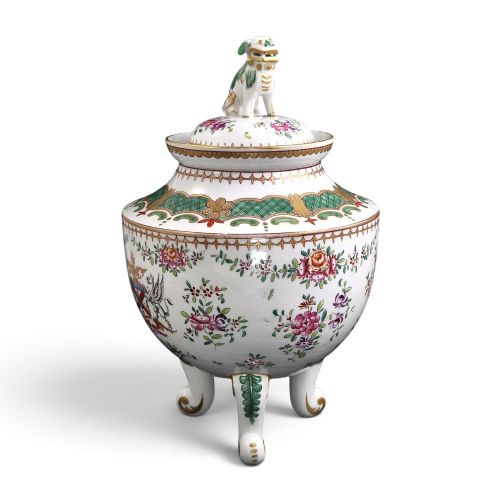
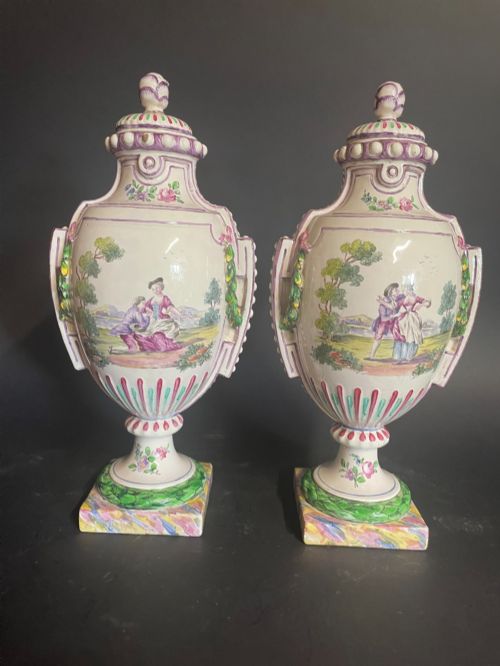
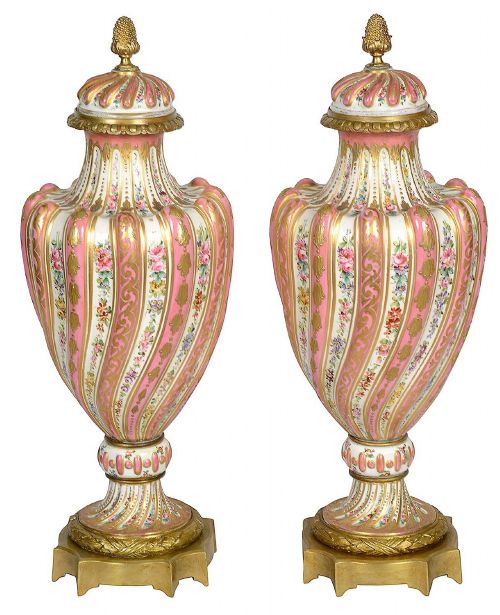
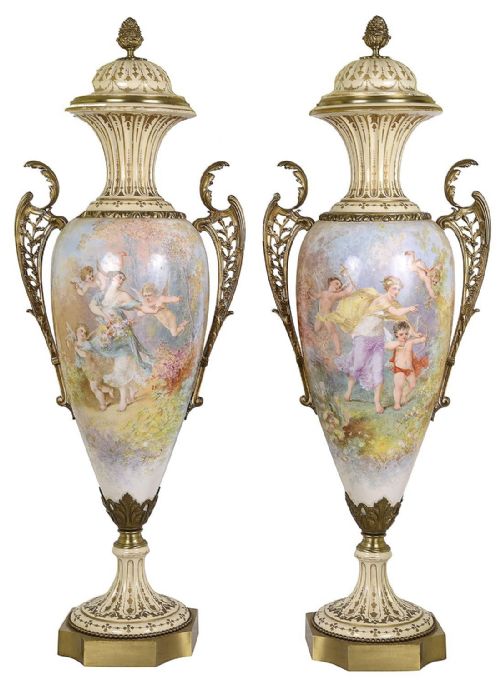
When you search for french porcelain lidded urns, you encounter substantial decorative vessels designed primarily for display during the nineteenth century. These pieces draw heavily upon Sèvres styles, often incorporating fitted covers and robust proportions suited to grand reception rooms.
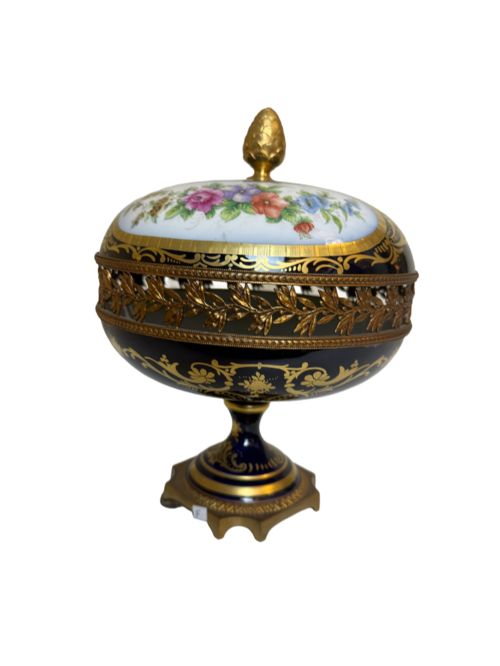
The selections available here range from tall pairs featuring classical silhouettes to smaller lidded dishes and vases mounted on stands. Many pieces reflect revival aesthetics, taking inspiration from earlier French motifs or incorporating Chinoiserie and Japanese Imari influences through colourful hand-painted enamel work.
Makers such as Samson of Paris also produced notable interpretations, sometimes emulating earlier Chelsea or Oriental designs with meticulous skill. Whether rendered in soft pink colourways or deep cobalt glazes, these urns remain definitive statements of nineteenth-century decorative ambition.
Materials and Craftsmanship
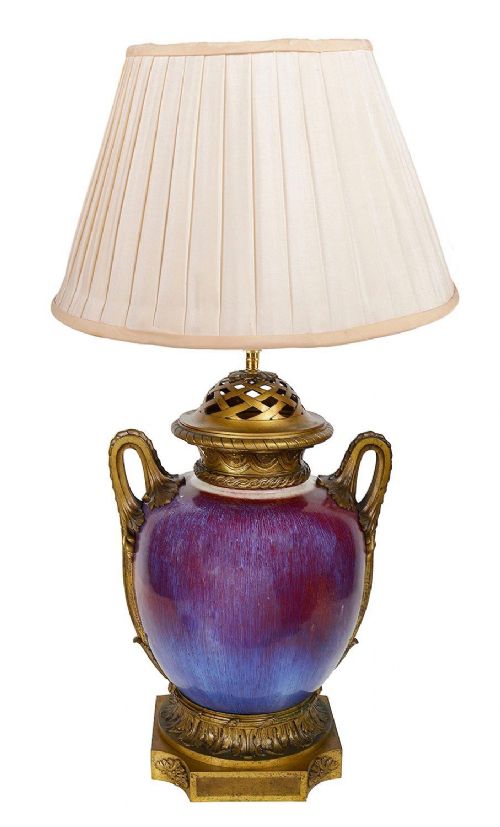
The construction of these vessels relies on fine ceramic bodies paired with elaborate metal mounts, most notably ormolu, gilt bronze, and gilt metal. Artisans shaped porcelain through traditional casting and moulding techniques before applying detailed hand-painted enamels and gold leaf highlights.
Mounting porcelain in cast ormolu required specialist metalworkers who secured the gilt bronze collars, handles, and bases around the fired ceramic bodies. This collaborative process between potter and bronzeworker elevated simple vases into architectural ornaments fit for exhibition.
Listings feature extensive nineteenth-century production, incorporating Sèvres style aesthetics alongside Faience earthenware and Samson of Paris interpretations.
Judging Quality and Execution
Quality in these urns rests upon the crispness of the porcelain moulding and the artistic merit of the hand-painted decoration. Superior examples display finely controlled enamel brushwork and meticulous gilding that has not suffered from excessive wear or overzealous cleaning.
The integration of the metal mounts further separates standard production from exhibition-grade pieces. Heavy, fire-gilt ormolu mounts with deeply chased details indicate a higher standard of manufacture than lightweight stamped brass alternatives.
Samson of Paris·Limoges·Sèvres·Sceaux
The French Porcelain Lidded Urns Glossary
- Ormolu
- A technique of applying finely ground high-carat gold to a bronze base, creating a rich golden surface that frequently frames nineteenth-century porcelain bodies.
- Sèvres style
- A descriptor for porcelain decorated in the manner of the famous French royal manufactory, often featuring rich ground colours and pastoral or exotic painted scenes.
- Faience
- Tin-glazed earthenware produced in various European centres, offering an opaque white surface suitable for painted decoration.
- Chinoiserie
- European artistic interpretations of Chinese and East Asian decorative motifs, popular in porcelain painting during the nineteenth century.
- Imari
- A style of Japanese export ceramic characterised by deep blue, iron red, and gilt decoration, frequently replicated by European copyists.
French Porcelain Lidded Urns: Frequently Asked Questions
What periods do these urns come from?
The pieces available predominantly date from the nineteenth century, with particular concentrations from the 1860s through to the 1890s. Manufacturers often drew upon earlier eighteenth-century aesthetics while employing contemporary industrial and artistic techniques.
You will also encounter Edwardian examples alongside occasional pieces bearing stylistic traits from earlier classical or Rococo revivals, reflecting a continuous nineteenth-century appetite for ornate display items.
How were lidded urns used historically?
These vessels served purely decorative functions within domestic interiors, displayed upon mantelpieces, pedestals, or large console tables in grand drawing rooms. Their imposing scale made them focal points for architectural symmetry within nineteenth-century room schemes.
Unlike utilitarian ceramics, their lids were fixed or intended strictly to complete the sculptural silhouette of the vase rather than to store contents.
How do I distinguish Sèvres style from original Sèvres?
The term Sèvres style generally indicates that a piece was manufactured by another pottery, such as Samson of Paris or various Limoges workshops, paying homage to the royal French factory's distinctive colour grounds and gilding.
Actual eighteenth-century royal production is exceptionally scarce, whereas nineteenth-century revival interpretations appear frequently on the market with rich pink, blue, or turquoise enamels.
How do I care for ormolu mounted porcelain?
Maintenance requires gentle dusting with a soft, dry cloth to prevent the accumulation of grit within the intricate crevices of the ormolu mounts and painted surfaces. Avoid all liquid cleaners, abrasive cloths, and chemical polishes, which can strip the delicate gold leaf and damage the glaze.
Keep the pieces away from direct sunlight and stable environmental conditions to protect both the ceramic body and the historical adhesive compounds used in assembly.