


Hand Painted French Pottery
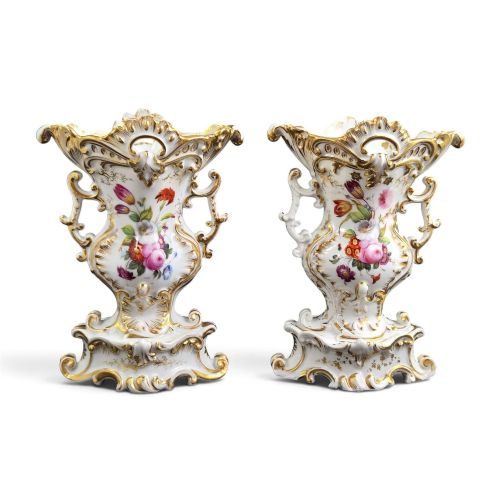
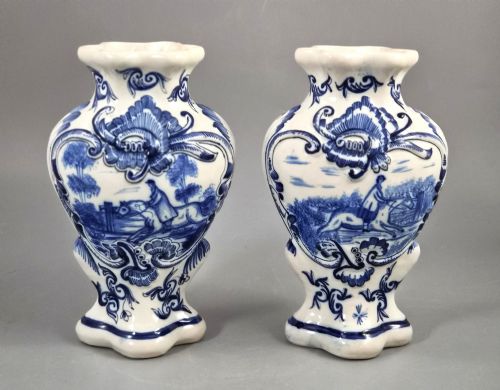
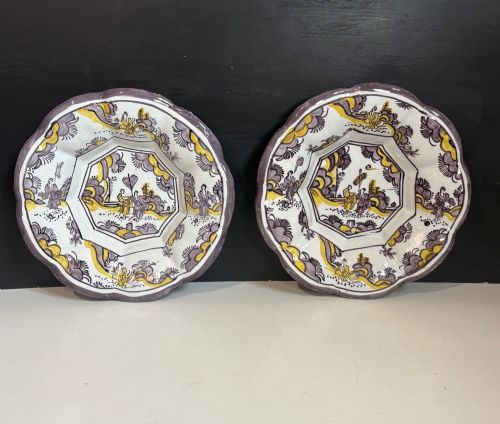
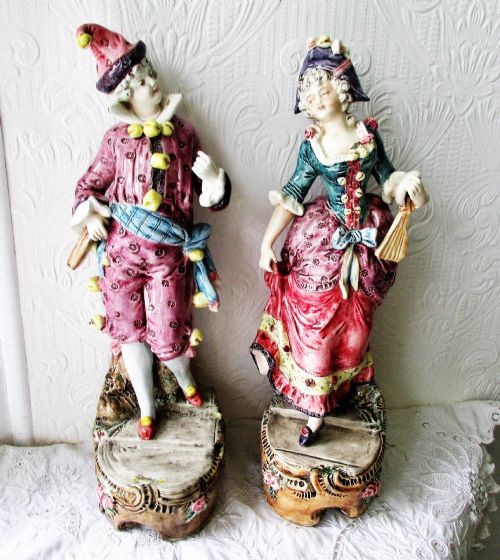
Hand painted french pottery brings centuries of colour and character to a room through tin-glazed earthenware and regional ceramics.
Hand Painted French Pottery
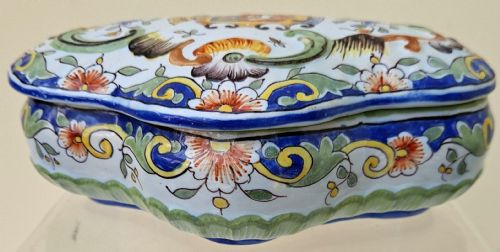
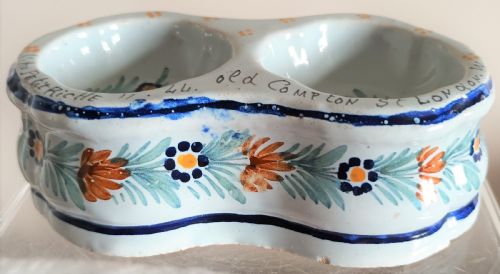
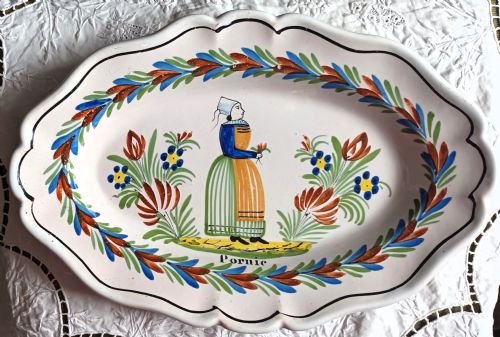
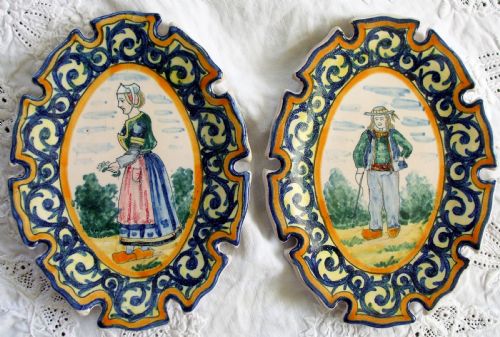
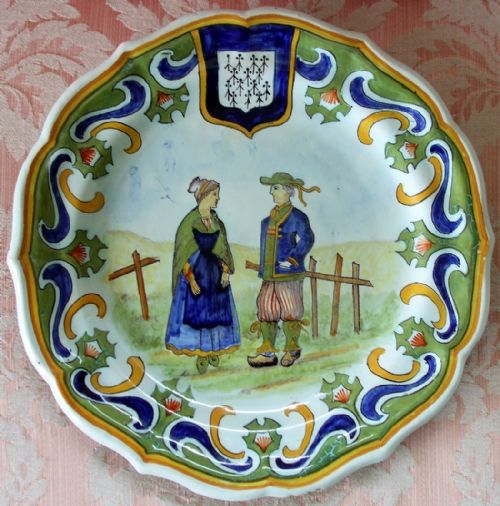
When you search for hand painted french pottery, you encounter a tradition spanning from eighteenth-century faience dishes to art deco vases and figures. The pieces range from utilitarian items like sauceboats, salt cellars and apothecary jars to decorative urns, plaques and wall pockets.
You are most likely to meet nineteenth-century faience from Quimper or Desvres, often decorated in blue and white or polychrome. These wares carry the distinct regional styles of French provincial workshops alongside earlier eighteenth-century forms.
How they were made
Potters shaped local earthenware and ceramic bodies before applying tin glaze to create an opaque white surface for painting. Artisans then brushed pigments directly onto the unfired or biscuit surface, sometimes adding gold leaf for enrichment.
The pieces were subsequently fired to fuse the glaze and pigments, resulting in the vibrant blue and white or polychrome finishes seen on faience and ceramic vessels from various periods.
Cats appear frequently in this ceramic tradition, staring out from wall pockets and figurines with hand-painted expressions.
What varies in quality
The skill of the brushwork defines the superior examples, where hand-painted details show fluidity and precision in floral, figural or armorial motifs. Crispness in the moulding of earthenware bodies and the smoothness of the tin glaze further separate fine workshop production from standard output.
Historical significance and factory origin also shape the standing of a piece, with documented works from notable centres like Marseille, Nevers or Quimper holding distinct weight among collectors.
Jacob Petit·Fourmaintraux-Courquin·Robert T Lallement·Veuve Perrin
The Hand Painted French Pottery Glossary
- Faience
- Tin-glazed earthenware produced in France, typically featuring hand-painted decoration over an opaque white glaze.
- Tin Glaze
- A ceramic glaze containing tin oxide that turns white and opaque upon firing, providing a ground for painted pigments.
- Vide-Poche
- A small shallow dish or tray used for emptying pockets of coins and keys, often rendered in glazed earthenware.
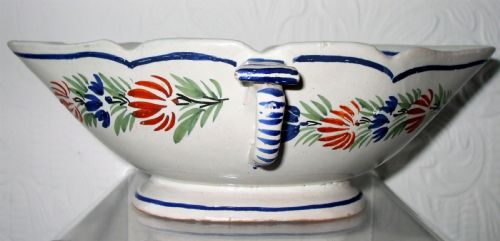
- Sauceboat
- A vessel with a lip designed for serving sauces, frequently modelled as double-handled forms in regional faience.
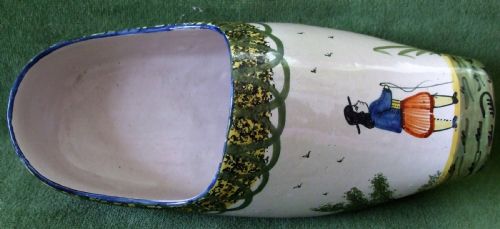
- Sabot
- A traditional wooden shoe shape translated into ceramic form as a decorative shoe or clog.
Hand Painted French Pottery: Frequently Asked Questions
How do I identify Quimper faience?
Quimper pieces typically display traditional Breton figures in regional costume, accompanied by floral borders and distinct factory marks on the base. The palette often relies on blues, yellows and greens.
Examining the hand-painted brushwork helps distinguish older nineteenth-century examples from later twentieth-century productions.
What is the difference between faience and earthenware?
Faience is a specific type of earthenware covered with an opaque tin glaze that allows for direct brush painting on the surface. Standard earthenware may utilise transparent glazes or coloured slips instead.
This tin-glazed technique gives French faience its characteristic opaque white background.
How should I clean antique pottery?
Dust these ceramic pieces gently with a soft, dry brush to prevent accumulation. Avoid submerging antique tin-glazed items in water, as moisture can penetrate old crazing in the glaze.
Professional restoration or delicate care preserves the hand-painted pigments on older surfaces.
Can I use these decorative dishes daily?
Most antique faience and decorative ceramics are best suited for display rather than heavy modern utility. The historic glazes and earthenware bodies can be sensitive to thermal shock and abrasive wear.
Gentle handling ensures the hand-painted details remain protected over time.