

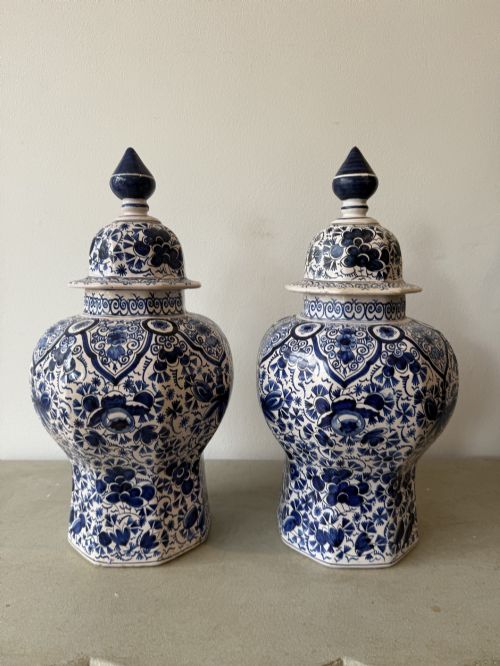




Hand Painted Delftware Jar
A hand painted delftware jar brings vibrant blue and white tin-glazed earthenware into a room, offering centuries of ceramic history that collectors prize.
Hand Painted Delftware Jar
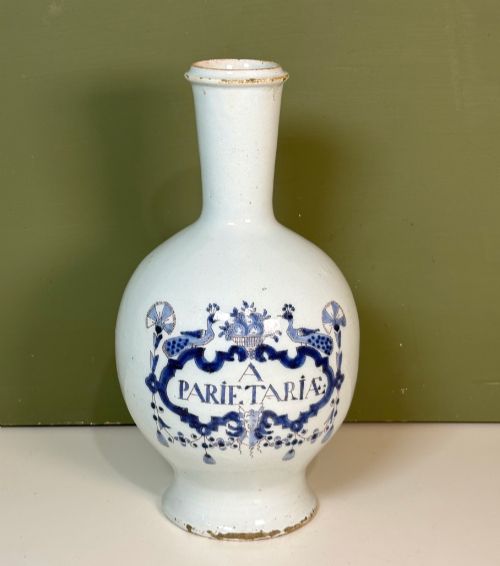
A hand painted delftware jar is a tin-glazed ceramic vessel shaped as an apothecary jar, lidded vase, or baluster vase. These pieces emerge predominantly from the eighteenth and nineteenth centuries, spanning Dutch, French, and Georgian origins.
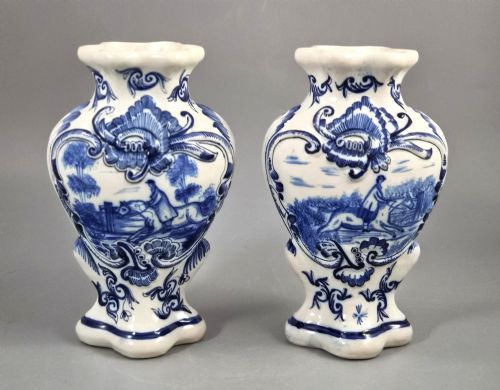
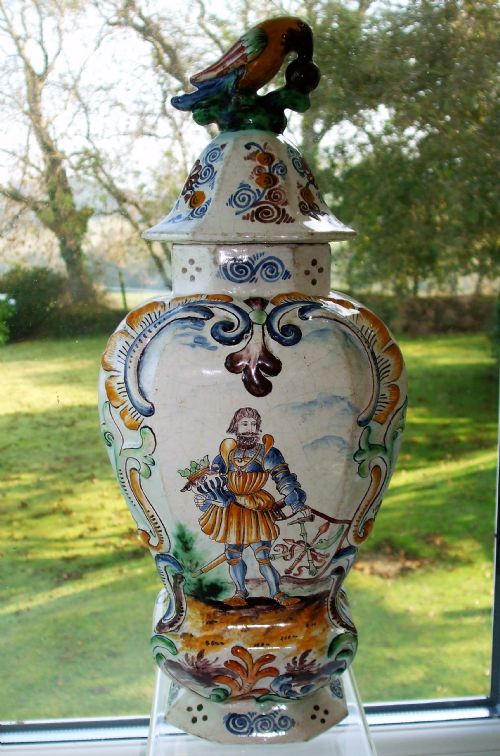
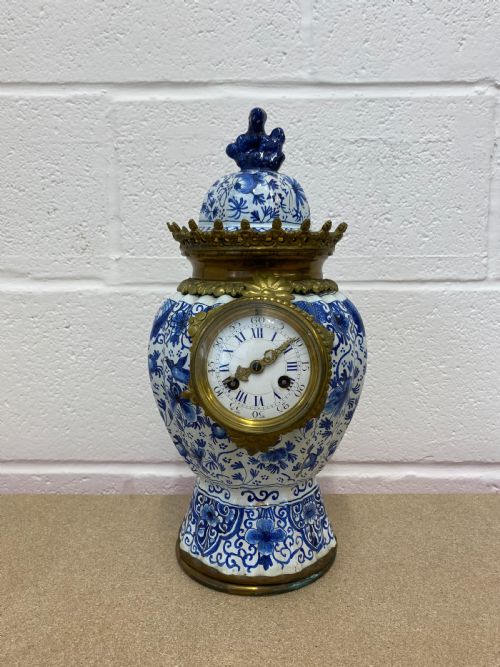
The versions most commonly met on this page include eighteenth-century lidded jars and nineteenth-century vases decorated in blue and white. Collectors also encounter polychrome examples and specialist items such as apothecary bottles and clock cases.
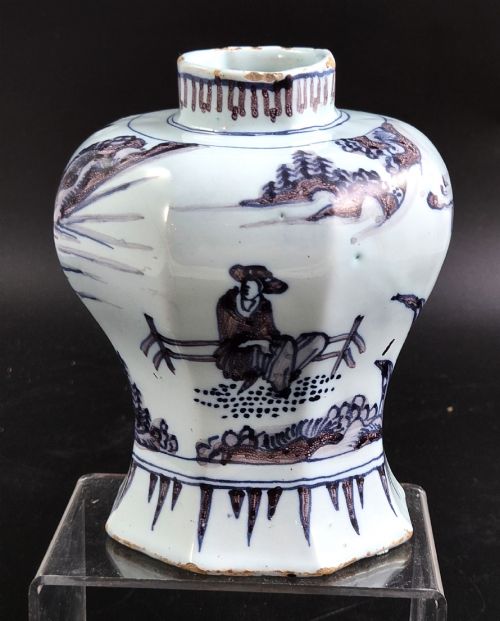
Makers and styles stretch from Dutch baroque and chinoiserie designs to French faience. Each object carries the distinct hand-painted brushwork characteristic of tin-glazed earthenware production.
Assessing quality and execution
Quality rests in the precision and fluidity of the hand-painted brushwork, distinguishing confident floral and avian motifs from hesitant decoration. The depth and consistency of the cobalt pigment against the tin glaze also signal superior execution.
The preservation of the original glaze and the integrity of the earthenware body determine the overall standing of an individual jar. Pieces that retain their matched covers demonstrate a higher degree of completeness.
Hand Painted Delftware Jar Retail Price Guide 2026
Typical asking prices for hand painted delftware jar among the pieces listed under this phrase on Sellingantiques today, from the lower quarter to the upper quarter. They describe what is for sale here now, not the wider market.
Listings feature tin-glazed earthenware from the seventeenth, eighteenth, and nineteenth centuries, including Dutch delft and French faience.
Fourmaintraux-Courquin
The Hand Painted Delftware Jar Glossary
- Tin-Glazed Earthenware
- Pottery fired with a lead glaze made opaque by the addition of tin oxide. This technique provides the white background essential for traditional delft painting.
- Baluster Vase
- A tall vase with a rounded body that tapers toward the neck and stands upon a broader base. This form frequently appears in eighteenth-century Dutch ceramics.
- Chinoiserie
- European decorative style reflecting Chinese artistic influences, commonly seen in birds and floral motifs on early delftware. Artisans adapted these oriental scenes to fit standard European vessel shapes.
- Polychrome
- Decoration employing multiple colours rather than a single hue, often combining soft reds, greens, and yellows with blue. Such palettes appear on both Dutch and French faience pieces.
- Faience
- European tin-glazed earthenware, particularly associated with French and continental production traditions. The term encompasses various decorative wares produced outside the main Dutch centres.
Hand Painted Delftware Jar: Frequently Asked Questions
How do I date a delftware jar?
Dating relies upon stylistic markers, changes in the tin glaze composition, and the specific form of the earthenware body. Eighteenth-century pieces often display distinct Dutch baroque or chinoiserie motifs.
Later nineteenth-century examples may incorporate French faience styles or converted mountings such as lamp fittings. Comparing the brushwork and pigment depth against established periods helps narrow the origin.
Were these jars used for medicine?
Many examples on this page are apothecary jars or chemist bottles originally created to store dry or liquid medicines in medical shops. Their inscribed labels identified specific contents for daily use by practitioners.
Other variants served as decorative lidded vases or display pieces in domestic interiors rather than utilitarian storage. Both functional and ornamental types share the same tin-glazed earthenware technique.
How should I clean my jar?
Maintenance requires gentle dusting with a soft, dry cloth to protect the porous tin glaze and painted surface. Moisture can infiltrate historic earthenware through micro-fissures in the glaze over time.
Avoid chemical cleaners, immersion in water, or abrasive materials that might damage the cobalt pigment. Stable indoor humidity helps preserve the ceramic body.
What is the difference between delft and faience?
Delft specifically refers to tin-glazed earthenware produced in the Netherlands, particularly in the town of Delft, known for its blue and white palette. Faience is the broader continental term used for similar tin-glazed pottery made in France and other regions.
Both traditions utilise a white tin glaze over an earthenware base, but regional painting styles and clay bodies differ. French Desvres pieces illustrate this continental variation alongside traditional Dutch wares.