



Hand Painted Commode
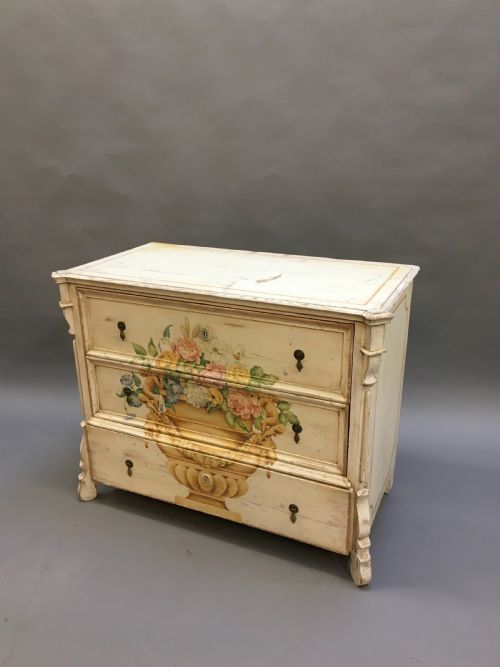
A hand painted commode brings decorative brushwork and practical storage together, offering storage with a distinct visual presence in a room.
Hand Painted Commode
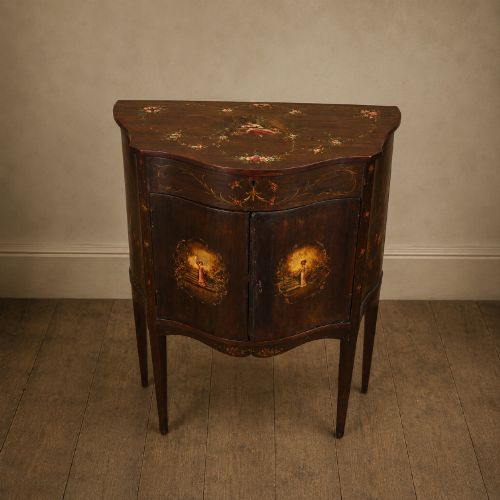
When you search for a hand painted commode, you encounter a wide selection of storage pieces spanning several centuries and various regional traditions. These items function primarily as chests of drawers, side cabinets, and commodes, each displaying surface decoration applied by hand.
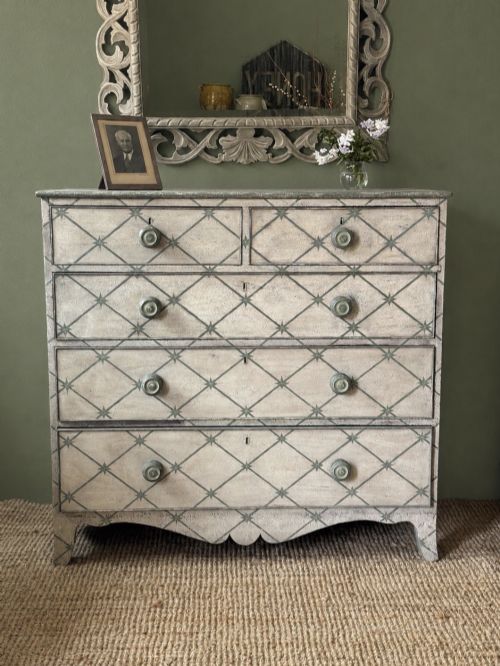
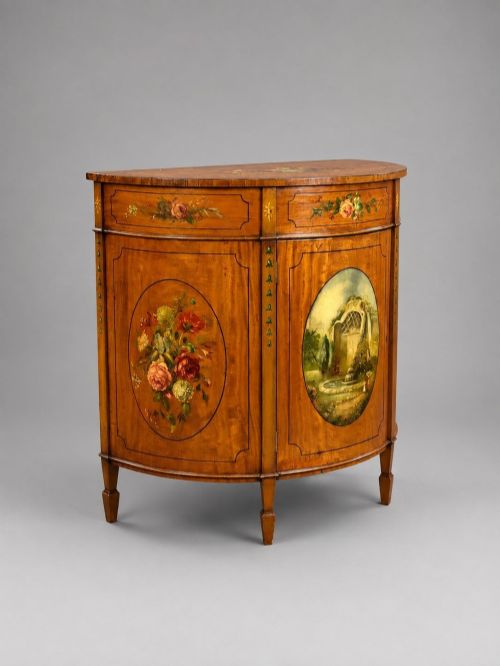
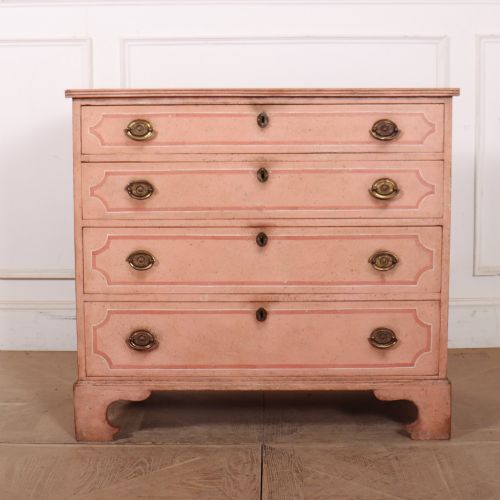
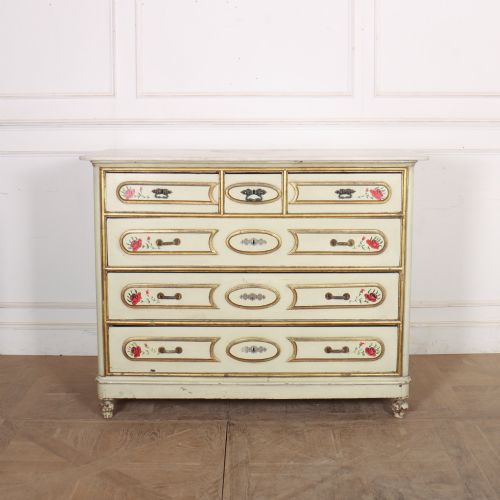
The versions you meet most frequently on this page date from the nineteenth century and the early twentieth century, taking forms such as serpentine side cabinets, demi-lune satinwood cabinets, and pine chests of drawers. Continental examples from France, Sweden, Italy, and Spain sit alongside English pieces, showing influences from regional folk art to formal revival styles.
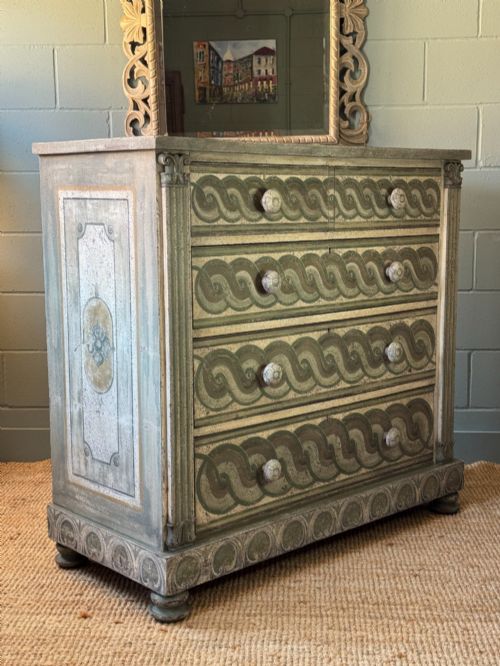
Makers and decorators utilised diverse woods including pine, satinwood, and ash as bases for paint, lacquer, and japanning. Whether finished in pale cream, Swedish grey, or intricate Venetian scenes, these items serve as functional furniture that doubles as a canvas for decorative painting.
Materials and construction
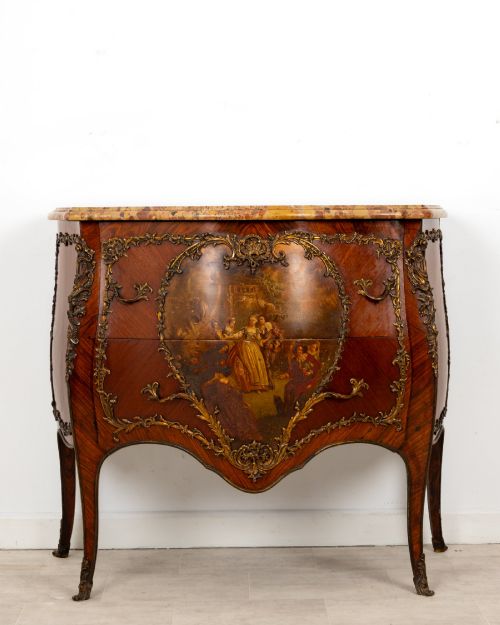
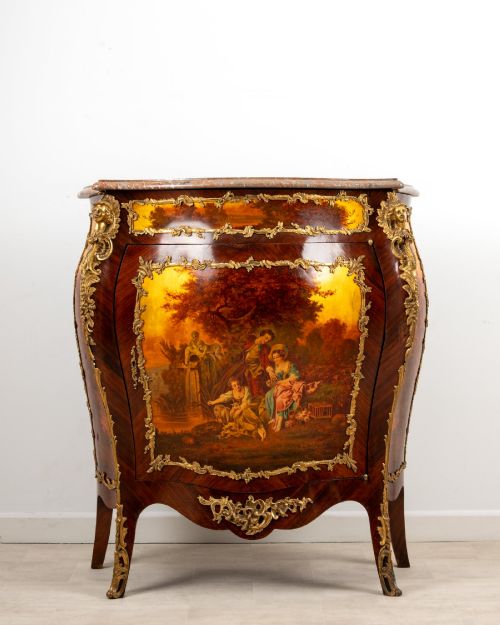
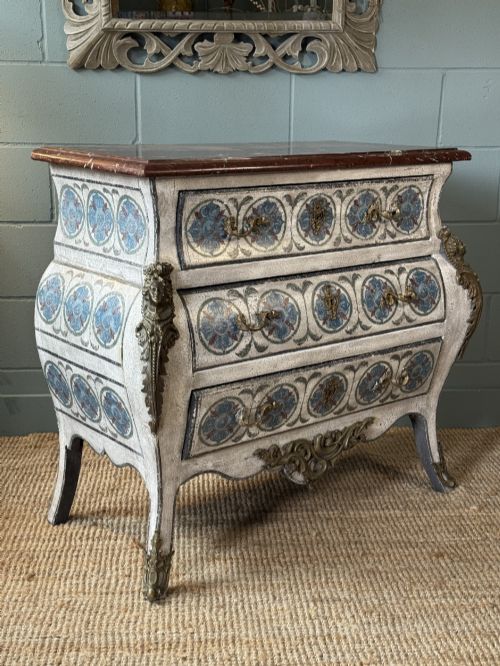
Craftsmen built these pieces from structural timbers such as pine and ash, or finer woods like satinwood and kingwood, often shaping them into serpentine or bombé profiles. Surfaces received priming coats before artists applied paint, lacquer, or japanning by hand, sometimes incorporating simulated wood finishes like simulated birch or scumbled textures.
Many examples feature decorative enhancements beyond paintwork, including gilt-bronze or ormolu mounts, brass hardware, and inset marble tops. Revivals of earlier periods introduced delicate satinwood inlay alongside painted motifs, while vernacular pieces relied on solid pine boards and original regional paint layers.
A child's high chair sneaks into the commode category, proving that small seats sometimes have big ambitions.
Distinctions in quality
Quality rests on the harmony between the underlying cabinetwork and the execution of the surface decoration. Finely proportioned frames with fluid serpentine or bombé curves provide a superior foundation for paint compared to plain, utilitarian boxes.
The skill of the brushwork dictates the visual success of the piece, distinguishing rapid decorative updates from meticulous artistic compositions like detailed Venetian scenes or fine Chinoiserie lacquer. The integrity of the surface, whether original historic paint or later artistic redecoration, shapes the character of each cabinet.
GEMLA FABRIKERS
The Hand Painted Commode Glossary
- Commode
- A low cabinet or chest of drawers designed for storage, often featuring decorative painted finishes or mounts. This form developed in France before being adopted across Europe and Britain.
- Demi-Lune
- A half-moon shape used for cabinets and commodes designed to sit flush against a wall. This profile became particularly popular during revival periods.
- Bombé
- A swelling, outward-curving profile found on the front and sides of advanced cabinetwork. This technique requires considerable skill in carpentry.
- Japanning
- A European imitation of East Asian lacquerwork using resin varnishes and painted designs. It appears on decorative English and continental furniture.
- Vernis Martin
- A simulated lacquer finish developed in France, prized for its translucent depth and polished surface. It frequently decorates revival commodes.
Hand Painted Commode: Frequently Asked Questions
What is a commode?
A commode is a low piece of furniture with drawers or doors, used originally for storage and display in domestic rooms.
Over time, the term has covered various forms from French polished cabinets to vernacular pine chests of drawers.
How do I date a painted chest?
Dating relies on examining construction methods, timber types, and the style of the painted decoration. Structural details and hardware offer clues to the period of manufacture.
Revival periods often copied eighteenth-century shapes during the late nineteenth and early twentieth centuries, adding specific clues through their decorative vocabulary.
Where were these pieces made?
These items originate from workshops across Britain and continental Europe, including France, Sweden, Italy, and Spain. Each region contributed distinct cabinetmaking traditions.
Local preferences influenced everything from the choice of wood, such as pine or satinwood, to the specific palette of the painted finish.
How do I care for painted wood?
Painted furniture requires protection from direct sunlight and excessive humidity to prevent the wood beneath from moving and the paint from cracking. Gentle dusting with a dry cloth is sufficient for routine maintenance.
Avoid chemical cleaners and abrasive polishes that can damage historic or delicate painted surfaces over time.