



Hand Painted Classical Vases
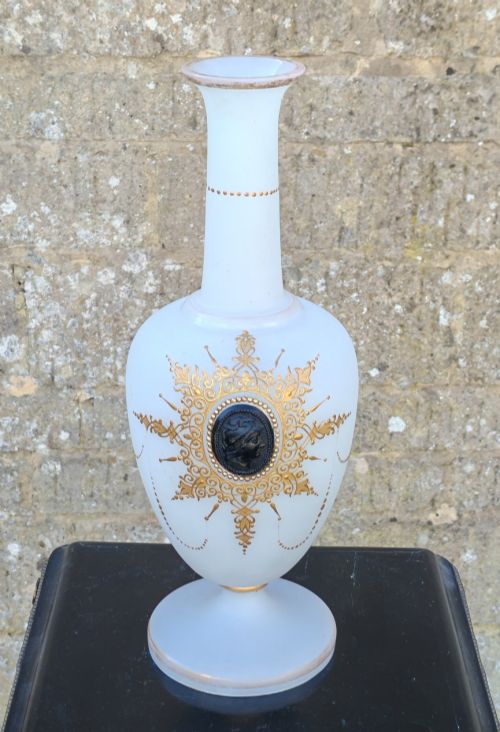
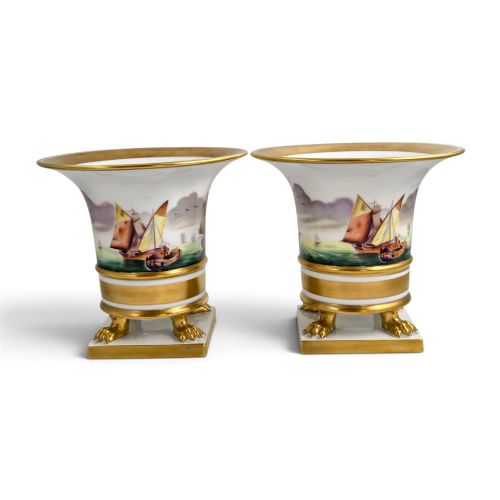
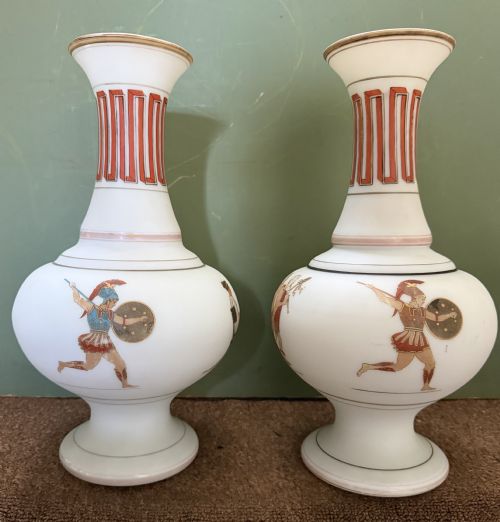
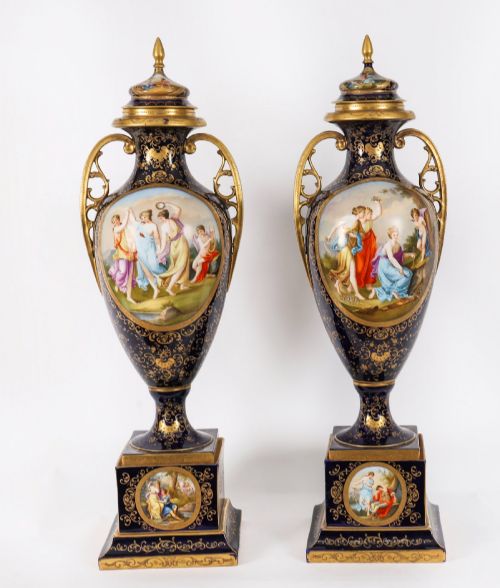
Hand painted classical vases bring sculptural grace and mythological narrative to a room, drawn chiefly from nineteenth-century European kilns.
Hand Painted Classical Vases
When you search for hand painted classical vases, you encounter porcelain, ceramic and glass vessels created across the eighteenth, nineteenth and early twentieth centuries. These pieces draw heavily on ancient Greek, Roman and Etruscan forms, translating amphorae, urns, ewers and krater shapes into decorative household objects.
The most common examples on this page stem from nineteenth-century European production centres, particularly Vienna, Sevres, Berlin and Paris. Many of these nineteenth-century items adopt earlier neoclassical, Empire or Renaissance revival idioms, combining hand-painted figural scenes with rich gilding.
Beyond standard tabletop vases, the selection encompasses lidded urns, garniture sets, pedestal vases and ceramic lamps. Makers frequently mounted porcelain bodies on brass, gilt bronze or ormolu bases, merging ceramic art with metalwork.
Materials and construction
The foundation of these pieces rests on hard-paste or soft-paste porcelain, earthenware, majolica or opaline glass, shaped either by throwing on a wheel or moulding in sections. Artisans applied polychrome enamel pigments by hand to depict mythological vignettes, floral panels or portraits before firing the pieces to fix the colours.
Gilding forms a defining characteristic of the medium, utilising gold leaf or liquid gold highlights applied to handles, rims and borders. On finer nineteenth-century examples, metal mounts in ormolu or gilt bronze frame the porcelain bodies, requiring precise foundry work to secure the ceramic components.
Hand Painted Classical Vases Retail Price Guide 2026
Typical asking prices for hand painted classical vases among the pieces listed under this phrase on Sellingantiques today, from the lower quarter to the upper quarter. They describe what is for sale here now, not the wider market.
Several nineteenth-century artists clearly studied classical sculpture from a distance, rendering heroic Greek gods with remarkably polite Victorian moustaches.
Distinctions in craftsmanship
Quality separates along the precision of the hand-painted brushwork and the depth of the palette. Superior pieces display finely detailed figural vignettes with subtle shading and expressive faces, whereas simpler items rely on transfer printing or heavy, repetitive floral motifs.
The integration of the decorative elements dictates the upper tiers of the category. Master factories invested in crisp relief moulding, substantial porcelain weight, and clean, unblemished gilding that complements rather than overpowers the painted surface.
Royal Vienna·Sevres·Meissen·Barr Flight And Barr·KPM
The Hand Painted Classical Vases Glossary
- Amphora
- A two-handled ancient vessel shape with a narrow neck, replicated extensively by nineteenth-century porcelain factories. These forms often feature classical figural scenes painted across the swelling body.
- Garniture
- A set of three or more matching decorative vessels designed to sit together on a mantelpiece or sideboard. They typically comprise a central lidded urn flanked by two smaller matching vases.
- Ormolu
- Finely chopped gold cast and chased onto a bronze base, frequently utilised for mounts, handles and pedestals on nineteenth-century decorative urns. It provides a warm metallic contrast to painted porcelain.
- Maiolica
- Tin-glazed Italian earthenware decorated with opaque colours, representing a distinct ceramic tradition separate from hard-paste porcelain. Pieces often depict historical or mythological narratives across broad surfaces.
- Ewer
- A large jug with a wide spout and looped handle, adapted from classical metal prototypes into decorative porcelain display pieces.
Hand Painted Classical Vases: Frequently Asked Questions
How were classical vases used originally?
In nineteenth-century interiors, these vessels served primarily as decorative showpieces on mantelpieces, pedestals and central tables. They established a cultured atmosphere by signalling an appreciation for classical antiquity.
Larger lidded urns and garniture sets anchored formal room displays, while smaller ewers and amphorae highlighted refined taste within domestic drawing rooms.
Are these vases suitable for holding water?
Most pieces on this page are intended strictly for decorative display rather than functional use as flower holders. The delicate hand-painted enamel and gold leaf can be sensitive to moisture and frequent handling.
If utilised for fresh stems, glass liners are recommended to protect the interior ceramic surface from water damage and mineral staining.
How do I distinguish Vienna style from Royal Vienna?
Genuine eighteenth and nineteenth-century pieces from the Imperial Vienna factory often bear blue shield or beehive marks pressed into the paste. Royal Vienna style items generally date from the late nineteenth century and emulate those earlier aesthetic standards.
factory marks on revival pieces frequently reflect later decorating studios rather than original imperial production.
What is an ormolu mount?
Ormolu refers to gilded bronze mounts attached to porcelain bodies to enhance structural presence and decorative appeal. Founders cast the bronze and applied gold leaf before securing the metal collars around handles, rims and bases.
This technique elevates the status of a ceramic vessel by combining two distinct decorative arts into a single object.