




Antique Opaline Glass Pair
These antique opaline glass pairs bring striking colour and sculptural symmetry to a room, offering a refined focal point for any mantelpiece or table.
Antique Opaline Glass Pair
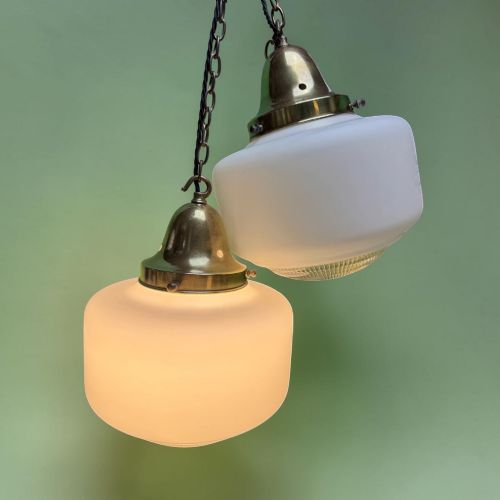
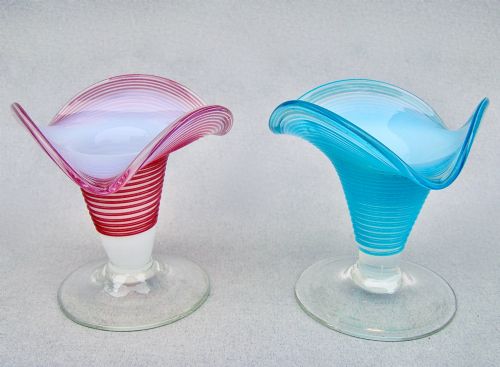
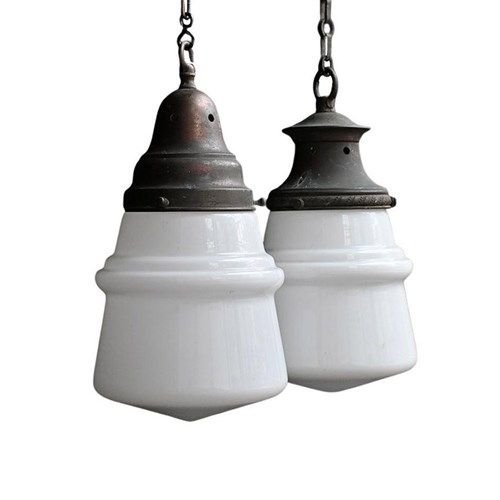
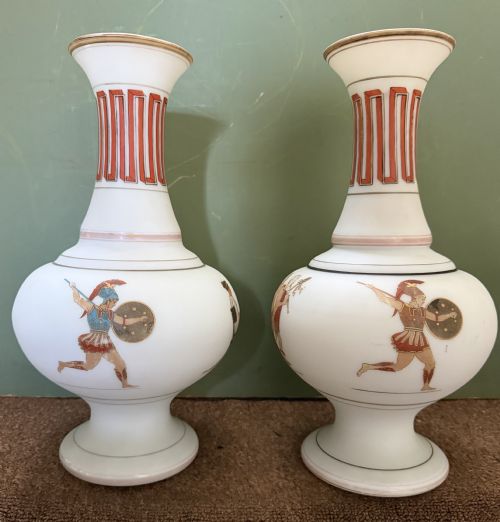
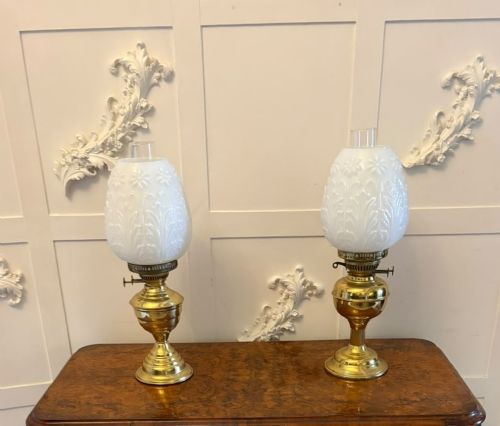
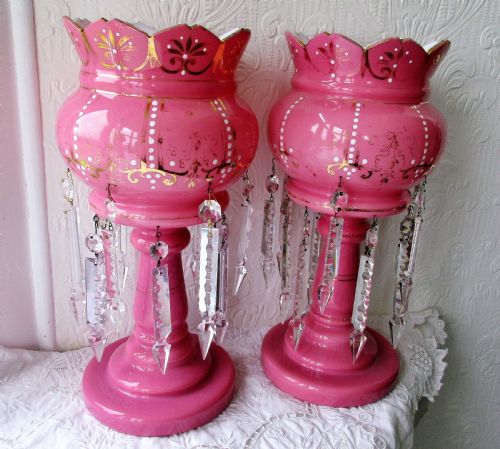
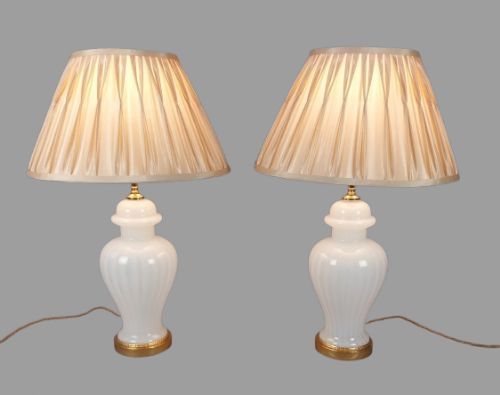
An antique opaline glass pair consists of matched decorative objects created in opaque or translucent glass, spanning periods from the nineteenth century into the early twentieth century. These matching pieces most commonly appear as ornamental vases, table lustres, and oil lamps.
The selection here encompasses diverse regional aesthetic movements, ranging from French Chateau and French Empire designs to English Victorian and Edwardian examples. Makers utilised these balanced pairs for symmetrical placement on mantelpieces, sideboards, and desks.
How they were made
Artisans produced these items using opaque opaline glass, sometimes integrating cranberry glass or blue spiral glass into the foundational body. Metal components in brass or chrome frequently support the glass elements in lighting fixtures and lamps.
Makers embellished the surfaces using enamel painting, applied gold leaf, and raised floral or figural designs. Lustres also incorporate suspended glass drops that catch the light around the central column.
Antique Opaline Glass Pair Retail Price Guide 2026
Typical asking prices for opaline glass pair among the pieces listed under this phrase on Sellingantiques today, from the lower quarter to the upper quarter. They describe what is for sale here now, not the wider market.
Some nineteenth-century desk lamps were built so heavily they doubled as paperweights during brisk draughts.
What varies in quality
The distinction between standard production and exceptional examples lies in the execution of the hand-painted vignettes and the precision of the gilding. Finely detailed floral motifs and clear figural painting elevate the artistic merit of a pair significantly.
Physical proportion and the integrity of supplementary materials, such as heavy brass mounts or well-matched glass shades, separate simpler utilitarian forms from high-status decorative objects.
Baccarat·Jean Francois Robert·Wild and Wessel
The Antique Opaline Glass Pair Glossary
- Opaline glass
- An opaque or translucent glass developed in pastel and solid shades during the nineteenth century. It provides a smooth, porcelain-like surface ideal for enamel decoration.
- Lustre
- A decorative tabletop vessel featuring a bowl fitted with a ring of hanging glass pendants or prisms. These pendants refract candlelight or daylight.
- Gilding
- The application of gold leaf or gold powder to the surface of the glass or metal mounts. It highlights raised motifs and rims.
- Enamel
- A melted glass powder applied to the surface of the glass body and fired to fix coloured designs in place. It creates durable, raised pictorial scenes.
- Grecian revival
- A nineteenth century design style drawing motifs from classical antiquity, including figural vignettes and architectural proportions.
Antique Opaline Glass Pair: Frequently Asked Questions
What is opaline glass?
Opaline glass is an opaque or semi-translucent material that sits visually between clear glass and porcelain. It was widely used in nineteenth-century Europe for decorative vessels and lighting.
The glass gets its milky appearance from bone ash or other opacifying agents added during the melting process. This gives the surface a smooth, soft texture that holds enamel and gilt decoration particularly well.
How were table lustres used?
Table lustres served as decorative mantel ornaments rather than practical lighting devices during the Victorian period. Their primary purpose was to add colour and reflect ambient light into a room.
The hanging glass prisms suspended around the rim caught the light from candles or lamps, creating a sparkling effect that enhanced formal drawing rooms and parlours.
How do I clean antique glass?
Cleaning antique opaline glass requires gentle care to protect delicate enamel work and surface gilding. Lukewarm water and mild soap applied with a soft cloth are sufficient for removing dust.
Harsh chemicals and abrasive sponges must be avoided entirely, as they can strip away painted details and gold leaf. Metal mounts should be dusted separately without liquid cleaners.
Are these lamps wired for modern use?
Many antique oil lamps and dish lights have been converted to electricity for contemporary homes. The conversion process typically integrates internal wiring while preserving the original glass and metal structure.
Buyers should check individual listings to confirm the wiring status and whether professional electrical testing has been carried out.