

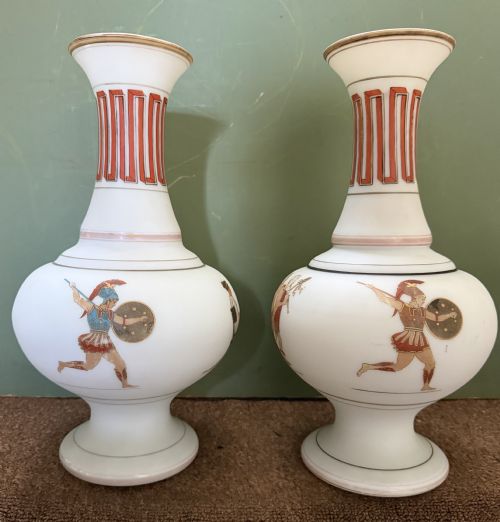


Classical Painted Mantel Vases
Classical painted mantel vases bring grand European porcelain and opaline glass into the sitting room, offering striking focal points for a traditional fireplace.
Classical Painted Mantel Vases
When searching for classical painted mantel vases, collectors encounter decorative vessels designed to sit upon a fireplace mantelpiece, frequently appearing in matched pairs or larger garniture sets. These pieces date primarily from the nineteenth century, reflecting the tastes of French Rococo Revival, Neoclassical, and Empire styles. The selection includes porcelain urns, lidded vessels, and opaline glass cylinders adorned with painted figural vignettes.
Most examples originate from major European ceramic centres, notably French workshops producing Sevres style wares, alongside German factories such as KPM and Vienna. Buyers frequently meet pairs of handled vases featuring classical motifs, sometimes accompanied by matching mantel clocks as part of a garniture set. The forms range from monumental lidded vases to smaller decorative urns displaying intricate hand-painted scenes.
How they were made
The makers of these vases utilised fine porcelain and opaline glass as the primary bodies, shaping them into classical urn and bottle forms through traditional moulding and throwing techniques. Skilled artisans then applied hand-painted figural vignettes and decorative scenes directly onto the glazed surfaces, often incorporating detailed gilding by hand.
Many nineteenth-century pieces feature cast bronze mounts, frequently finished with ormolu or gold leaf to accent the handles, bases, and rims. The combination of fired ceramic, enamel colours, and metallic mounts required multiple stages of kiln firing and metalworking craftsmanship.
Classical Painted Mantel Vases Retail Price Guide 2026
Typical asking prices for classical painted mantel vases among the pieces listed under this phrase on Sellingantiques today, from the lower quarter to the upper quarter. They describe what is for sale here now, not the wider market.
Some nineteenth-century mantel vases were purely ornamental showpieces with sealed lids, hiding the fact that they could hold neither flowers nor water.
What varies in quality
Quality in these vases rests largely upon the refinement of the hand-painted vignettes and the crispness of the porcelain moulding. Finer examples display delicate brushwork in the figures and faces, whereas simpler pieces rely on transfer-printed details or heavier, less expressive enamel work.
The integration and casting of metal mounts also separate standard pieces from superior examples, as finely chased ormolu and heavy gilt bronze handles demonstrate greater workshop investment. Additionally, the crisp preservation of gold leaf and enamel colours across the body indicates the initial grade of materials used.
KPM·Vienna
The Classical Painted Mantel Vases Glossary
- Garniture
- A set of matching decorative vessels, often comprising a central clock flanked by two vases or a set of three graduated vases designed for display together on a mantelpiece.
- Opaline glass
- A delicate, translucent white or coloured glass popular during the nineteenth century, frequently used as a ground for hand-painted figural scenes.
- Ormolu
- Finely ground high-carat gold applied to a bronze base using a mercury amalgamation process, or cast bronze finished to imitate solid gold.
- Sevres style
- A descriptor for nineteenth-century decorative porcelain emulating the aesthetic, rich ground colours, and painted panels associated with the historic French royal factory.
- Vignette
- A small, self-contained painted scene, often depicting classical figures or landscapes, framed by gilded scrollwork on the body of a vase.
Classical Painted Mantel Vases: Frequently Asked Questions
What is a mantel garniture?
A mantel garniture is a matched set of decorative objects, typically consisting of a central clock paired with two matching vases or urns. These sets were designed to create a balanced, symmetrical display across a fireplace mantel.
In period interiors, they served both a functional timekeeping role and a decorative purpose, anchoring the visual weight of the fireplace surround.
How do I display mantel vases?
Mantel vases are traditionally placed on a fireplace mantelpiece, either as a symmetrical pair framing a mirror or artwork, or as part of a larger three-piece garniture set. They require a stable surface with sufficient depth to support their bases safely.
Because many examples feature delicate hand-painted surfaces and gilt bronze mounts, they should be kept away from direct heat sources and strong, prolonged direct sunlight.
How do I identify nineteenth-century styles?
Nineteenth-century vases often combine historical revivals, such as Neoclassical, Empire, or Rococo Revival motifs, reflecting the eclectic taste of the period. Examining the painting style, gilding technique, and form helps align a piece with these historic design movements.
Maker marks or factory stamps on the underside of the porcelain can also provide definitive clues to the origin and approximate date of manufacture.
Are opaline glass and porcelain cleaned differently?
Porcelain and opaline glass both require gentle maintenance to preserve their painted vignettes and gilt highlights. Dusting with a soft, dry brush is generally sufficient for routine care.
Harsh chemical cleaners or abrasive cloths must be avoided, particularly around ormolu mounts and hand-painted enamel areas where moisture or scrubbing can cause permanent damage.