


Hand Painted Chinese Charger
A hand painted chinese charger brings vibrant pigments and intricate brushwork straight from historic kilns to your table.
Hand Painted Chinese Charger
A hand painted chinese charger is a wide, shallow ceramic dish created for display or service rather than daily dining. These pieces arrive from various eras, spanning the eighteenth century through to the nineteenth century, including Georgian and Qing dynasty periods.
The selections on this page encompass porcelain plates, chargers, platters, and decorative bowls. Many bear the hallmark of Chinese export production, tailored for Western markets while retaining traditional techniques.
Materials and Methods
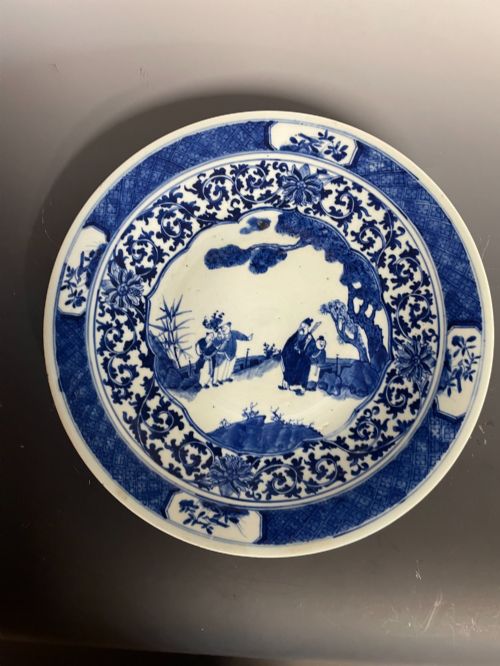
Potters shaped these objects from hard-paste porcelain and ceramic, applying cobalt underglaze for deep blue motifs before the initial firing. Enamel glaze and gold leaf were often added on top for subsequent low-temperature firings.
Every surface motif relies entirely on brushwork rather than transfer printing. Skilled hands rendered floral sprays, armorial crests, and narrative scenes directly onto the dried clay body.
Judging Quality
Quality rests in the precision of the brushwork and the clarity of the enamel pigments. Superior examples display crisp outlines and a balanced composition across a wide surface.
The weight of the porcelain body and the smoothness of the glaze also distinguish finer items. Specific heraldic details, such as armorial crests for titled families, add historical significance to the execution.
The Hand Painted Chinese Charger Glossary
- Charger
- A large decorative plate or platter. These substantial vessels were traditionally used for ceremonial service or grand display.
- Famille Rose
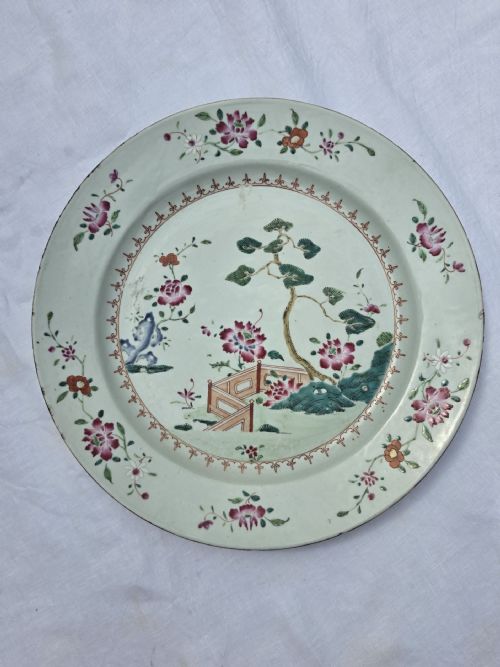
- A palette of opaque enamel colours introduced in the eighteenth century. Pink enamel derived from colloidal gold defines this distinct style.
- Chinese Export
- Ceramics manufactured in China specifically for overseas markets. These wares blend Eastern production methods with Western decorative demands.
- Cobalt Underglaze
- A blue pigment applied to the raw ceramic body before glazing and firing. This mineral withstands high kiln temperatures without losing its depth.
Hand Painted Chinese Charger: Frequently Asked Questions
How were these large dishes used?
These wide plates served as centrepieces for dining tables or were displayed upright on sideboards. Their generous diameters allowed artisans to paint elaborate narrative scenes.
Over generations, owners shifted them from service use to pure display, mounting them on walls or cabinets to protect the painted surfaces.
How do I identify eighteenth century pieces?
Eighteenth century examples typically feature hard-paste porcelain with hand-applied cobalt underglaze or famille rose enamels. The weight and footrim construction reflect the period standards.
Examining the footrim reveals unglazed clay that shows age through weathering and tone. Brush strokes remain visible under magnification on authentic period work.
What is Chinese export porcelain?
Chinese export porcelain refers to wares made in Chinese kilns for buyers in Europe and America. These pieces often incorporate Western crests or shapes alongside traditional motifs.
Trade routes brought these ceramics across the globe, resulting in a distinct cross-cultural aesthetic that defines much of the surviving material.
How should I care for antique porcelain?
Display these items away from direct sunlight to preserve the stability of the enamel colours. Dust them gently with a dry, soft cloth.
Avoid using dishwashers or harsh chemical cleaners, as the low-fired enamel details and gold leaf can wear away over time.