
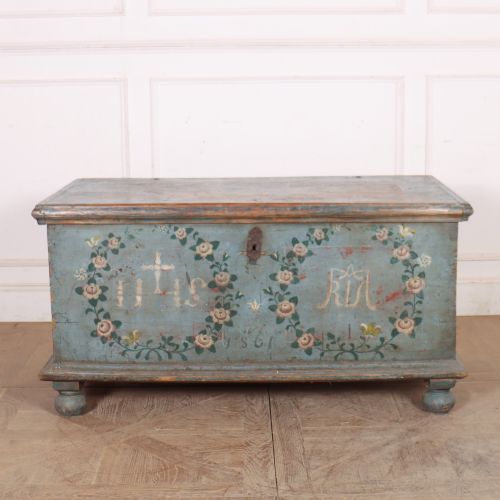
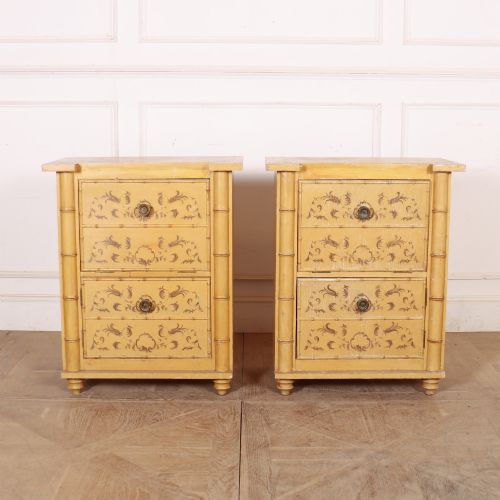

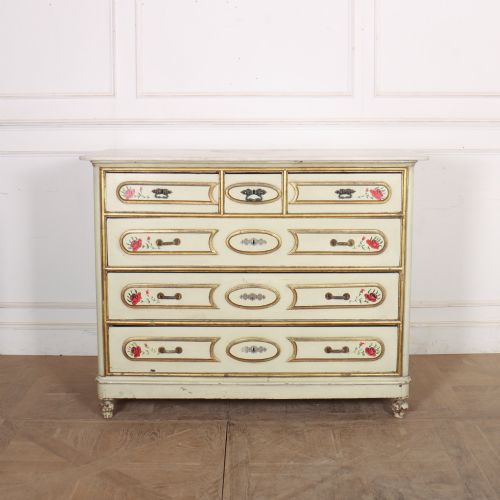
Hand Painted Chest
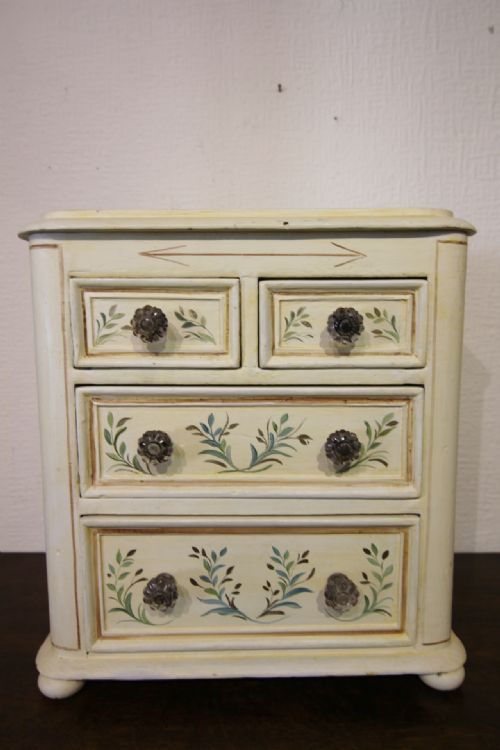
When you search for a hand painted chest, you invite vibrant folk traditions, delicate Chinoiserie, and robust Victorian utility into a room.
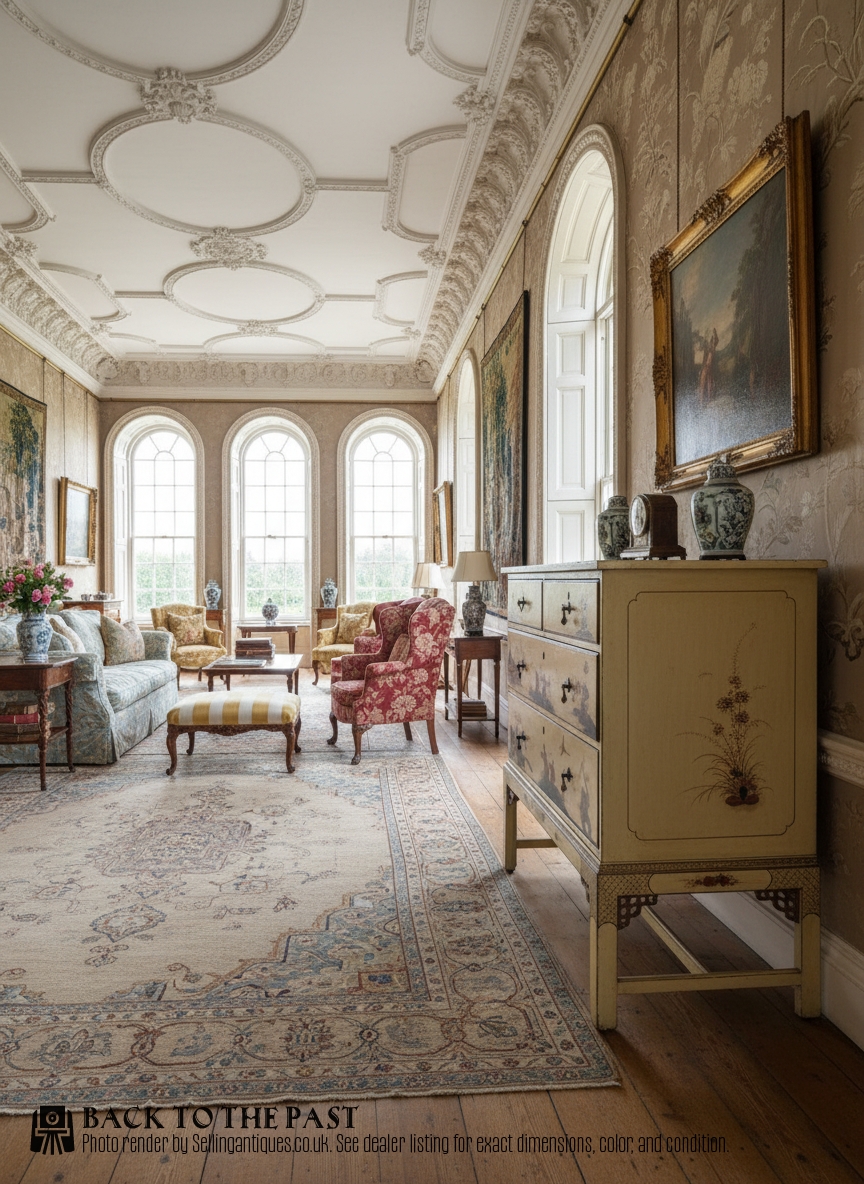
Hand Painted Chest
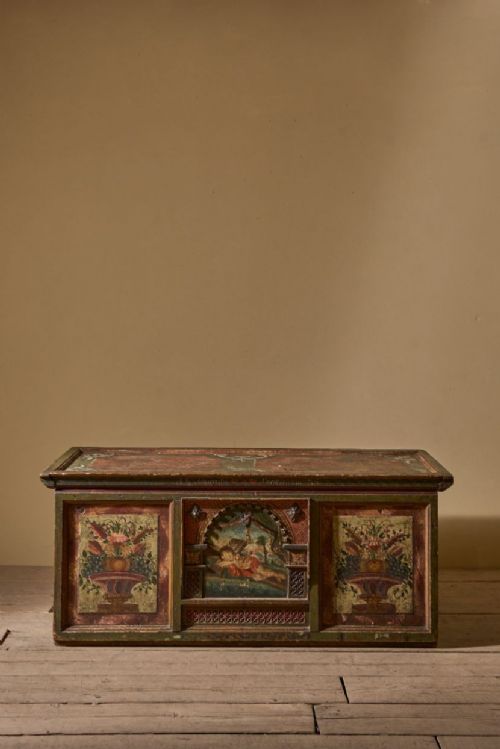
A hand painted chest spans multiple centuries, originating in domestic workshops, provincial towns, and grand cabinetmakers' studios alike.
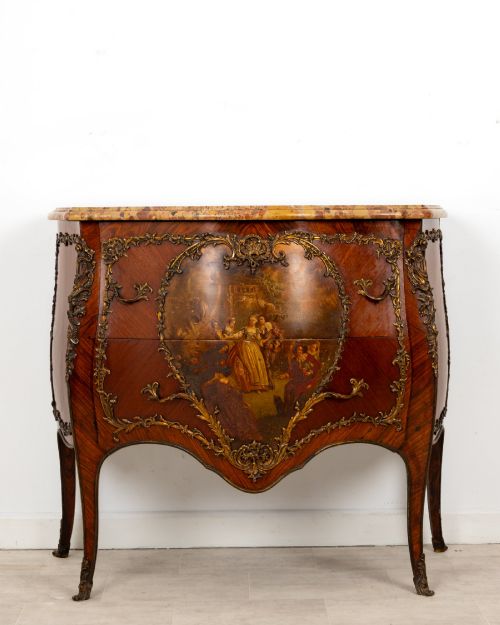
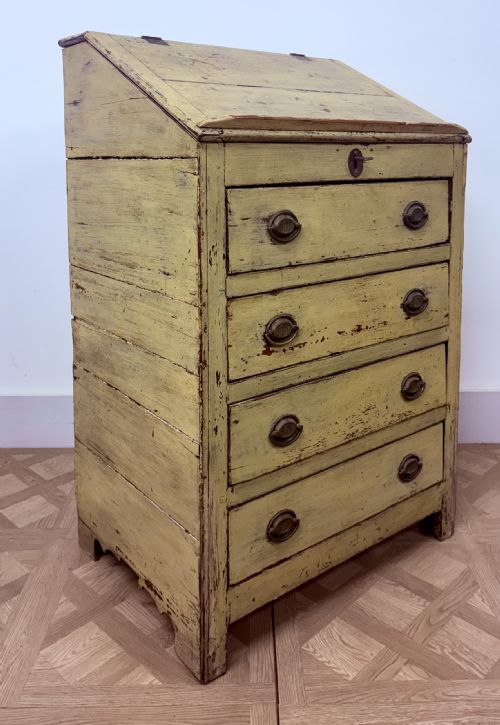
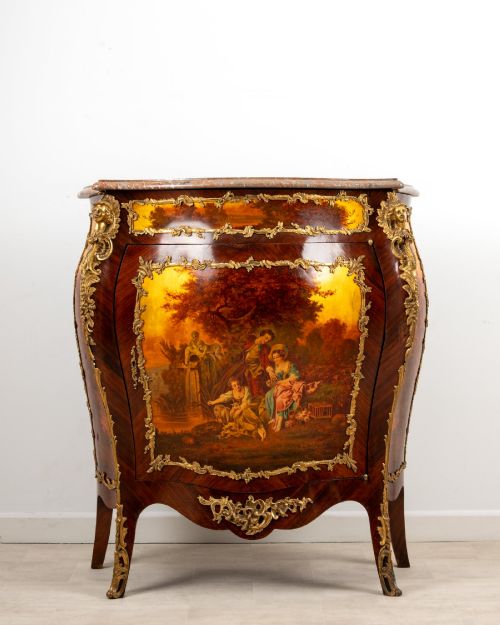
The phrase encompasses utilitarian pine blanket boxes, Scandinavian marriage chests bearing floral motifs, and sophisticated French commodes.
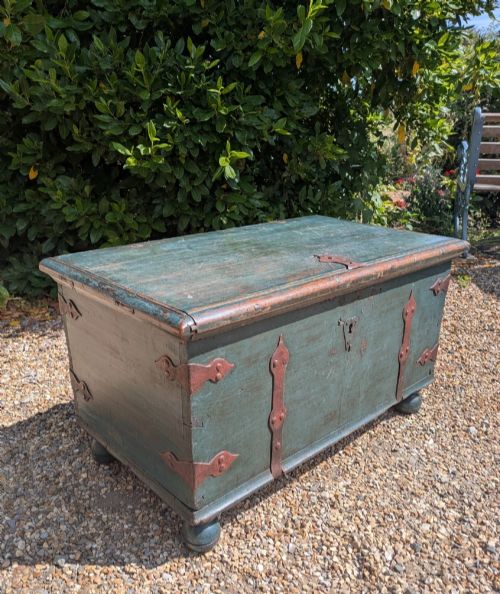
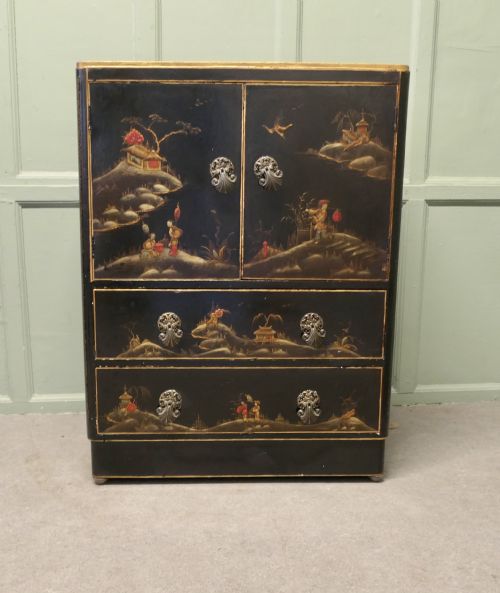
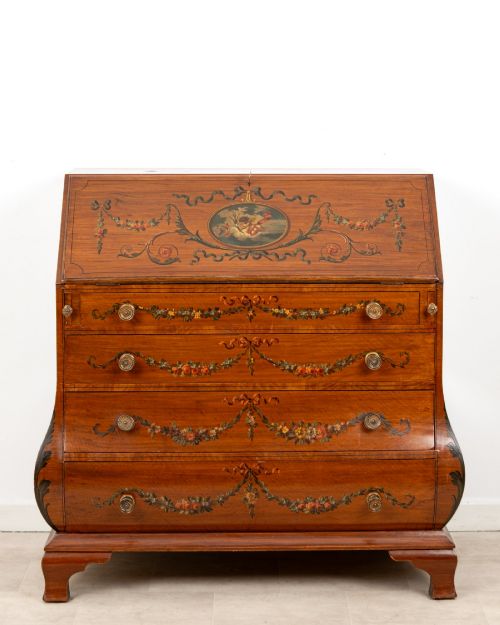
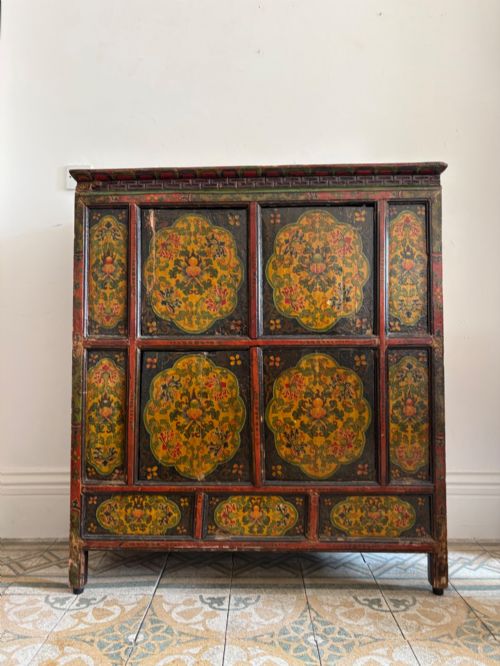
On this page, buyers regularly encounter pieces ranging from heavy iron-strapped trunks to refined satinwood writing desks and Chinese lacquer cabinets.
Materials and construction methods
Wood serves as the primary substrate, utilising accessible regional timbers like native pine alongside imported mahogany, kingwood, and satinwood.
Makers applied pigments directly onto prepared wooden surfaces, occasionally incorporating lacquer, gesso, or Vernis Martin to achieve deep, reflective finishes.
Structural hardware relies on hand-forged iron strapwork, brass handles, and gilt-bronze or ormolu mounts to secure corners and drawers.
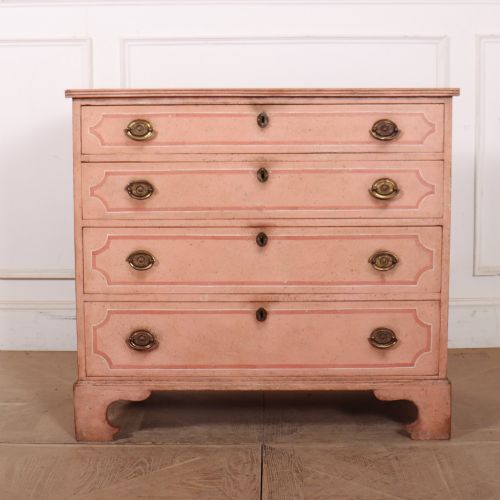
The listings span pieces from the Georgian era through to the 1930s, utilising pine, mahogany, lacquer, and wrought iron.
Distinctions in standard and execution
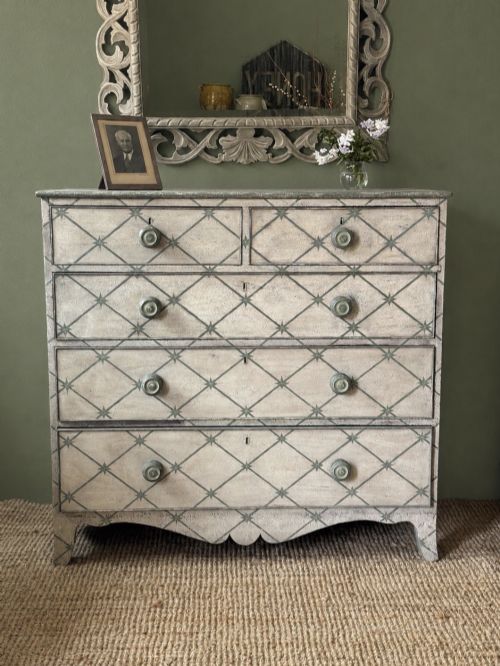
Quality rests in the fidelity of the decorative brushwork, shifting from simple provincial folk motifs to intricate, multi-layered Chinoiserie scenes.
The integrity of the underlying joinery defines the piece, distinguishing estate-made vernacular boxes from master cabinetmakers' commodes.
Surviving surfaces show varying degrees of original pigment retention, separating untouched historic decoration from later repainting.
Harrods·Shoolbred
The Hand Painted Chest Glossary
- Vernis Martin
- A European imitation of Asian lacquer developed by the Martin brothers in the eighteenth century. It creates a translucent, glossy finish often seen on French furniture.
- Marriage chest
- A traditional trunk or coffer commissioned to celebrate a wedding, frequently decorated with names, dates, and symbolic floral motifs.
- Chinoiserie
- European artistic interpretations of Chinese and East Asian decorative styles. This aesthetic dominated lacquer cabinets and screens during various revival periods.
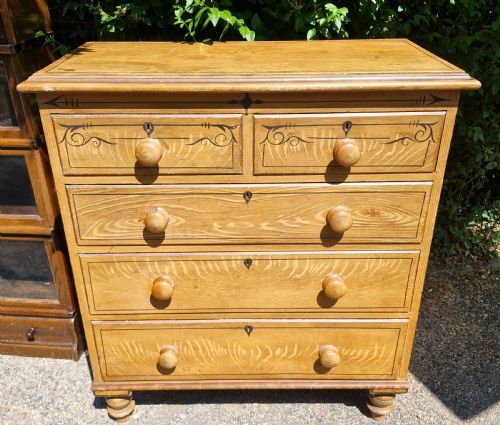
- Scumbled pine
- A decorative painting technique where layers of translucent glaze are manipulated with tools to simulate the grain of more expensive hardwoods.
- Cassone
- A large Italian chest intended for holding household linen or dowry items. These pieces often feature elaborate painted panels or sculptural relief work.
Hand Painted Chest: Frequently Asked Questions
How do I care for antique painted wood?
Keep painted furniture away from direct sunlight and steady heat sources to prevent the pigments from fading and the timber from splitting. Dust gently with a dry, soft cloth rather than utilising harsh cleaning sprays.
Wax finishes require occasional gentle feeding, but painted surfaces demand caution to avoid lifting the historic layers. Consult a conservator if the paint begins to flake or stabilise.
Were these chests used for travel?
Many trunks and sea chests served utilitarian transport purposes for journeys across continents or oceans. Iron strapwork and robust timber protected belongings from rough handling on ships and carriages.
Conversely, marriage chests and fine commodes remained stationary in domestic interiors to store linens and valuable garments. Examining the interior fittings helps reveal whether a trunk was built for travel.
How can I tell original paint from later decoration?
Original paint shows natural craquelure, uniform wear patterns, and integrated patination accumulated over centuries. Pigments settle into the wood pores in ways modern touch-ups struggle to replicate.
Under magnification, older surfaces reveal subtle tool marks and consistent ageing across the entire decorative scheme. Comparing the wear on the paint to the wear on the underlying wood offers further clues.
What is the difference between a coffer and a commode?
A coffer is a deep box with a hinged lid primarily designed for storage, often associated with early marriage chests and dowry trunks. It opens from the top rather than via internal pull-out drawers.
A commode is a low chest of drawers, frequently standing on legs and featuring decorative mounts or a marble top. These developed into refined furniture pieces for domestic reception rooms.