
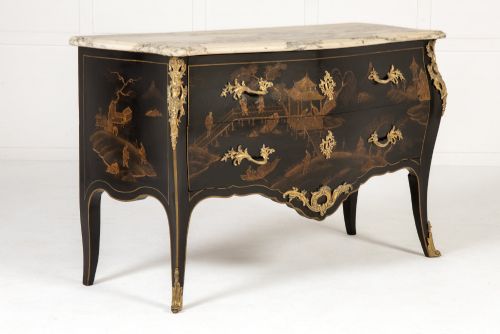


Edwardian Japanned Cabinet
These edwardian japanned cabinet pieces bring hand-finished Chinoiserie character and glossy surface depth to a room.
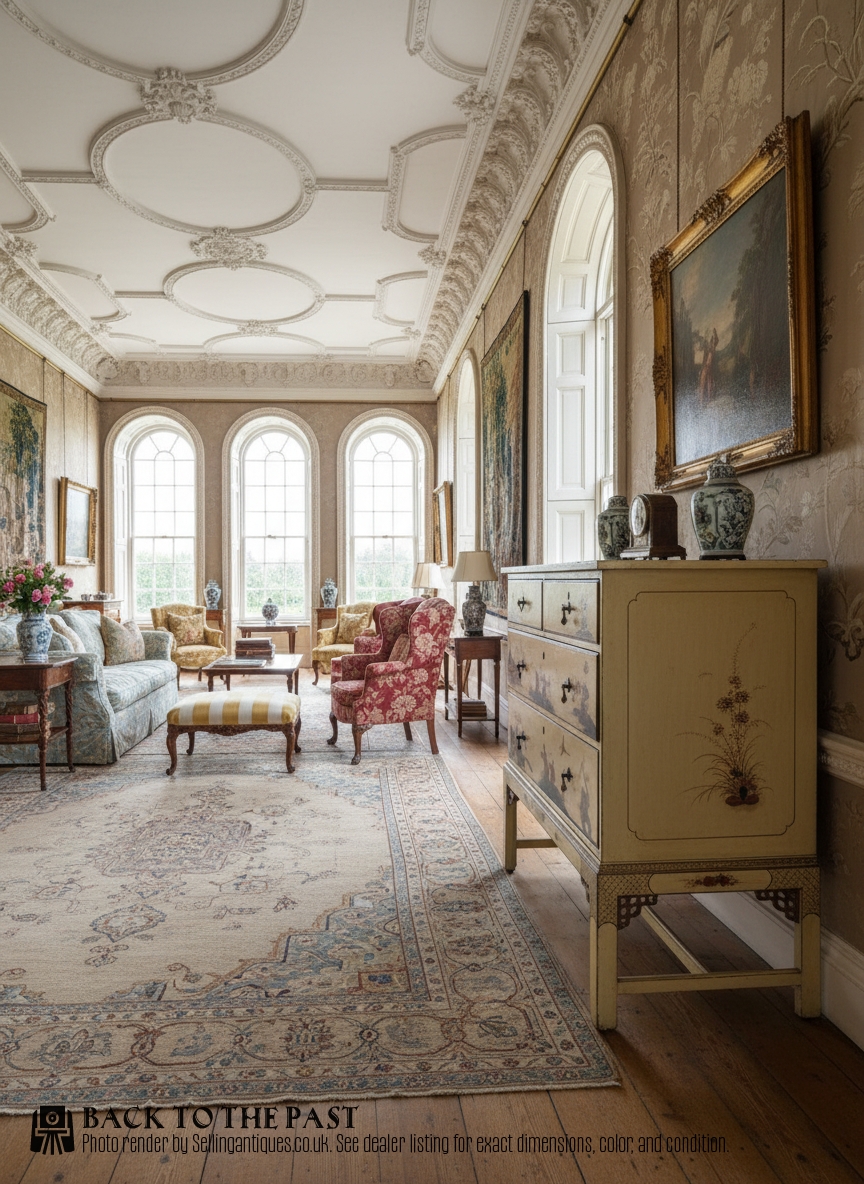
Edwardian Japanned Cabinet
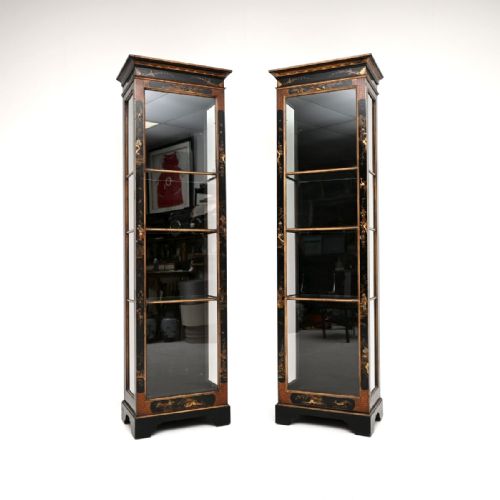
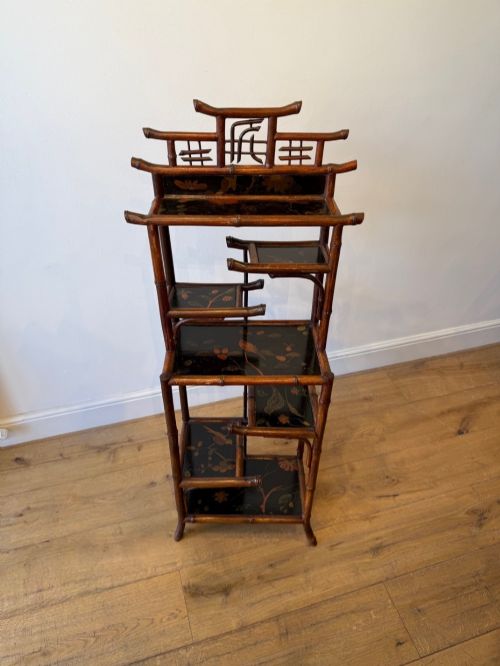
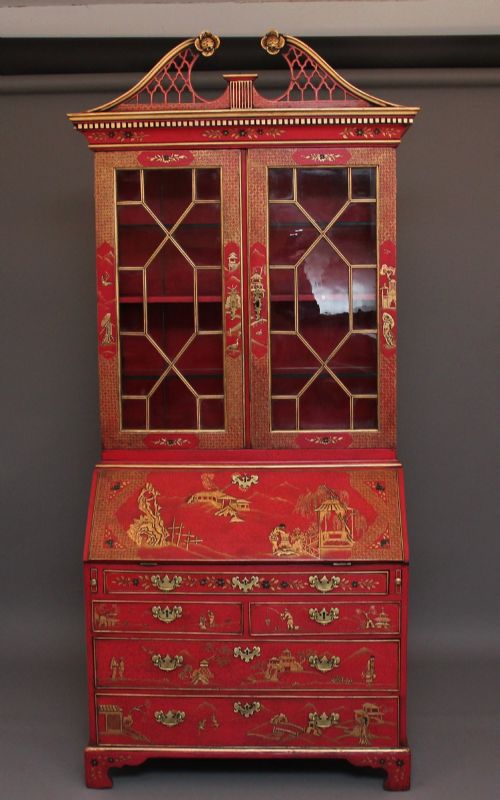
When you search for an edwardian japanned cabinet, you encounter display cabinets, bureau bookcases, side cabinets, and chests of drawers rooted in early twentieth-century and Victorian styles. The selection spans forms from corner cabinets and commodes to bamboo display shelves and bijouterie tables, reflecting diverse English and French Rococo Revival influences.
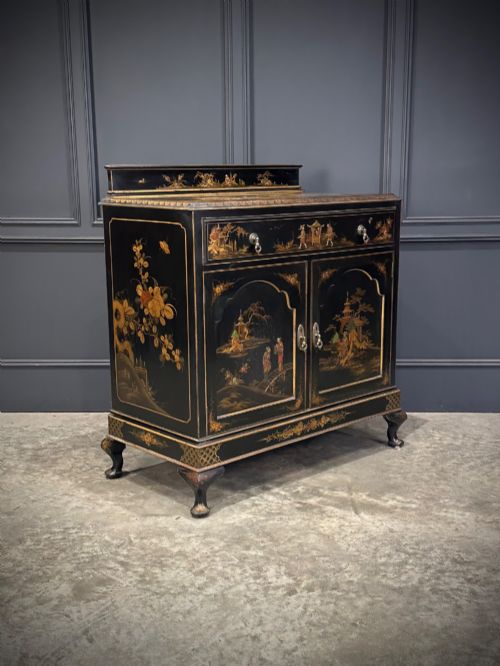
You are most likely to meet items finished in black lacquer or pale cream colour, decorated with Chinoiserie motifs. These pieces serve as functional storage and display furniture while introducing distinctive painted imagery to domestic spaces.
How they were made
These items combine timber and bamboo structures with lacquer surfaces, applying traditional finishing methods to wood substrates. Makers built the carcases using solid timber or bamboo before layering applied finishes.
Decoration relies on gold leaf and gilt details applied over lacquer backgrounds to create pictorial Chinoiserie scenes. Brass and glass elements frequently appear as structural mounts, hardware, or protective cabinet doors.
Object forms include display cabinets, bureau bookcases, display shelves, side cabinets, commodes, chests of drawers, bureaux, and corner cabinets.
What varies in quality
The sophistication of the painted Chinoiserie decoration determines the visual merit of an edwardian japanned cabinet. Finely rendered figures and landscapes in gold leaf distinguish superior work from simpler decorative surfaces.
The integration of materials such as brass hardware and glass panels shapes the overall standard of construction. Cohesion between the underlying timber carcase and the applied lacquer finish marks the distinction between standard production and exceptional execution.
The Edwardian Japanned Cabinet Glossary
- Japanned
- A European imitation of East Asian lacquerwork, typically executed using dark varnish and raised metallic decoration. This technique gained widespread popularity across British furniture production during the Victorian and Edwardian periods.
- Chinoiserie
- The European interpretation of Chinese and East Asian artistic traditions, expressed through whimsical scenes of figures, pavilions, and flora. It appears prominently on the painted surfaces of cabinets and commodes.
- Bureau bookcase
- A dual-purpose form combining a sloping writing flap that conceals fitted drawers with upper shelving enclosed by doors. Examples in this category often feature elaborate lacquer decoration.
- Bijouterie table
- A glazed display table designed for small valuables and curiosities, sometimes constructed with bamboo frames. These pieces share stylistic ties with surrounding cabinetwork.
Edwardian Japanned Cabinet: Frequently Asked Questions
What is an edwardian japanned cabinet?
It is a piece of storage or display furniture from the early twentieth century featuring simulated Asian lacquerwork and Chinoiserie painted scenes.
These items range from side cabinets to bureau bookcases and display shelves, utilising dark or pale cream lacquer finishes.
How were these cabinets used?
They served to store household goods, books, or personal items while simultaneously displaying decorative objects behind glass panels.
Bureau variations provided a dedicated writing surface alongside concealed compartment storage.
How do I live with one?
Position the piece away from direct sunlight and excessive temperature fluctuations to protect the delicate lacquer and gold leaf surfaces.
Pair the furniture with neutral backgrounds to let the painted Chinoiserie motifs and brass hardware stand out.
How do I tell periods apart?
Look to structural styles and material combinations, such as the bamboo frames common in late nineteenth-century pieces compared to solid timber carcases.
Stylistic cues like French Rococo Revival curves or Edwardian proportions help distinguish the manufacturing era.