
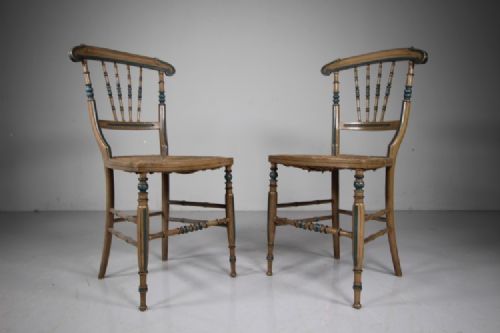


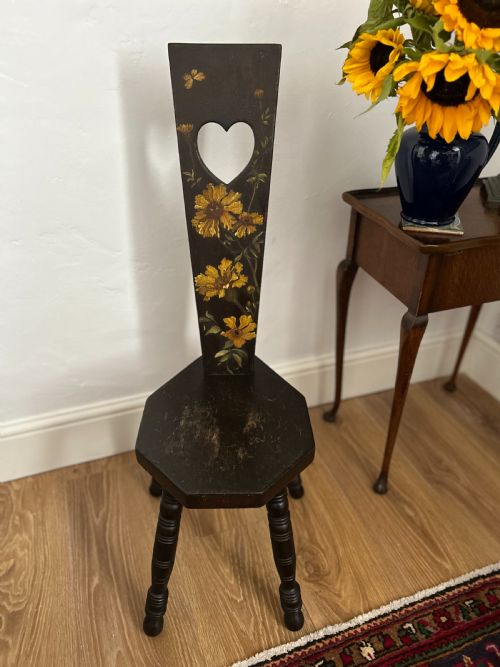


Hand Painted Chairs
Hand painted chairs range from elegant satinwood bedroom seats to robust country rocking chairs, bringing individual character and colour to any room.
Hand Painted Chairs
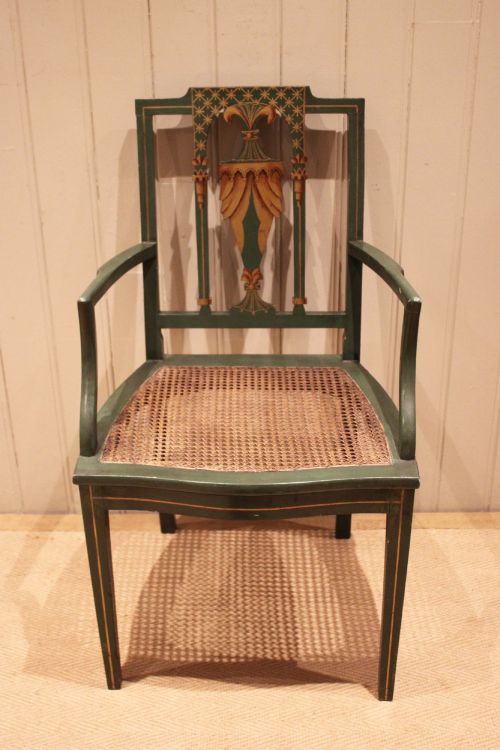
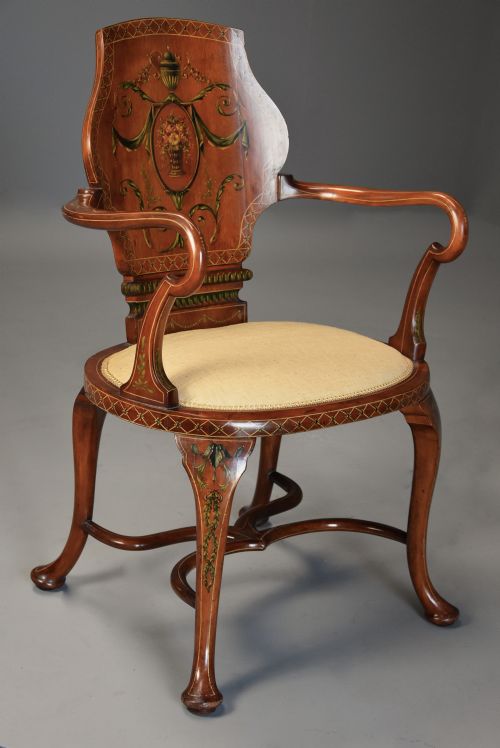
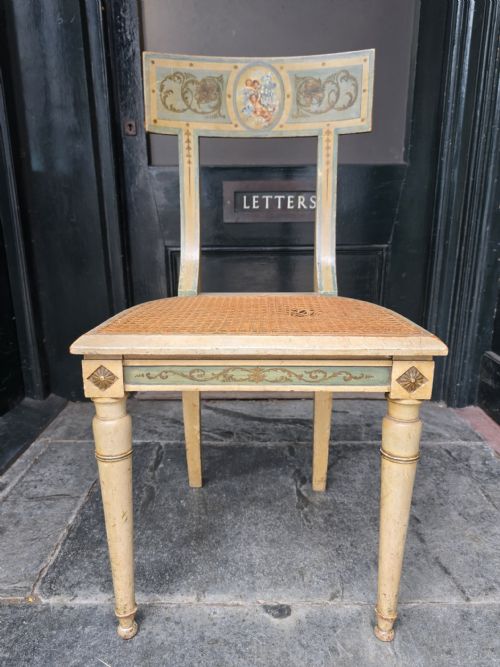
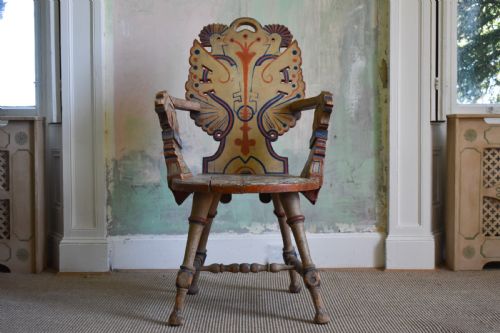
Hand painted chairs encompass a diverse variety of seating forms, ranging from refined Regency elbow chairs and Edwardian satinwood armchairs to rustic country rocking chairs and Swedish folk art pieces. Buyers browsing this selection encounter numerous styles, including Chinoiserie, Victorian decorative designs, and Hepplewhite influences.
The objects span multiple centuries, with examples originating from the eighteenth, nineteenth, and early twentieth centuries. Forms vary widely from full dining sets and bedroom chairs to specialised items such as spinning chairs, children's high chairs, and miniature doll furniture.
Regional diversity strongly shapes the selection, featuring Venetian gondola chairs, Moroccan painted armchairs, and Irish ash chairs alongside traditional English and continental European pieces. Many retain original decorative finishes, floral motifs, or japanned lacquer surfaces applied decades or centuries ago.
How they were made
Construction relies heavily on traditional woodworking materials such as solid wood, pine, mahogany, walnut, and ash, providing sturdy frames for intricate surface decoration. Artisans shaped these timbers into armchairs, side chairs, and rocking chairs using established joinery techniques.
Surface finishes involve direct application of paint, lacquer, and japanning over wood or papier-mâché, often paired with decorative satinwood veneers. Many pieces incorporate textural seating elements like cane work, plaited straw súgán seats, and upholstered fabric pads.
Ornamentation depends on skilled hand painting, detailing floral patterns, Chinoiserie scenes, and folk art motifs directly onto the prepared wooden surfaces. Artisans utilised specialised decorative layering to achieve the enduring visual depth seen on Regency and Victorian examples.
Listings feature hand painted chairs spanning from the eighteenth century through the Edwardian era, utilising materials like satinwood, cane, and papier-mâché.
What varies in quality
The integrity of the original surface finish largely determines the distinction between ordinary and exceptional pieces, particularly where hand-painted floral motifs or lacquering remain intact without heavy modern overpainting. Preservation of authentic period decoration distinguishes pieces that retain their historical character from those with compromised surfaces.
The refinement of the underlying woodwork and structural framing sets apart standard production from master craftsmanship. Finely turned elements, balanced proportions, and sophisticated styling in the manner of specific regional traditions elevate the stature of a chair.
The choice of materials and secondary components, such as genuine cane seating, fine satinwood veneers, or robust structural timbers like mahogany and walnut, establishes the tier of the piece. Superior execution in both the structural joinery and the delicate brushwork ensures lasting durability and visual appeal.
The Hand Painted Chairs Glossary
- Bergere
- An enclosed upholstered armchair with a wooden frame where the sides are typically filled with cane work. This French form provides a distinct silhouette found across various nineteenth and twentieth-century pieces.
- Japanning
- A European imitation of East Asian lacquerwork involving layered varnishes and heat treatments. It creates a glossy, dark surface often embellished with gilt Chinoiserie motifs.
- Satinwood
- A durable, lustrous timber native to India and Ceylon prized for its yellowish colour and fine grain. It served as a primary wood or veneer for high-end eighteenth and nineteenth-century bedroom and parlour furniture.
- Súgán
- An Irish term for twisted straw or hay used to weave traditional chair seats. This rustic seating technique provides a strong, flexible surface on regional country chairs.
- Chinoiserie
- A European decorative style interpreting East Asian artistic traditions through painted scenes, landscapes, and motifs. It appears frequently on eighteenth and nineteenth-century satinwood and lacquered furniture.
Hand Painted Chairs: Frequently Asked Questions
How do I care for a painted chair?
Keep hand painted chairs out of direct sunlight to prevent the pigments and varnishes from fading or yellowing over time. Dust them gently with a soft, dry cloth and avoid harsh chemical cleaners that might damage the historical painted surface.
Maintain stable humidity levels in the room to protect the underlying wood and prevent any cane or straw seating materials from drying out and becoming brittle.
Are these chairs suitable for daily use?
Many sturdy wooden side chairs and dining chairs remain entirely functional for everyday seating. Lighter bedroom chairs, delicate satinwood pieces, or antique miniature furniture function better as decorative accents.
Assess the structural stability of the frame and the condition of cane or upholstered seats before putting older chairs into regular service.
How can I identify the period of a painted chair?
Examine the structural joinery, wood types, and underlying hardware to establish a baseline era. Eighteenth-century pieces often display hand-cut joints and distinct regional proportions, while Victorian and Edwardian examples incorporate machine-sawn elements.
Compare the style of the painted decoration, such as Regency motifs or Chinoiserie details, with documented design movements of the corresponding century.
What is the difference between japanned and painted chairs?
Painted chairs typically feature pigments applied directly to a prepared wooden or papier-mâché substrate, often showing matte or lightly varnished finishes. Japanned chairs specifically utilise specialised layered lacquer techniques designed to replicate Asian export wares.
Japanning involves building up hard, glossy resin surfaces that are frequently cured and hand-polished to a high sheen.