

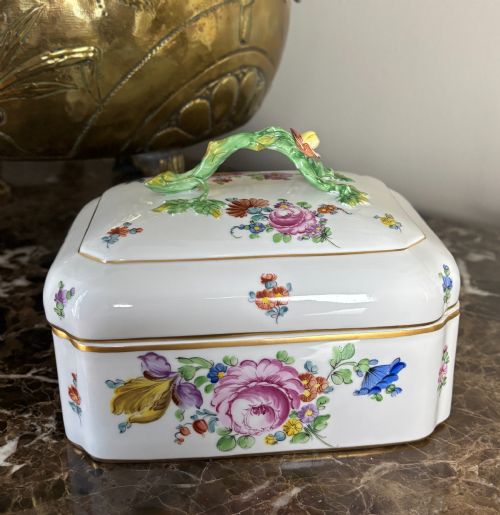
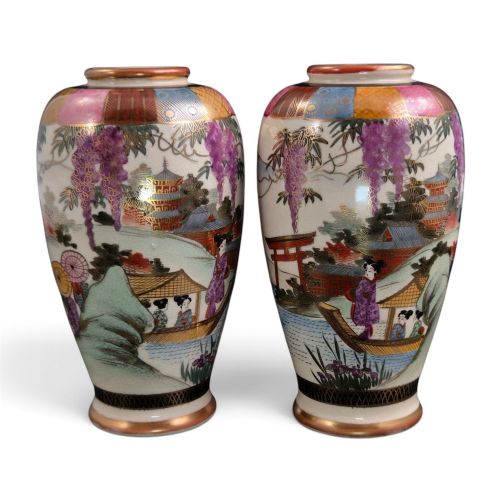
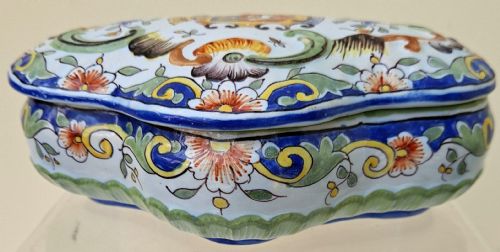

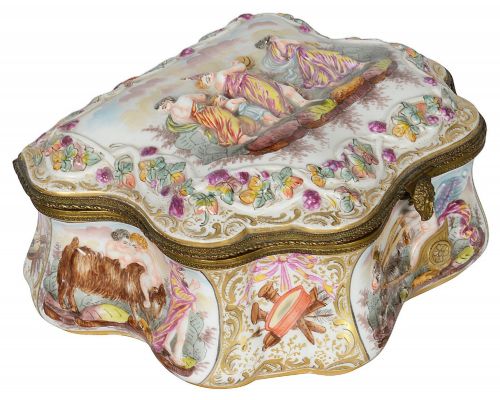
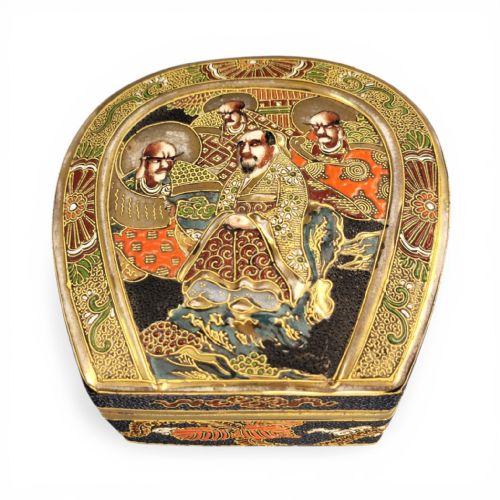


Hand Painted Ceramic Box
A hand painted ceramic box brings together utility and miniature artistry, offering a secure home for small valuables while displaying the painter's brush.
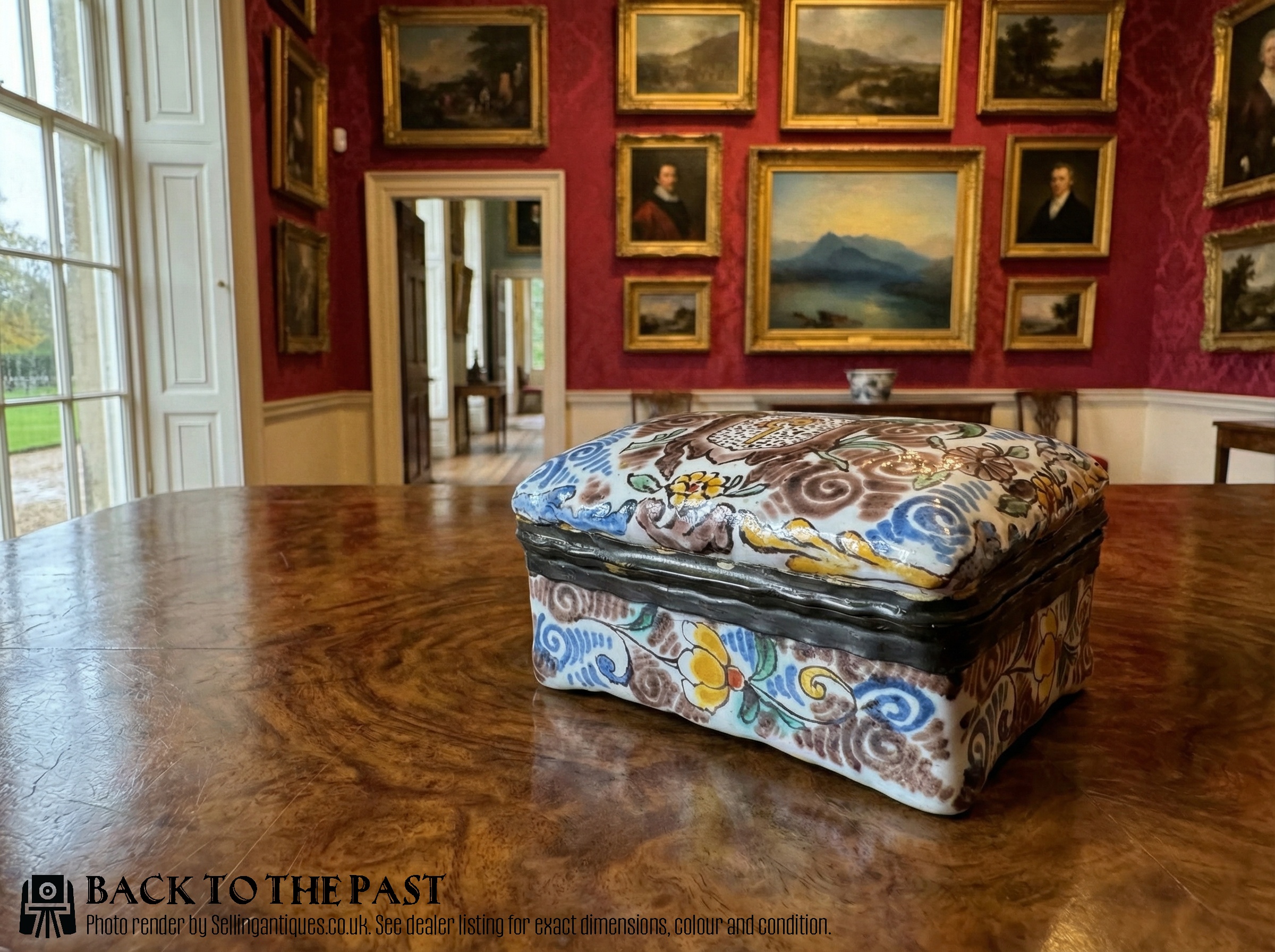
Hand Painted Ceramic Box
A hand painted ceramic box encompasses trinket boxes, sugar boxes, patch boxes, jewellery caskets, and powder bowls produced across centuries and continents. The pieces found here span from nineteenth-century European porcelain works to earlier East Asian covered vessels and faience containers.
Buyers will frequently encounter nineteenth-century French porcelain caskets, German porcelain bonbonnières, and earthenware boxes carrying floral or figural scenes. These objects served functional roles on dressing tables and writing desks, storing cosmetics, snuff, or keepsakes.
Origins stretch from English and French factories to Italian workshops, Dutch kilns, and Japanese or Chinese potteries. Each region brings distinct shapes, from octagonal covered boxes to heart-shaped containers and round powder bowls.
Materials and technique
Makers shaped these objects from porcelain, earthenware, and tin-glazed ceramic bodies, often mounting them with brass or silver-plated metal fixtures. The primary structure was formed in a mould or thrown before receiving its initial firing.
Surface decoration relies on applied glaze, enamel pigments, and gilt detailing, fired repeatedly to fuse the colours to the ceramic body. Artisans painted motifs by hand directly onto the biscuit or glazed surface, utilising blue and white pigments, polychrome enamels, and famille rose or famille verte palettes.
Hand Painted Ceramic Box Retail Price Guide 2026
Typical asking prices for hand painted ceramic box among the pieces listed under this phrase on Sellingantiques today, from the lower quarter to the upper quarter. They describe what is for sale here now, not the wider market.
Listings feature hand painted ceramic boxes spanning the sixteenth through the twentieth centuries, utilising porcelain, earthenware, enamel, and tin glaze.
Evaluating craftsmanship
The standard of a hand painted ceramic box rests upon the precision of the brushwork and the refinement of the ceramic body. Finer examples display crisp, detailed hand-painted scenes without blurring, alongside finely articulated giltwork and well-fitted lids.
Construction details also separate baseline items from superior pieces, such as the snugness of the cover fit and the quality of any metal hinges or mounts. Purity of the glaze and the complexity of the palette, whether delicate blue and white or rich polychrome enamels, further define the tier of the piece.
Toshozan·Richard Ginori·Meissen·Ridgway
The Hand Painted Ceramic Box Glossary
- Faience
- Tin-glazed earthenware produced in France and other European countries, typically featuring hand-painted designs on an opaque white glaze. This technique allowed makers to achieve vibrant surface decoration.
- Famille Rose
- A palette of Chinese porcelain enamels dominated by opaque pink or rose colours, introduced in the eighteenth century. Artisans used this scheme to render intricate floral and figural compositions.
- Sucrier
- A sugar bowl or sugar box, frequently provided with a matching cover. In ceramic tableware, these pieces often match specific tea services.
- Gilt
- Application of gold or golden material to the surface of ceramics for ornamentation. This detailing highlights rims, edges, and painted motifs.
Hand Painted Ceramic Box: Frequently Asked Questions
What were ceramic boxes used for?
These boxes served multiple domestic purposes, holding items such as sugar, powder, snuff, patches, and jewellery. Their decorative nature meant they sat openly on dressing tables, sideboards, and writing desks.
Over time, their utility shifted according to changing fashions, turning from functional kitchen and vanity wares into purely decorative display items.
How do I care for a painted box?
Keep ceramic boxes away from direct sunlight to protect enamel pigments and gilt detailing from fading. Dust them gently with a dry, soft cloth rather than using chemical cleaners.
Handle lids and metal mounts with care, lifting covers straight up to avoid chipping the ceramic edges where the base and lid meet.
How are different periods identified?
Periods are determined through a combination of glaze characteristics, painting styles, shape forms, and factory marks. Eighteenth-century pieces often show different potting techniques and enamel formulations compared to nineteenth-century revival styles.
Stylistic cues, such as Rococo curves or Art Deco geometric symmetry, further help date the manufacture of the container.